


Listen to the article
DC Homicides Drop by Half as Trump Administration Touts Federal Crackdown
Washington, D.C.’s homicide count has fallen dramatically this year, with murders down approximately 50% compared to the same period in 2025. The city has recorded 20 homicides so far in 2026, compared to 42 during the equivalent timeframe last year.
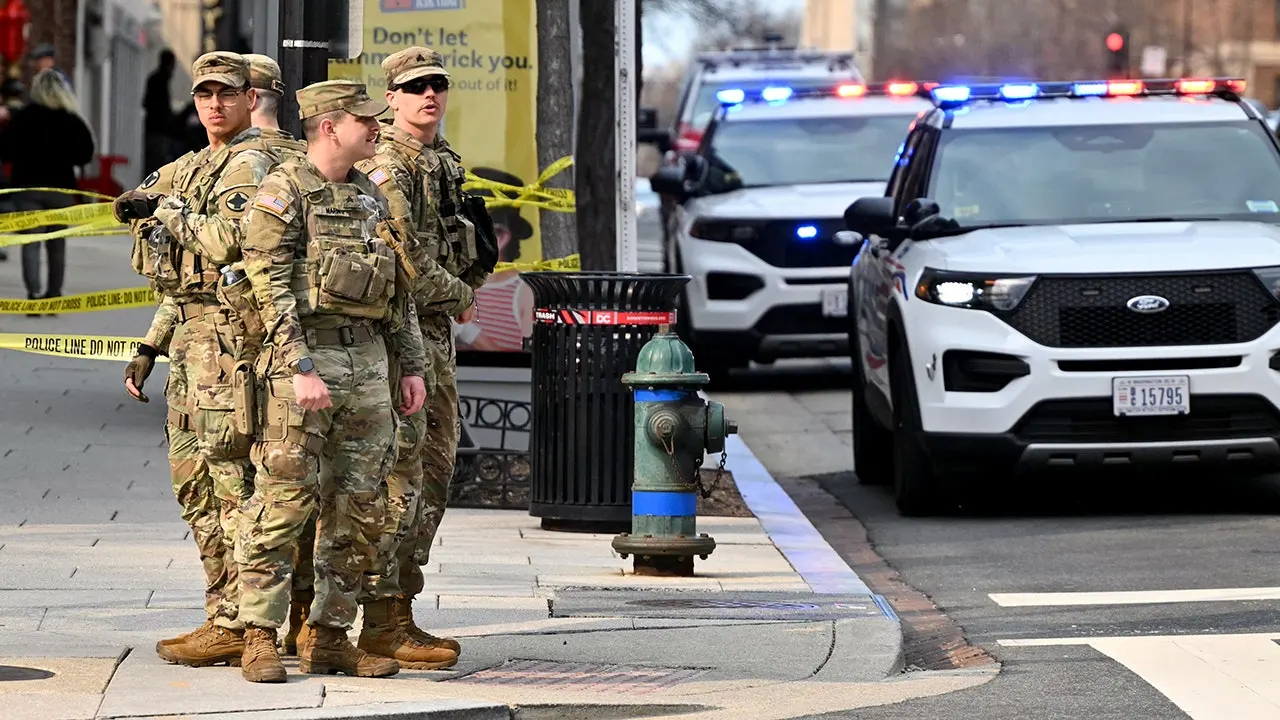
The Trump administration has claimed credit for the reduction, pointing to a multi-pronged approach that includes the appointment of U.S. Attorney Jeanine Pirro, the deployment of National Guard troops, and a surge of federal agents throughout the capital city.
“Crime has dropped across the board, dangerous criminals have been removed from the streets, missing children have been recovered, illegal weapons have been confiscated, and more,” said White House spokeswoman Abigail Jackson. She attributed the improvements to President Trump’s “bold actions in D.C.” and noted that “residents are thankful.”
The administration’s crime task force has reportedly produced “tremendous results for the community,” according to White House officials. The initiative has led to hundreds of arrests, with the administration specifically highlighting the removal of illegal weapons and drugs from D.C. streets.
The nationwide murder rate has also declined significantly, reaching its lowest point since 1900, a development President Trump has connected to his border policies.
However, criminologists caution against attributing the decline to any single policy or initiative. Thaddeus Johnson, a senior fellow at the Council on Criminal Justice and criminology professor at Georgia State University, notes that similar crime reductions are occurring across multiple U.S. cities.
“Crackdowns can have an effect,” Johnson acknowledged in an interview. He pointed out that Washington has struggled with court backlogs and delayed cases in recent years, potentially contributing to higher crime rates. Recent progress in clearing this backlog has allowed prosecutions to move forward, effectively removing offenders from the streets.
Johnson did not discount the impact of Pirro’s aggressive prosecution strategy or the National Guard deployment but emphasized that no single action serves as a “magic bullet” for crime reduction.
“If you’re prosecuting cases, you know that the deterrence is not only the severity of punishment, but it’s the celerity or the swiftness of punishment and the certainty of it — the certainty of punishment is more important than the severity,” Johnson explained.
The professor also noted that Washington continued to struggle with elevated robbery rates as recently as 2024, with incidents expanding beyond traditionally high-crime areas in Southeast D.C. into revitalized neighborhoods such as the Wharf and Navy Yard.
“I haven’t seen anything per se, evidence directly, where I can say, ‘well, yeah, it’s due to the prosecutions and the judges’ as to why these crimes are going down when we started seeing that many of the crimes had started going down already,” Johnson said. “It’s hard to say that it didn’t play a part… particularly when we see similar patterns across the nation.”
The White House’s claims of success contrast sharply with earlier warnings from Democratic critics who predicted the federal intervention would be counterproductive. District of Columbia Councilmember Robert White Jr. previously characterized the National Guard presence as an “occupation” that was “both unwelcome and unwarranted.”
White told Governing News in September that local officials “have an obligation to be clear that this is going to make crime worse in the coming years,” and expressed difficulty explaining the military presence to his young children.
Rep. Jamie Raskin, a Democrat representing neighboring Takoma Park, Maryland, similarly criticized the initiative last August, calling it “a phony, manufactured crisis” and claiming that “no one in Washington is asking Trump to deploy the National Guard or take over the MPD [Metropolitan Police Department].”
House Minority Leader Hakeem Jeffries was equally critical, arguing that Trump was behaving like a “wannabe king” and that deploying the National Guard would “put the safety of the people of our nation’s capital in danger.”
Despite these criticisms, the administration has continued to highlight the statistical improvements in the District’s crime rates as vindication of its approach, setting up an ongoing debate about effective crime reduction strategies in major American cities.
Fact Checker
Verify the accuracy of this article using The Disinformation Commission analysis and real-time sources.

7 Comments
While any reduction in violence is welcome, the administration’s triumphant tone and lack of nuance is concerning. Crime is a complex societal challenge, and sustainable solutions require collaboration, not unilateral federal action. I hope the city and federal government can work together constructively on this issue.
A 50% decrease in homicides is certainly a significant development. However, the administration’s claims of credit should be scrutinized, as the causes of crime trends are often complex. I hope the city can sustain these improvements through evidence-based policies, not just federal force.
Well said. Addressing the root causes of crime, rather than just heavy-handed tactics, is crucial for lasting public safety improvements. Let’s hope the city and federal government can work together effectively on this challenge.
A 50% decrease in homicides is a significant achievement, if the data holds up. However, the administration’s partisan framing and claims of credit raise concerns about political motivations. Objective analysis from nonpartisan sources would help provide a more balanced perspective on this issue.
The drop in DC’s murder rate is certainly good news, but the administration’s self-congratulation raises some red flags. I’d like to see a more independent evaluation of the contributing factors and the long-term sustainability of these crime reductions.
Interesting to see the drop in DC’s murder rate. While federal intervention can be controversial, it’s good to hear the administration claims it’s producing positive results for the community. I’d be curious to see independent data and analysis to fully evaluate the situation.
I agree, it’s important to look at the full picture rather than just take the administration’s word for it. Objective data and analysis will be key to understanding the real impact of this federal intervention.