


Listen to the article
President Trump has abruptly canceled negotiations with Iran that were set to take place in Pakistan this weekend, telling Fox News in an exclusive interview that he sees no value in sending U.S. diplomats on an 18-hour flight when “the U.S. holds all the cards” in the conflict.
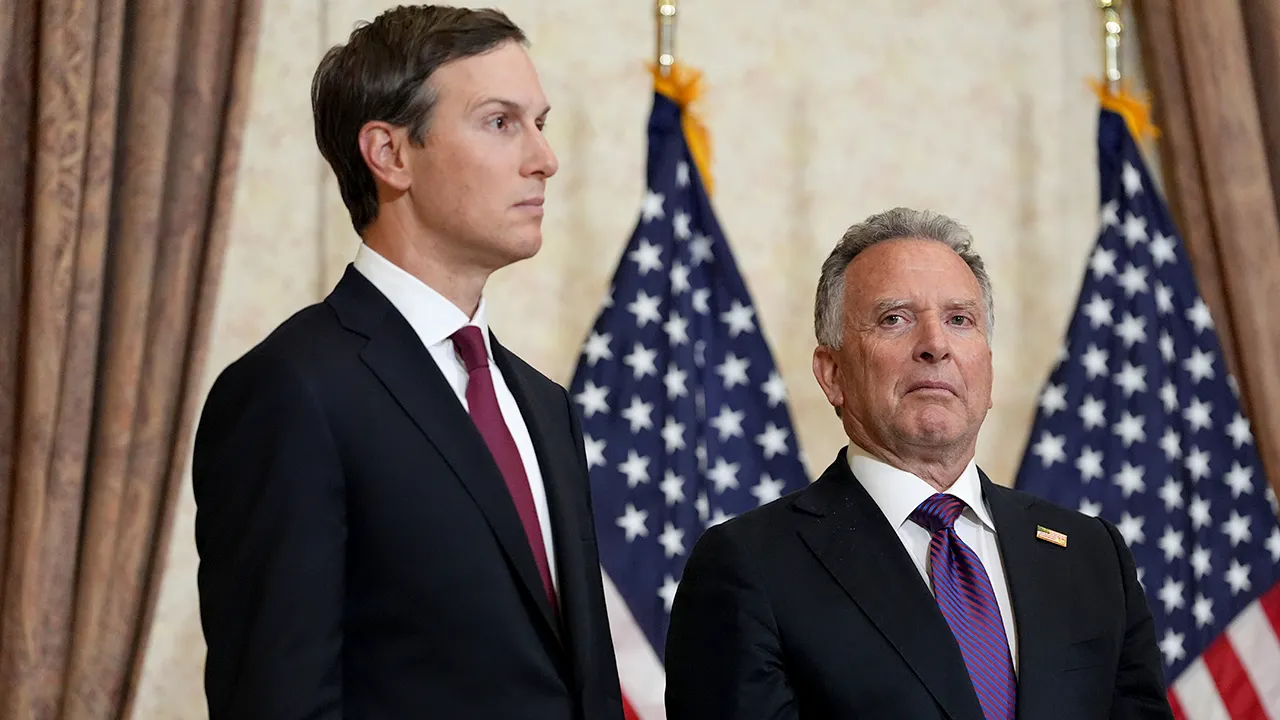
The planned trip would have sent U.S. special envoy Steve Witkoff and presidential son-in-law Jared Kushner to Pakistan for a second round of talks as part of ongoing diplomatic efforts during Operation Epic Fury.
“I’ve told my people a little while ago they were getting ready to leave, and I said, ‘Nope, you’re not making an 18-hour flight to go there,'” Trump told Fox News White House correspondent Aishah Hasnie. “We have all the cards. They can call us anytime they want, but you’re not going to be making any more 18-hour flights to sit around talking about nothing.”
The president reinforced his position on social media, claiming Iran is experiencing “tremendous infighting and confusion within their ‘leadership'” and that “nobody knows who is in charge, including them.” This assessment suggests the administration believes Iran’s internal political instability makes substantive negotiations difficult at this time.
The decision represents a significant shift from just a day earlier when White House press secretary Karoline Leavitt had expressed optimism about recent developments, telling reporters, “We’ve certainly seen some progress from the Iranian side in the last couple of days” regarding a potential deal to end the conflict.
This marks the second high-profile cancellation of U.S.-Iran talks in recent weeks. Vice President JD Vance was scheduled to travel to Pakistan earlier this week for the same round of negotiations but was recalled to Washington for meetings, leading to an indefinite postponement.
The diplomatic maneuvering comes as tensions remain high between the two nations. Vance, Witkoff, and Kushner had previously traveled to Pakistan for an initial round of talks with Iranian representatives, but those discussions ended without an agreement.
Meanwhile, Iranian Foreign Minister Abbas Araghchi was in Islamabad on Saturday meeting with Pakistan’s prime minister. Following those discussions, Araghchi wrote on social media that he had a “very fruitful visit to Pakistan,” adding that Iran values Pakistan’s “good offices and brotherly efforts to bring back peace to our region.”
However, Araghchi’s statement also contained a note of skepticism about U.S. intentions, saying Iran had “shared Iran’s position concerning workable framework to permanently end the war on Iran” but adding they “have yet to see if the U.S. is truly serious about diplomacy.”
The diplomatic impasse occurs as the U.S. faces significant challenges in the region, including efforts to reopen the strategically vital Strait of Hormuz. Recent reports indicate the U.S. military has been deploying drone technology to address regional tensions after retiring conventional minesweepers previously used for such operations.
Pakistan has emerged as an important neutral venue for potential U.S.-Iran negotiations, with its government attempting to position itself as a mediator in the ongoing conflict. The cancellation raises questions about what alternative diplomatic channels might remain open between Washington and Tehran.
The administration’s abrupt change in approach signals Trump’s preference for negotiating from a position of strength, consistent with his diplomatic style during his previous term. By forcing Iran to make the next move, the president appears to be applying pressure tactics rather than pursuing traditional diplomatic engagement.
Analysts suggest this development may either force Iran to reconsider its negotiating position or potentially lead to a prolonged diplomatic standoff, with significant implications for regional stability and global energy markets that have been closely watching developments in the Persian Gulf.
Fact Checker
Verify the accuracy of this article using The Disinformation Commission analysis and real-time sources.

24 Comments
Interesting developments in the Iran-US negotiations. Canceling the Pakistan trip seems like a strategic move to exert pressure on Iran amid reports of internal turmoil. Curious to see how this plays out.
Canceling the planned Pakistan trip suggests the administration is taking a more assertive stance towards Iran, potentially capitalizing on the reported internal turmoil in the Iranian government.
This could indicate a shift in the administration’s approach, though the ultimate goals remain unclear. Worth watching how the diplomatic efforts evolve from here.
Canceling the Pakistan trip signals an unwillingness to engage in extended diplomatic efforts at this stage. The president seems to favor a more assertive posture vis-à-vis Iran.
This could indicate the administration is doubling down on its ‘maximum pressure’ campaign against Iran. Interesting to watch the potential escalation of tensions.
The administration’s focus on Iran’s internal dynamics is notable. Trying to capitalize on perceived instability could be a risky strategy, but may also create new diplomatic openings.
I’m curious to see how this plays out. Diplomatic outreach can be tricky when leadership is in flux within the target country.
Interesting to see the administration emphasizing its negotiating position vis-à-vis Iran. The perceived internal instability in Iran’s government may be shaping the U.S. approach.
This could indicate a shift towards a more confrontational stance, though the ultimate goal remains unclear. Worth watching how the diplomatic efforts evolve from here.
It’s clear the Trump administration is taking a tough approach to Iran right now. Citing internal instability as a reason to cancel the planned talks shows their intention to maximize pressure on the regime. This could be a risky strategy, but the administration seems confident they hold the upper hand.
The cancellation of the Pakistan trip signals the administration’s hardline stance against Iran. With Trump claiming Iran is in disarray, this could be a negotiating tactic to gain leverage. I wonder how Iran will respond.
The decision to cancel the Pakistan trip suggests the administration is adopting a more assertive posture towards Iran, potentially capitalizing on the reported internal turmoil.
Curious to see if this leads to further escalation or opens up new diplomatic avenues. The regional dynamics will be important to monitor going forward.
This move by Trump to cancel the Pakistan trip seems aimed at increasing the US’s bargaining power with Iran. Claiming Iran is in disarray internally could be a way to force their hand in future negotiations. However, it’s a high-stakes gamble that could backfire if Iran digs in further.
Interesting to see the president emphasizing the U.S. negotiating position and unwillingness to engage in lengthy diplomatic efforts. The perceived instability in Iran’s leadership seems to be a factor in this decision.
The regional dynamics will be crucial to monitor going forward. Potential for further escalation or unexpected diplomatic openings, depending on how this plays out.
The administration’s focus on Iran’s internal dynamics is an interesting development. Leveraging perceived instability could be a risky strategy, but may also create new negotiating opportunities.
It will be important to see how this plays out in the broader regional context. Diplomatic outreach can be challenging when leadership is in flux within the target country.
The administration’s decision to cancel the Pakistan trip for Iran talks is intriguing. Citing Iran’s internal chaos as the reason suggests they believe they can extract more concessions by withholding engagement. It will be interesting to see Iran’s response and whether this strategy pays off for the US.
The canceled Pakistan trip suggests the administration is taking a harder stance against Iran amid reports of internal turmoil. Maintaining strong negotiating leverage seems key to this administration’s approach.
Interesting to see the president emphasizing that the U.S. holds the cards here. Wonder how this will impact the broader regional dynamics.
The reported internal turmoil in Iran’s leadership appears to have influenced the decision to cancel the planned diplomatic talks. Maintaining leverage seems to be the priority here.
It will be important to monitor how this plays out in the broader regional dynamics. Potential for further escalation or unexpected diplomatic openings.
The cancellation of the planned Pakistan talks with Iran is a bold move by the Trump administration. Leveraging reports of internal turmoil in Iran to gain negotiating leverage is a high-risk, high-reward approach. It remains to be seen whether this will compel Iran to the table or further inflame tensions.