


Listen to the article
Florida Congressional Redistricting Battle Heats Up as Special Session Looms
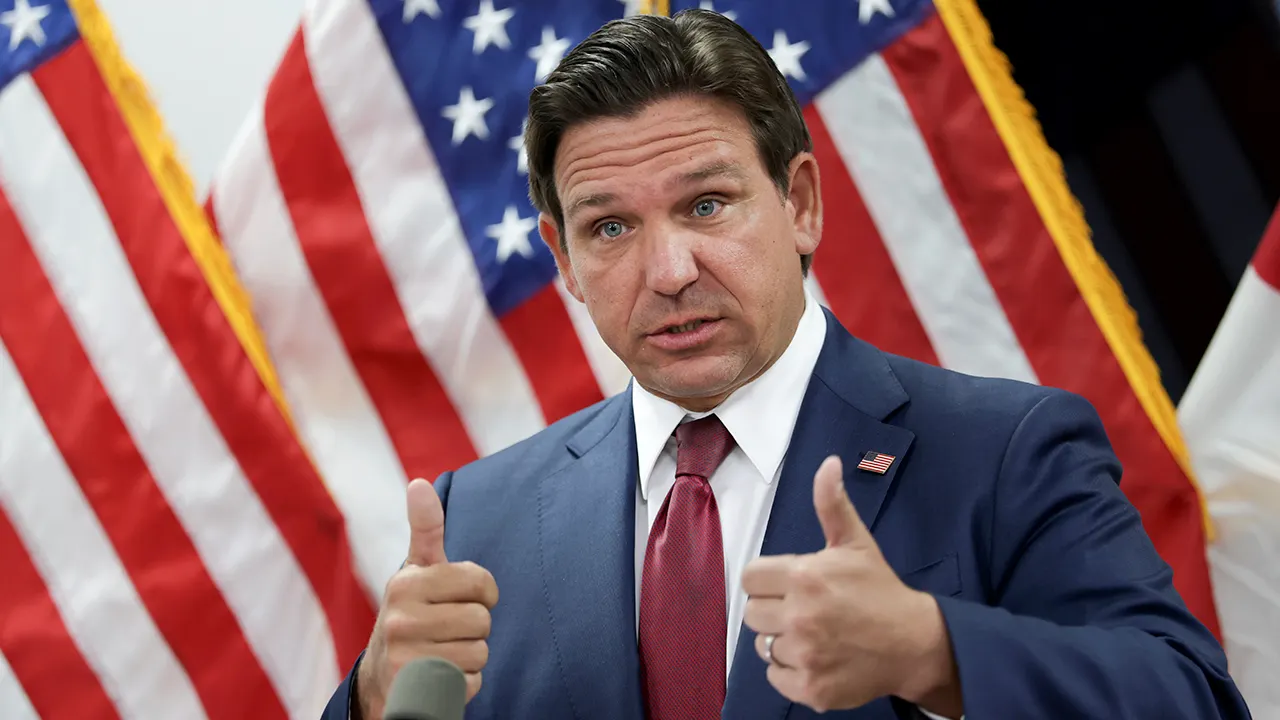
All eyes are on Florida next week as the state becomes the final battleground in the high-stakes fight over congressional redistricting between President Donald Trump’s Republicans and Democrats. A special session of the Florida legislature, called by Republican Governor Ron DeSantis, will convene Tuesday with control of the U.S. House of Representatives during the final two years of Trump’s second term hanging in the balance.
For months, both parties have been redrawing House district maps in states they control to gain partisan advantages ahead of this year’s midterm elections, where Republicans are defending their razor-thin congressional majority.
The Florida session comes just one week after Virginia voters narrowly passed a referendum that, pending legal challenges, will transfer redistricting power from a nonpartisan commission to the Democratic-controlled legislature through 2030. That move could potentially give Democrats a 10-1 advantage in Virginia’s congressional delegation, up from their current 6-5 edge.
This Virginia outcome has intensified pressure on DeSantis to deliver a new Florida map that could create between three and five more Republican-leaning congressional districts. House Speaker Mike Johnson made the GOP’s position clear when he told reporters Wednesday, “Florida has the right and the intention to do it. And my view is that they should.”
According to a Florida-based Republican in the governor’s wider political circle who requested anonymity, “Gov. DeSantis is under tremendous pressure to deliver an answer to Virginia for Trump and Speaker Johnson.” However, the source added that despite pressure from the president’s team, DeSantis may aim for three rather than five additional right-leaning districts when he unveils his proposed map on Monday.
The path forward isn’t straightforward. DeSantis already pushed through a new House map four years ago that helped secure the GOP’s current 20-8 majority in Florida’s congressional delegation. Redrawing districts again so soon presents both practical and legal challenges.
Florida’s constitution explicitly prohibits redrawing maps for partisan gain, known as gerrymandering. Democrats have already promised lawsuits against any new map that emerges from Tallahassee. U.S. House Democratic leader Rep. Hakeem Jeffries recently took aim at what some are calling a “dummymander,” warning Florida Republicans: “F around and find out.” Jeffries threatened that such redistricting moves would lead Democrats to expand their target list of vulnerable Florida House Republicans.
DeSantis has countered these concerns by arguing that the last U.S. Census contained flaws that deprived Florida of an additional congressional seat. He’s also pointed to the significant influx of new residents who moved to Florida following the COVID-19 pandemic as justification for redrawing the maps.
Not all Florida Republicans support the effort. Some congressional representatives reportedly “don’t want this,” according to a Florida-based GOP strategist who requested anonymity. Within the state legislature, there are also signs of reluctance, with the strategist noting that “some don’t want to do it, but their hands will be forced.”
The timing creates significant complications for candidates already running for Congress. Florida has moved its filing deadline for congressional candidates from April to June, but as veteran Florida-based GOP donor Dan Eberhart noted, “Changing the map changes the race. Candidates have been interviewed for a job description that just got a requirement change.”
This redistricting conflict traces back to last spring when Trump first proposed mid-decade congressional redistricting to preserve the GOP’s House majority during the midterms. The battle quickly spread beyond Florida, with Republican-led Texas passing a redrawn map expected to add five GOP-leaning districts. In response, California voters approved Proposition 50, allowing the Democratic-dominated legislature to temporarily bypass the state’s nonpartisan redistricting commission, likely resulting in five more Democratic-leaning districts.
Republican-controlled Missouri and Ohio, along with GOP-dominated North Carolina, have all drawn new maps as part of the president’s redistricting initiative. However, Republicans have faced setbacks in Utah, where a district judge rejected a GOP-drawn map in favor of one creating a Democratic-leaning district, and in Indiana, where the state Senate defied Trump by rejecting a redistricting bill that had passed the House.
As the national redistricting chess match reaches its endgame in Florida, the outcome could determine which party controls the House of Representatives for the remainder of Trump’s term.
Fact Checker
Verify the accuracy of this article using The Disinformation Commission analysis and real-time sources.

8 Comments
As someone with an interest in mining and energy issues, I’ll be keeping an eye on how this Florida redistricting battle plays out. It could have downstream impacts on policies and legislation that affect those sectors.
Interesting to see the high stakes involved in the Florida redistricting battle. It could have major implications for the balance of power in the House of Representatives.
From a neutral perspective, it’s crucial that the redistricting process in Florida is fair and transparent, regardless of partisan interests. The integrity of the electoral system is vital for democracy.
Well said. Maintaining impartial, nonpartisan redistricting should be the top priority, not gaining political advantage.
This is a complex issue with partisan interests at play. I’m curious to see how the special session in Florida plays out and what the final congressional map looks like.
Agreed, it’s going to be an important process to follow closely. The redistricting outcomes in key states like Florida could shift the political landscape significantly.
The Virginia referendum to shift redistricting power to the Democratic-controlled legislature is certainly an interesting development. It will be worth monitoring how that plays out and any potential legal challenges.
This is a high-stakes political battle with far-reaching consequences. I hope the process in Florida is handled responsibly and with the best interests of constituents in mind, not just partisan interests.