


Listen to the article
Congress faces intense legislative sprint to close out contentious year
Congress will return to Washington next week facing a tight three-week window to address several major legislative challenges before year’s end, capping what has been a tumultuous and often dramatic year on Capitol Hill.
The most contentious battle looming is how lawmakers will approach the expiring enhanced Obamacare subsidies, an issue that dominated the recently ended government shutdown negotiations. Neither Republicans nor Democrats have presented comprehensive plans to address the subsidies, though Republicans have floated potential solutions such as redirecting subsidy funding into Health Savings Accounts (HSAs).
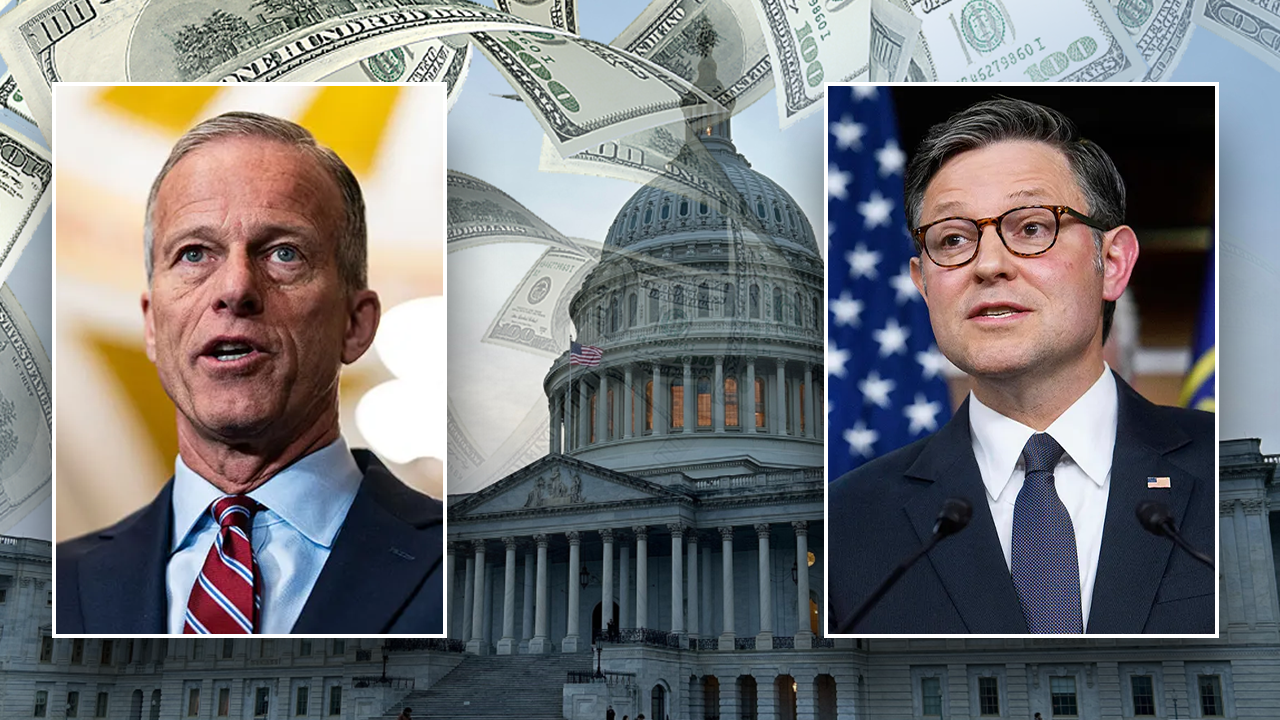
Senate Majority Leader John Thune (R-S.D.) acknowledged the difficulty ahead but has committed to giving Senate Democrats a vote on their proposal by the second week of December. “The one thing that unites” Republicans, Thune noted, is the belief that the subsidies need reform and rising healthcare costs must be addressed.
“I think the affordability issue is a big issue,” Thune said. “I think it’s been exacerbated by the way that Obamacare has been structured through the years, including the way that enhanced subsidies were structured by going directly to insurance companies and incentivizing them to enroll people without their knowledge.”
The White House is reportedly developing its own healthcare proposal, though its rollout appears to have been delayed due to Republican objections to proposed language. When questioned about the plan, a White House official simply stated, “there was never a healthcare announcement listed on [Monday’s] daily guidance.”
Despite this setback, some Senate Democrats remain encouraged by President Trump’s involvement. Sen. Jeanne Shaheen (D-N.H.), who proposed legislation to extend the subsidies, expressed appreciation for the president’s efforts to prevent the credits from expiring.
“I’ve had constructive conversations with many of my Republican colleagues who I believe want to get this done,” Shaheen said. “They understand that the vast majority of people who benefit from these tax credits live in states the President won, and that the President’s own pollsters have underscored the enormous political urgency of Republicans acting.”
Beyond healthcare, Congress faces several other critical tasks. Lawmakers aim to pass the annual National Defense Authorization Act before year’s end, while the Senate continues to consider another package of Trump nominees. Additionally, a package of four appropriations bills covering Defense, Labor, Transportation, and Commerce is expected soon.
Senate Appropriations Chair Susan Collins (R-Maine) noted earlier this month that there was “interest on the House side” to move these spending bills forward. Their passage would represent significant progress toward averting another government funding deadline on January 30, 2026.
“The more appropriations bills that we’re able to pass, the better off we’re going to be, the better off the American people will be served,” Collins said.
Other unresolved issues could emerge as surprises before the year concludes. These include congressional handling of Russia sanctions and a controversial provision in the government reopening package that would allow senators to sue for up to $500,000 if their records were requested without notification.
On sanctions against Russia, the Senate has developed bipartisan legislation that Trump appears to support. However, there seems to be disagreement between Thune and House Speaker Mike Johnson (R-La.) regarding which chamber should originate the legislation. Thune believes it would be better suited for the House since it’s revenue-focused, while Johnson warned that passing it through the lower chamber would be time-consuming due to the multiple committee reviews required.
Some senators are already looking ahead to next year, when midterm election considerations will intensify. There’s discussion about attempting another budget reconciliation process—the mechanism used to pass Trump’s recent major legislation—though whether Republicans broadly support this approach remains unclear.
Sen. John Kennedy (R-La.) strongly advocated for using reconciliation again, calling it “legislative malpractice” not to utilize a process allowing legislation to pass with only 51 votes. “It’s just exquisitely dumb,” Kennedy said. “Why would you not take advantage of an opportunity to pass something with 51 votes? That doesn’t mean that our Democratic colleagues can’t join with us, but if they don’t, they can’t filibuster.”
Fact Checker
Verify the accuracy of this article using The Disinformation Commission analysis and real-time sources.

7 Comments
With the tight timeline, Congress will have to work quickly and collaboratively to find solutions on the Obamacare subsidies and other year-end legislation. Pragmatism and compromise will be essential to getting things done before the new year.
The affordability of healthcare remains a major concern, and it’s good to see Congress focused on addressing rising costs. However, any reforms need to ensure continued access to coverage, especially for vulnerable populations.
Interesting to see Congress grapple with complex healthcare legislation before year-end. Reducing costs and improving access will be a delicate balance. Reform proposals like HSAs could be a constructive solution, but details matter.
Agreed, the politics around healthcare are always tricky. It will be important for both parties to find common ground and pragmatic fixes that address affordability without disrupting coverage.
The expiring Obamacare subsidies are a critical issue that Congress must address soon. I’m curious to see what proposals emerge from both Republicans and Democrats to control rising healthcare costs while preserving access.
Redirecting subsidy funds into HSAs could be an interesting approach, but the details would need careful consideration. Balancing cost control and maintaining coverage will be the key challenge.
Digging into the details of the various proposals, like using HSAs, will be crucial. The goal should be finding the right balance between cost control and preserving the benefits of the Affordable Care Act.