


Listen to the article
The U.S. Coast Guard abruptly reversed course Thursday night, releasing a firm policy banning hate symbols just hours after media reports revealed the agency had planned to describe items like swastikas and nooses as merely “potentially divisive.”
“Divisive or hate symbols and flags are prohibited,” declares the new policy, explicitly stating that this category includes “a noose, a swastika, and any symbols or flags co-opted or adopted by hate-based groups.”
In an accompanying press release, the Coast Guard emphasized this was “not an updated policy but a new policy to combat any misinformation and double down that the U.S. Coast Guard forbids these symbols.”
The swift change came after The Washington Post and other media outlets reported that the Coast Guard had drafted a policy earlier in November that softened language around these symbols. That earlier version had replaced terminology used since 2019 that described swastikas and nooses as “widely identified with oppression or hatred” and classified their display as “a potential hate incident.”
The latest policy takes a stronger stance than the earlier November draft, unequivocally prohibiting all divisive or hate symbols from Coast Guard facilities. The previous version had not explicitly banned such symbols and suggested commanders could take steps to remove them from public view while allowing them in private spaces outside of public view, such as family housing.
Both policies maintain the long-standing prohibition on publicly displaying Confederate flags except in specific contexts such as educational or historical settings.
The policy change sparked immediate criticism from lawmakers. Senator Jacky Rosen (D-Nevada) expressed concern that the initial revision “rolls back important protections against bigotry and could allow for horrifically hateful symbols like swastikas and nooses to be inexplicably permitted to be displayed.”
“At a time when antisemitism is rising in the United States and around the world, relaxing policies aimed at fighting hate crimes not only sends the wrong message to the men and women of our Coast Guard, but it puts their safety at risk,” Rosen added.
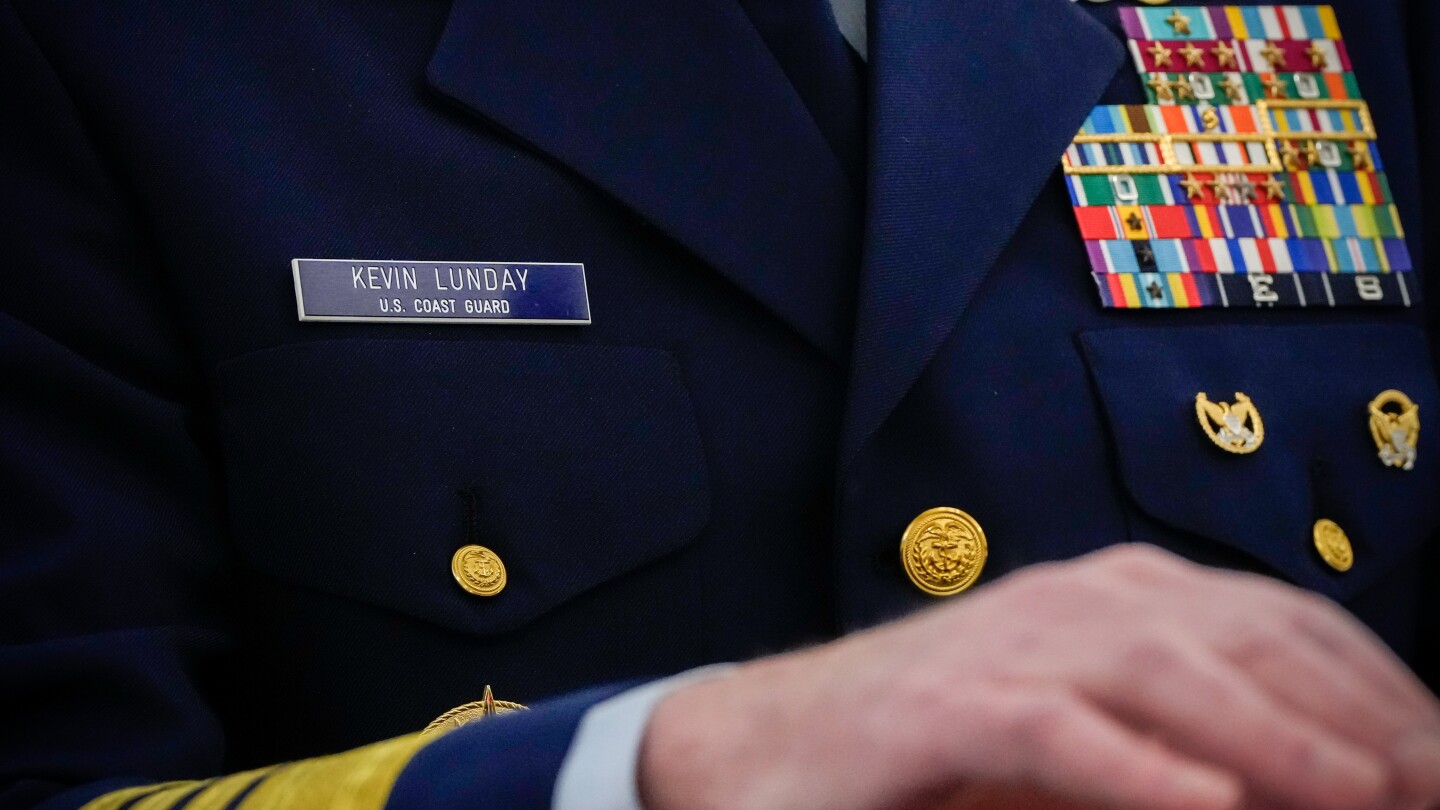
Before the late-night policy reversal, Admiral Kevin Lunday, acting commandant of the Coast Guard, had defended the earlier version, calling it “categorically false” to suggest any prohibitions had been rolled back.
“These symbols have been and remain prohibited in the Coast Guard per policy,” Lunday stated. “Any display, use or promotion of such symbols, as always, will be thoroughly investigated and severely punished.”
The leadership shuffle at the Coast Guard may be contributing to the policy turbulence. Lunday’s predecessor, Admiral Linda Fagan, was dismissed on President Donald Trump’s first day in office. Trump officials later claimed she was fired partly for placing “excessive focus” on diversity and inclusion efforts that diverted “resources and attention from operational imperatives.”
While the newest policy explicitly prohibits hate symbols, it remains silent on whether Coast Guard personnel will be able to report “hate incidents” as they could under the 2019 policy. The November draft had explicitly removed this terminology, instead directing that such conduct would be treated as “a report of harassment in cases with an identified aggrieved individual.”
The Coast Guard, although under the Department of Homeland Security, is considered part of America’s armed forces and often aligns its policies with Pentagon directives. The timing of this policy shift is notable, coming less than two months after Defense Secretary Pete Hegseth ordered a review of all hazing, bullying, and harassment definitions across the military, arguing existing policies were “overly broad” and “jeopardizing combat readiness, mission accomplishment, and trust in the organization.”
The Pentagon has not provided details on whether this review could lead to similar changes in other military branches or when it might be completed.
The initial policy change drew sharp criticism from legal and community experts. Menachem Rosensaft, a Cornell University law professor and Jewish community leader, stated that “the swastika is the ultimate symbol of virulent hate and bigotry, and even a consideration by the Coast Guard to no longer classify it as such would be equivalent to dismissing the Ku Klux Klan’s burning crosses and hoods as merely ‘potentially divisive.'”
Senate Democratic leader Chuck Schumer condemned the initial move as “disgusting,” calling it “more encouragement from the Republicans of extremism.”
The Coast Guard’s rapid policy reversal highlights the sensitivity and significance of how government agencies address symbols associated with hatred and oppression, particularly amid rising concerns about extremism and discrimination.
Fact Checker
Verify the accuracy of this article using The Disinformation Commission analysis and real-time sources.

13 Comments
The Coast Guard’s swift action to ban hate symbols like swastikas and nooses is a positive development. As a public institution, they have an obligation to promote inclusive, non-discriminatory values.
Agreed. Decisive policy changes like this can help foster trust and send a clear message about an organization’s commitment to diversity and equity.
While I’m glad the Coast Guard has taken a strong stance against hate symbols, it’s concerning that there was an earlier draft policy that seemed to downplay their significance. This type of ambiguity can send the wrong message.
Absolutely, any equivocation around hateful symbols undermines efforts to create a welcoming, non-discriminatory environment. Kudos to the Coast Guard for swiftly correcting course.
I’m curious to know more about the rationale behind the initial draft policy that seemed to downplay hateful symbols. Was there pushback from certain quarters? Transparency around the decision-making process would be valuable.
This policy reversal demonstrates the importance of public scrutiny and accountability. Kudos to the media for reporting on the initial problematic draft and pushing the Coast Guard to take stronger action.
Absolutely. Robust journalistic oversight helps ensure government agencies uphold their principles and responsibilities to the public.
While the new Coast Guard policy is commendable, it’s concerning that there was an earlier draft that seemed to downplay hateful symbols. Consistent, unambiguous stances against discrimination should be the norm, not the exception.
This is an important policy reversal by the Coast Guard to firmly prohibit hate symbols like swastikas and nooses. Symbols of oppression and discrimination have no place in a professional organization like the Coast Guard.
Agreed, clear and unambiguous policies against hate symbols are necessary to uphold values of inclusivity and respect.
Prohibiting hate symbols like swastikas and nooses is the right call. As a public-facing organization, the Coast Guard has a responsibility to uphold principles of diversity and inclusion.
Fully agree. Decisive action to ban hateful imagery aligns with the Coast Guard’s mission to serve all members of the public.
The Coast Guard’s new policy is a positive step, but it raises questions about what prompted the initial draft that was more lenient on hate symbols. Transparent accountability around these policy changes would be reassuring.