


Listen to the article
Health Care Subsidy Extension Stalls as Partisan Divide Deepens in Congress
Hopes for extending critical health care subsidies are fading in Congress as bipartisan talks have effectively collapsed, raising the likelihood that millions of Americans will face substantial premium increases starting January 1. The impasse comes despite earlier Democratic expectations that they could negotiate with Republicans after agreeing to reopen the government in exchange for a December health care vote.
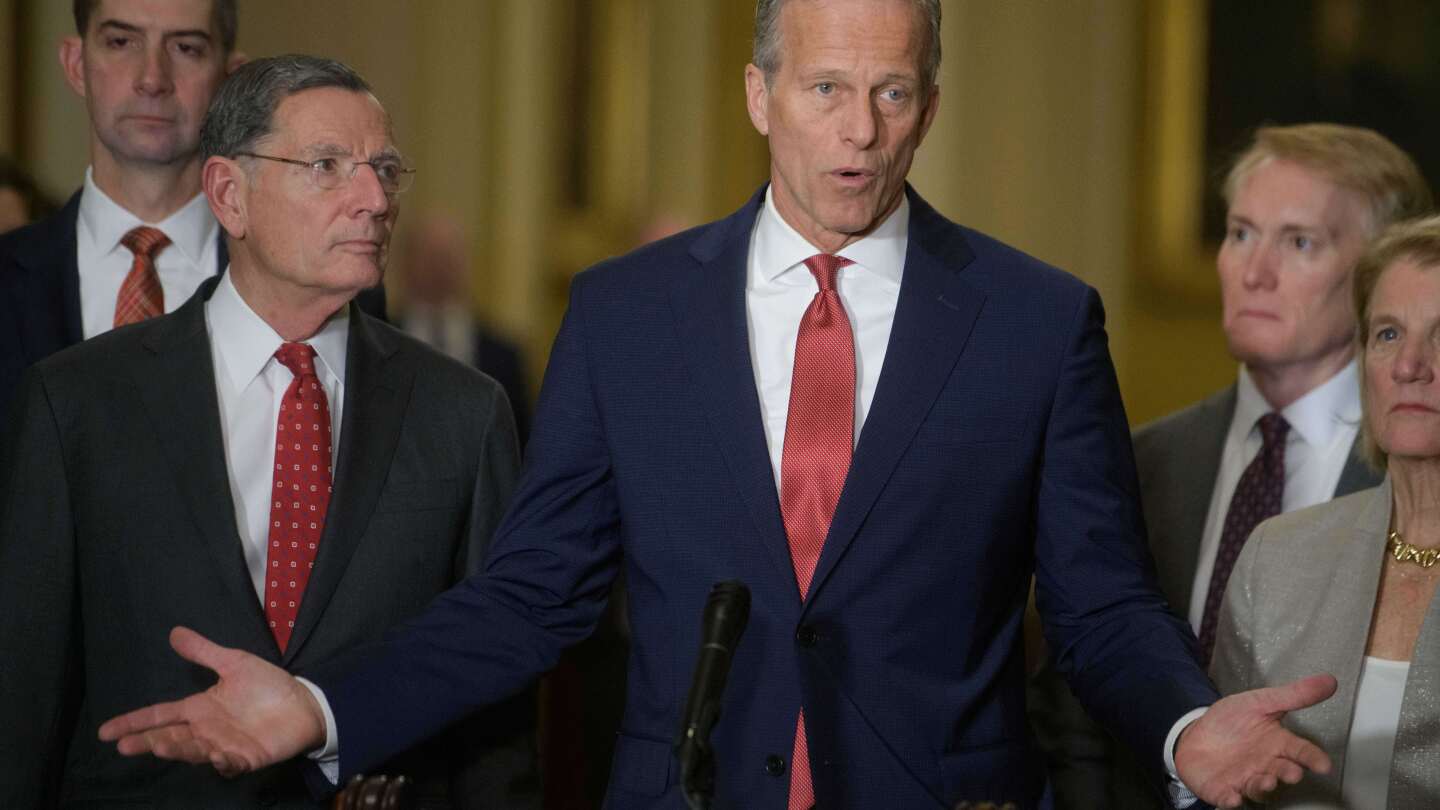
Senate Majority Leader John Thune acknowledged the deadlock on Tuesday following Republican caucus discussions. “I don’t think at this point we have a clear path forward, I don’t think the Democrats have a clear path forward,” Thune said after Republicans met to consider various proposals to revamp the Affordable Care Act.
The breakdown means next week’s promised Senate vote may become merely a partisan messaging exercise with little chance of actual passage. Under the government shutdown resolution deal, Democrats can determine which legislation comes up for consideration. Senate Democratic Leader Chuck Schumer indicated his party is leaning toward a vote on extending the COVID-era tax credits without modifications, a proposal Republicans have already dismissed.
“So far the Republicans are in total disarray and have no plan,” Schumer stated Tuesday. “We have a plan.”
Democrats maintain they’re open to negotiation, with some expressing willingness to consider new subsidy limitations. However, they point to two major obstacles: President Donald Trump’s lack of clear guidance and Republican insistence on including abortion funding restrictions in the discussions.
“Our Republican colleagues aren’t going to engage with us” unless Trump weighs in, said Senator Peter Welch (D-Vermont). “That’s the paralysis here.”
Senator Angus King of Maine, an independent who caucuses with Democrats and helped broker the shutdown resolution, confirmed that informal bipartisan talks stalled when Republicans demanded stricter abortion restrictions on ACA plans. “They have set up a red line that is also a red line for the Democrats,” King observed. “So they’re going to own these increases.”
Missouri Senator Josh Hawley, who supports extending the tax credits, countered that abortion “should not be a deal-killer” since federal funding restrictions already exist in current law. Democrats contend these existing provisions should suffice, noting that while many states prohibit abortion coverage in ACA marketplace plans, others permit or require coverage that doesn’t use federal funding.
The subsidy issue also highlights broader Republican ambivalence toward the ACA. Many GOP lawmakers have long advocated dismantling or substantially revising the healthcare law, but consensus on approach remains elusive.
Republican senators are considering multiple competing proposals. Senators Bill Cassidy (Louisiana) and Rick Scott (Florida) have proposed creating alternative health savings account structures that would transform insurance purchasing mechanisms—an idea Trump has vaguely endorsed on social media. Other senators prefer extending subsidies with new income limitations.
“We will see where the Republicans come down, but that conversation continues,” Thune noted, adding that while Republicans want “a constructive solution,” such a plan “hasn’t landed yet.”
House lawmakers are similarly divided, with no evidence that any proposal could be prepared by year-end or generate sufficient bipartisan backing. “Health care is a very complicated issue,” acknowledged House Speaker Mike Johnson (R-Louisiana), while maintaining that Republicans were still “pulling ideas together.”
Both parties recognize that Trump’s support is crucial for any plan’s advancement, yet the president hasn’t formally endorsed any specific legislation. The White House briefly circulated a proposal last week to extend subsidies with certain limitations, including income caps and mandatory minimum premiums for all recipients. The proposal would also have allowed individuals with lower-tier coverage to contribute to health savings accounts, but this plan was never officially released.
When questioned about subsidy extensions, Trump seemed to reference the leaked plan, saying, “somebody said I wanted to extend it for two years. … I’d rather not extend them at all.” Nevertheless, he conceded that some form of extension may be “necessary.”
Without congressional action, the expiration of these enhanced subsidies would significantly impact millions of Americans who rely on them for affordable healthcare coverage through the ACA marketplaces, potentially causing premium increases that could force many to drop coverage altogether.
Fact Checker
Verify the accuracy of this article using The Disinformation Commission analysis and real-time sources.

7 Comments
The failure to renew these subsidies demonstrates the continued dysfunction in Washington. Both parties need to put politics aside and work together to protect access to affordable health care for all Americans.
Well said. This issue shouldn’t be a partisan battle – it’s about ensuring vulnerable families can get the coverage they need. Lawmakers need to find common ground quickly.
Allowing these health care subsidies to expire would be a devastating blow, especially for lower-income families already struggling with rising costs. Congress needs to put partisan politics aside and renew this critical assistance.
This is a frustrating situation. Millions of people could face unaffordable premium hikes through no fault of their own. Congress should put the needs of constituents first and find a compromise solution.
This is a concerning development for millions of Americans who rely on these critical health care subsidies. It’s crucial that Congress finds a bipartisan solution to avoid premium spikes that could leave many struggling to afford coverage.
I agree, the partisan divide in Congress is deeply troubling. Allowing these subsidies to expire would have serious consequences for public health and financial security across the country.
It’s concerning to see the breakdown in bipartisan negotiations on such an important issue. These subsidies help keep health care accessible for many. I hope the parties can find a way to work together before the deadline.