


Listen to the article
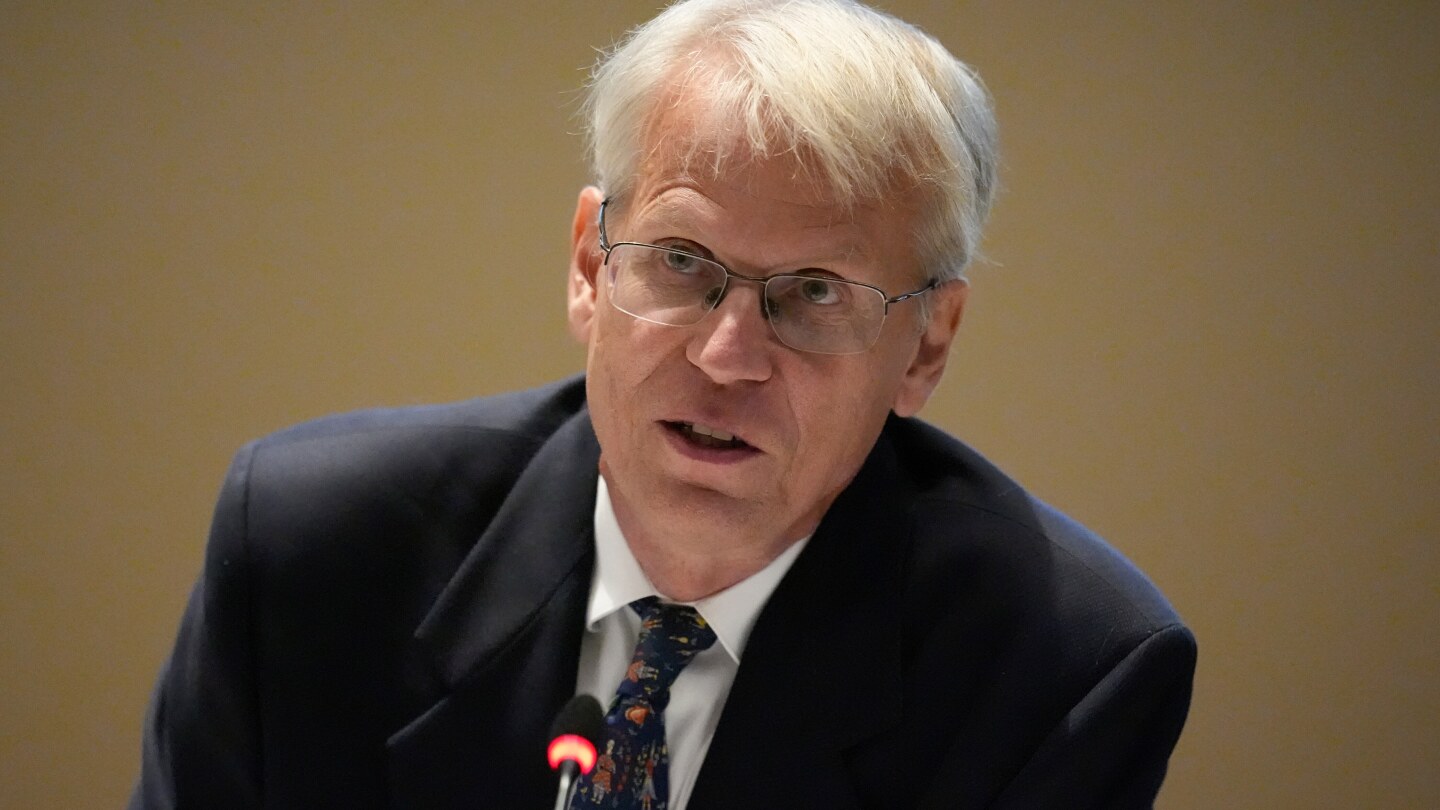
U.S. Health Secretary Robert F. Kennedy Jr.’s vaccine advisory committee will convene later this week with new leadership, as federal officials announced Monday that Martin Kulldorff is stepping down as chair to assume a higher position within the Department of Health and Human Services.
Dr. Kirk Milhoan, a pediatric cardiologist who has previously claimed vaccines cause cardiovascular disease, will replace Kulldorff as head of the Advisory Committee on Immunization Practices (ACIP). Milhoan was appointed to the committee in September and now takes over as it prepares to discuss the pediatric vaccine schedule and hepatitis B shots for newborns at meetings scheduled for Thursday and Friday in Atlanta.
HHS officials released a statement praising Kulldorff’s contributions but declined to provide additional details about the leadership change. In his new role, Kulldorff will serve as chief science officer within the HHS planning and evaluation office, described as the department’s “in-house think tank.”
“I look forward to contributing to the science-based public health policies that will Make America Healthy Again,” Kulldorff said in the HHS press release.
The leadership change comes amid significant controversy surrounding Kennedy’s overhaul of the influential committee. Earlier this year, Kennedy, who was a prominent anti-vaccine activist before becoming the nation’s top health official, dismissed all 17 members of the original panel and appointed replacements that include several individuals known for anti-vaccine positions.
Under Kulldorff’s brief leadership, the committee made several contentious decisions that departed from established scientific consensus. In June, the panel recommended removing thimerosal, a preservative, from flu vaccines despite acknowledging there was no evidence it caused harm. In September, they implemented new restrictions on the combination vaccine that protects against chickenpox, measles, mumps, and rubella, and took the unprecedented step of not recommending COVID-19 vaccinations for any population group, instead framing vaccination as a personal choice.
These decisions prompted major medical organizations to criticize the committee for abandoning evidence-based recommendations. Many physician groups have advised healthcare providers to continue following previously established guidance instead of the new committee’s recommendations.
Kulldorff, a Swedish-born biostatistician known for co-authoring the Great Barrington Declaration during the COVID-19 pandemic, also led ACIP’s departure from its traditional “evidence-to-recommendation” framework that had previously involved months of rigorous analysis before proposals reached a vote.
With Kulldorff’s exit, the committee now has 11 members. Incoming chair Milhoan operates a medical missionary organization called For Hearts and Souls with his wife and testified at a 2024 congressional hearing that vaccines should be blamed for increased cardiovascular disease in older teenagers and young adults.
At this week’s meeting, the committee is expected to vote on potential changes to hepatitis B vaccination recommendations for newborns, though HHS officials have not clarified the specific proposals under consideration. Current guidelines recommend administering the first dose within 24 hours of birth.
The potential reconsideration of these guidelines has already drawn significant pushback. Last week, 15 state governors submitted public comments expressing concern that the committee is undermining public trust in vaccines and creating barriers to affordable immunizations.
Hepatitis B, which can cause serious liver infections, is primarily spread in adults through sexual contact or needle sharing. However, infected mothers can pass the virus to their newborns, and up to 90% of infected infants develop chronic infections that lead to lifelong health issues.
The hepatitis B vaccine has been licensed in the United States since 1981, with infant vaccination rates between 85% and 95% effective in preventing chronic infections. Public health experts consider the vaccination program a success story that has dramatically reduced infant infections, and research shows no safety concerns with administering the vaccine shortly after birth.
In September, Kennedy’s ACIP members discussed delaying the initial vaccination but postponed voting amid criticism from pediatric and infectious disease specialists who defended the vaccine’s safety record and effectiveness.
The committee’s ongoing revision of longstanding vaccination protocols continues to generate controversy among public health officials and medical professionals concerned about the scientific basis for these changes.
Fact Checker
Verify the accuracy of this article using The Disinformation Commission analysis and real-time sources.

12 Comments
The move of the former chair to a higher position within HHS suggests there may be a shift in priorities. I’m curious to see how this will impact future vaccine recommendations.
It will be important for the new leadership to maintain the committee’s focus on public health and safety, rather than any political agenda.
This is an interesting development in the vaccine advisory committee. I’m curious to learn more about the new leadership and their views on vaccine policies.
The change in leadership does raise some questions about the direction the committee may take moving forward.
The appointment of a pediatric cardiologist with unorthodox views on vaccines is an unusual choice for this role. I hope the committee can remain objective and evidence-based.
The public deserves to have confidence in the vaccine recommendations made by this committee. Transparency and scientific rigor should be the top priorities.
The move of the former chair to a higher position within HHS raises questions about the motivations behind this leadership change. I hope the new committee will remain objective and focused on evidence-based policies.
Maintaining public trust in vaccine recommendations will be crucial, especially with a new chair who has expressed controversial views on vaccine safety.
It’s concerning to see someone with controversial views on vaccine safety taking over the committee. I hope the new leadership will prioritize science-based decision-making.
The public deserves to have confidence in the vaccine policies set by this committee. Transparency and impartiality will be key.
This leadership change comes at a critical time for vaccine policy. I hope the new chair will be able to navigate these complex issues with the appropriate expertise and impartiality.
It will be important to closely monitor the committee’s decision-making process and ensure it remains focused on public health rather than any personal or political agendas.