


Listen to the article
California’s high-speed rail project has reached a staggering new cost estimate of $126 billion, nearly quadrupling the $33 billion price tag initially presented to voters in 2008. The revelation came during a CBS “60 Minutes” interview, where California High Speed Rail Authority board member Anthony Williams acknowledged the dramatic cost increase.
“Today, we estimate with the right optimization just over $125 billion,” Williams told the program. “I think $126 billion is the current estimate for that.”
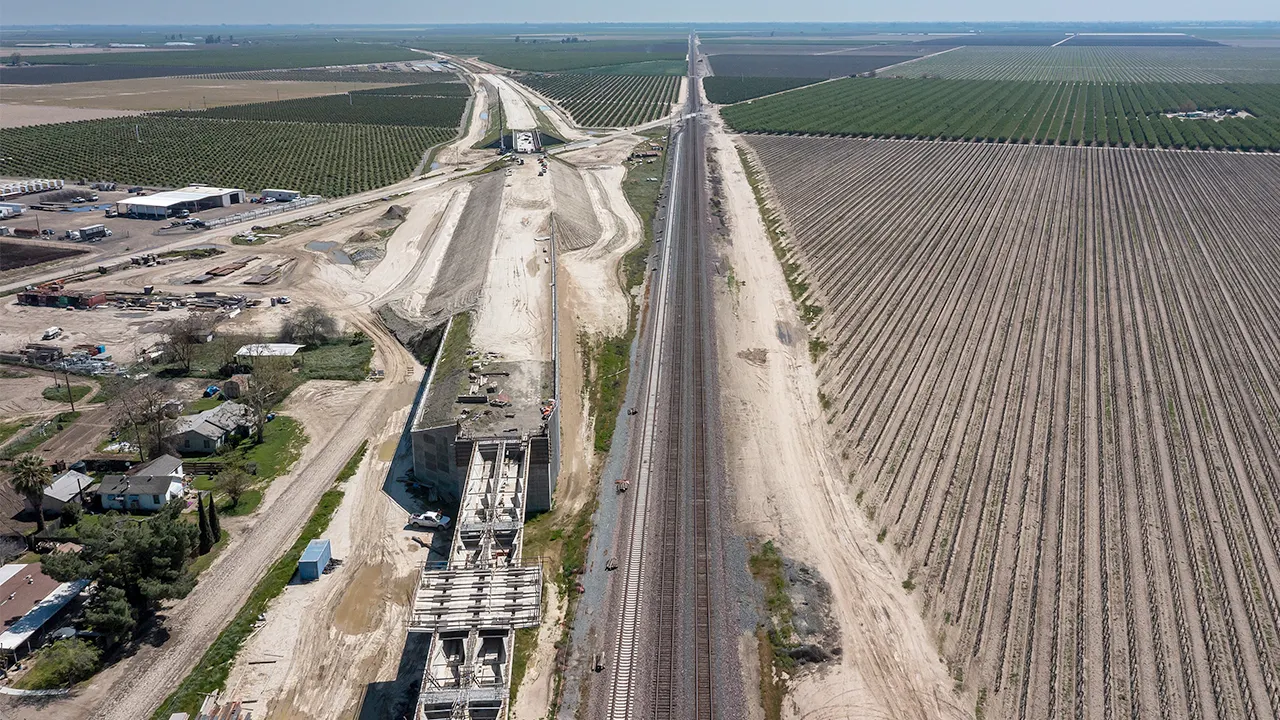
The ambitious project, intended to connect Los Angeles and San Francisco with high-speed train service, has become increasingly controversial as costs mount while visible progress remains minimal. Nearly two decades since its inception, no track has been laid, with the only significant construction occurring on a Central Valley segment between Bakersfield and Merced.
California Transportation Secretary Toks Omishakin conceded that many criticisms of the project are warranted. “There were mistakes made,” Omishakin said. “Some of the criticisms on this project, I think, are very fair.”
He further admitted that neither voters nor officials fully understood the scope and requirements of the project at its outset. “I don’t think the voters fully understood, and neither did we in the public sector, what it was going to take to actually get this project delivered,” Omishakin stated.
Republican lawmakers have been particularly vocal in their opposition. Rep. Vince Fong (R-Calif.), a member of the House Transportation Committee, called for the project to be terminated. “We’re now in 2026: There are no trains; there’s no track laid; it was a complete bait and switch,” Fong told “60 Minutes.” “The California high-speed rail nightmare is the probably quintessential example of government waste and mismanagement.”
The project faces a daunting funding gap of approximately $90 billion. Even California Governor Gavin Newsom cast doubt on the full San Francisco-to-Los Angeles plan back in 2019, signaling a retreat from the original vision sold to voters.
Transportation Secretary Sean Duffy criticized the project in a statement to CBS: “What this administration won’t stand for is boondoggle projects like Newsom’s Train to Nowhere that wasted billions in taxpayer dollars yet delivered nothing to the American people.” Duffy added that the Trump administration has “defunded Newsom’s disaster” and redirected funds to “critical projects that enhance safety on rail networks across America.”
Critics have pointed to the project’s inefficiency compared to private sector achievements. Palantir CTO Shyam Sankar noted in 2024, “For $10 billion, Elon Musk put 300 rockets in orbit; for $11 billion, the state of California has built 1,600 feet of elevated rail with no rail.”
Financial oversight has become a major concern. According to Rep. Fong, the project has undergone 597 change orders that have cost more than $2.3 billion alone as of November 2025, representing nearly 7% of the initial project estimate.
“Taxpayers deserve full transparency and accountability,” Fong stated in February. “The high-speed rail nightmare is a glaring example of structural mismanagement. Reckless, repeated contract amendments have squandered resources and precious tax dollars.”
Despite the mounting costs and criticism, California officials maintain they can secure additional funding to continue the project. Omishakin acknowledged the challenge ahead: “The ultimate 494 miles of building this out without the federal government’s help will be challenging: There’s no doubt about that.”
The earliest projected opening date is now 2033, far later than originally promised when California voters approved the project. The delay and cost overruns have transformed what was once heralded as a visionary transportation solution into what critics call a symbol of governmental waste and mismanagement in infrastructure development.
Fact Checker
Verify the accuracy of this article using The Disinformation Commission analysis and real-time sources.

16 Comments
Quadrupling the initial cost estimate is completely unacceptable. This project needs to be put under a microscope to understand where all the money is going and why progress has been so painfully slow.
I’m curious to know what specific factors have driven the costs up so dramatically. Was it underestimated engineering challenges, political interference, or simply poor project management? Taxpayers deserve a full accounting.
Those are great questions. The state needs to provide a detailed, transparent breakdown of the cost overruns and delays. Taxpayers have a right to understand where their money is being spent.
It’s disheartening to see such a massive cost increase with no real progress to show for it. Californians were promised an ambitious high-speed rail network, but this fiasco has shaken public trust. Serious changes are needed.
I agree. At this point, the state should consider scaling back the project’s scope or finding a more cost-effective alternative. Taxpayer dollars must be spent wisely, not on a runaway infrastructure project.
The lack of tangible progress is very concerning. Californians were sold on a vision of high-speed rail, but this project has been plagued by mismanagement and ballooning costs. Taxpayers deserve better.
Exactly. This is a cautionary tale for large infrastructure projects. Proper planning, oversight, and cost controls are essential to avoid these kinds of costly fiascos.
This is a cautionary tale about the importance of thorough planning, realistic budgeting, and effective project management for large-scale public works. California needs to learn from this experience and apply those lessons going forward.
This is a classic case of scope creep and poor project management. Californians were promised one thing and are now facing a vastly different, much more expensive reality. Transparency and accountability are sorely needed.
Agreed. Overpromising and underestimating costs is a recipe for disaster with large infrastructure projects. The state needs to course-correct quickly or risk wasting even more taxpayer money.
Wow, $126 billion for a high-speed rail project with no tangible progress? That’s an astronomical price tag. I hope state officials can get this project back on track, both literally and figuratively.
This is a frustrating situation for California residents. High-speed rail could be a transformative transportation solution, but not at this staggering price tag. The project needs to be reevaluated from the ground up.
While I support investing in modern transportation infrastructure, this project has clearly gone off the rails. The state needs to be more prudent with taxpayer money and reevaluate the feasibility of this plan.
That’s a fair point. With no track laid and costs spiraling, it’s time for a hard reset. Californians deserve a realistic, cost-effective solution, not an endless money pit.
This cost overrun is staggering. It’s clear the initial cost estimates were grossly underestimated. Taxpayers deserve accountability and transparency on this project’s progress and spending.
I agree. With no visible progress and costs quadrupling, this project seems like a debacle. The state needs to reevaluate if it’s worth continuing at this point.