


Listen to the article
Bolivia Seeks New Partnership with US, Shifting Away from China
After decades of strained relations, Bolivia is actively pursuing a closer partnership with the United States as part of a significant diplomatic repositioning under its new conservative leadership. The South American nation is working to reduce its dependence on China while establishing itself as a potential new ally for Washington in the region.
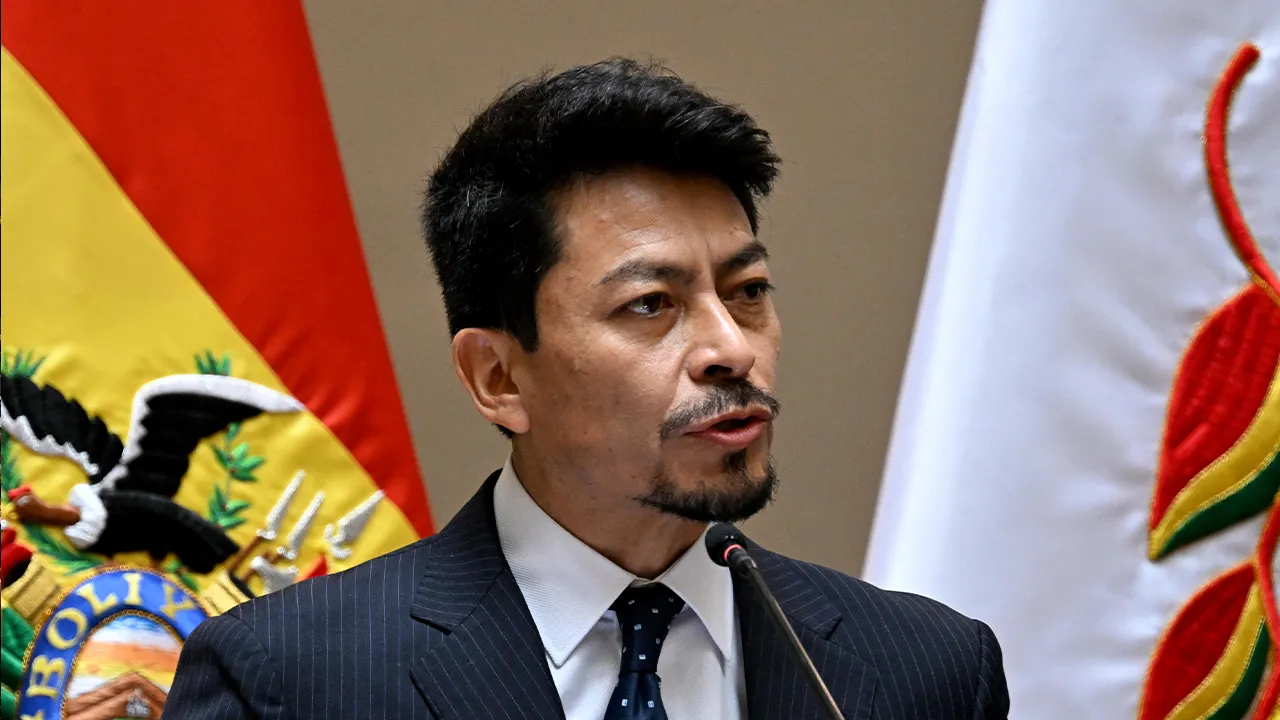
Foreign Minister Fernando Aramayo visited Washington this week to sign an agreement reestablishing diplomatic ties with Israel, which had been severed during the Gaza war by the previous administration. During his visit, Aramayo outlined his government’s vision for a transformed relationship with the United States.
“We are looking for a long-term relationship with the U.S., relations based on the same values and interests that we share, for democracy and to create a new alliance in South America,” Aramayo told Fox News Digital in an exclusive interview.
This diplomatic pivot comes after President Rodrigo Paz was sworn in last month, marking a dramatic shift from nearly two decades of leftist governance. Paz’s victory followed the collapse of the MAS party that had dominated Bolivian politics under former presidents Evo Morales and Luis Arce. That political machine unraveled amid economic crises, corruption scandals, and growing public anger over alleged narcotrafficking networks embedded within the state.
The election of a pro-business conservative represents a remarkable transformation for a country that had been among China and Venezuela’s closest ideological allies in Latin America. Aramayo indicated that Bolivia is now taking concrete steps to attract U.S. investment, particularly in the mining sector.
“We want to institute new laws and regulations to attract U.S. investment and break up China’s monopoly on mining our natural resources, particularly lithium,” said Aramayo. Bolivia possesses some of the world’s largest lithium reserves, a critical component for batteries and electric vehicles.
The foreign minister emphasized the potential benefits of American technological expertise: “The U.S. has a lot of technology and has a lot of experience in sustainable extraction of resources. We want to take advantage of that. Of course, we want to receive some technology transfers and to be part of the whole chain of production.”
When asked about concerns that China uses its investments in Latin America to extract political leverage, Aramayo was direct: “Of course we share those concerns. We want to diversify our portfolio and we want serious investors.”
Beyond economic considerations, the Bolivian diplomat highlighted regional security as a priority. He warned that transnational criminal organizations have flourished across South America amid political instability and have embedded themselves throughout the region. Bolivia, he said, is still contending with the legacy of what he described as “narco authorities” who governed the country over the past two decades.
“We’re very concerned about the presence of these cartels in South America,” Aramayo stated, noting that criminal networks undermine confidence in state institutions and fuel cross-border instability.
The diplomatic realignment comes as the United States increases pressure on Venezuelan leader Nicolás Maduro. U.S. officials have recently targeted vessels allegedly linked to narco-trafficking connected to Maduro’s regime and seized an oil tanker reportedly used to evade sanctions.
Aramayo carefully avoided criticizing these U.S. actions, stating instead that Washington “has the right to represent their own interests.” He added that South American nations broadly share concerns about Venezuela’s trajectory and remain open to diplomatic efforts to resolve the crisis.
Bolivia’s new administration intends to support a “democratic transition” in Venezuela and collaborate with regional partners to help restore the “legitimacy and reliability” of Venezuelan institutions following years of political repression and economic decline.
The shift in Bolivia’s foreign policy represents one of the most significant geopolitical realignments in Latin America in recent years, potentially creating new opportunities for U.S. influence in a region where China has made substantial economic and diplomatic inroads.
Fact Checker
Verify the accuracy of this article using The Disinformation Commission analysis and real-time sources.

7 Comments
The shift in Bolivia’s foreign policy is an intriguing development that could have broader implications for the region. As a major lithium producer, the country’s closer alignment with the US may impact global supply chains and the dynamics of the clean energy transition. It will be important to monitor how this plays out in the coming months and years.
As a major producer of lithium, Bolivia’s diplomatic shift could have implications for the global supply of this critical mineral. The country’s new openness to the US may impact its relationship with China, a major consumer of lithium. This is an important development to watch, especially as the demand for lithium continues to grow with the transition to electric vehicles.
This news highlights the dynamic nature of global geopolitics, especially in resource-rich regions like South America. Bolivia’s move to distance itself from China and forge closer ties with the US is a significant strategic decision that could reshape the regional balance of power. I’ll be curious to see how this unfolds and what it means for the country’s economic and political future.
The decision to reestablish diplomatic ties with Israel is a notable move. It signals a clear shift in Bolivia’s foreign policy priorities under the new administration. I wonder how this will impact the country’s relations with other regional partners, particularly those more aligned with the Palestinian cause.
That’s a good observation. Bolivia’s realignment with Israel could create tensions with some of its traditional leftist allies in the region who have been more vocal in their support for the Palestinian cause. It will be interesting to see how this plays out diplomatically.
This is an interesting shift in Bolivia’s foreign policy. After decades of leftist rule, it seems the new administration is looking to establish closer ties with the US and distance itself from China’s influence in the region. I’m curious to see how this plays out and what implications it may have for the country’s economic and political landscape.
You raise a good point. Bolivia’s pivot toward the US could have significant regional implications, especially as it relates to the geopolitical dynamics between the US, China, and other leftist-leaning nations in South America. It will be important to watch how this unfolds.