


Listen to the article
Supreme Court to Hear Challenge to Trump’s Birthright Citizenship Order
A 28-year-old Argentine immigrant living in Florida made obtaining a U.S. passport for her newborn son one of her first priorities after his birth last year. For her, the document represents concrete proof of his American citizenship.
“It’s funny because I actually booked him for his passport application appointment even before he was born,” she said, speaking on condition of anonymity due to concerns about possible retribution from the administration. “I would say that I am definitely relieved that at least he is protected.”
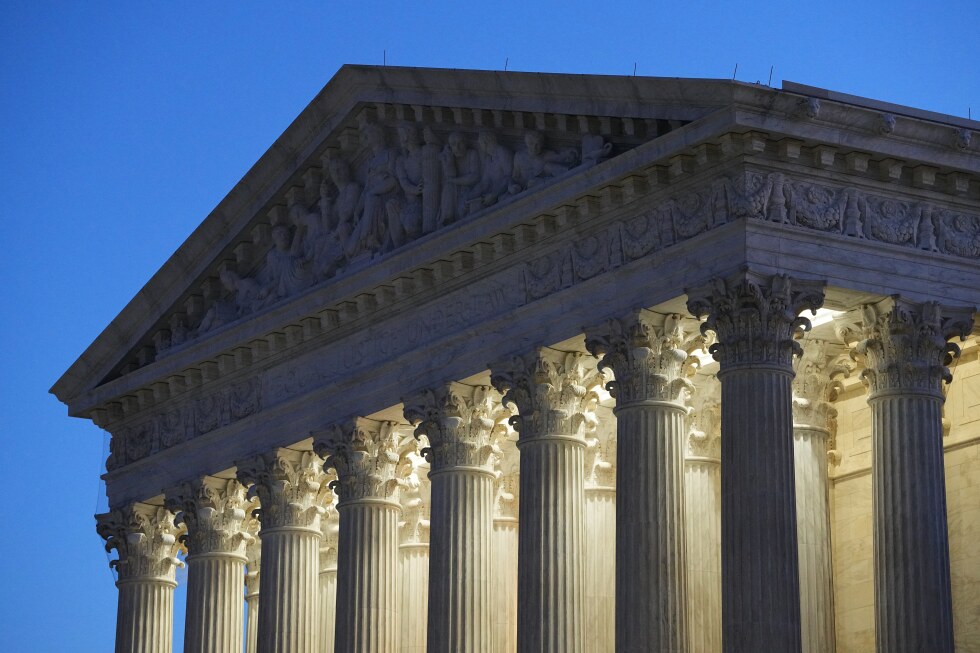
Her relief comes amid a high-stakes legal battle over President Donald Trump’s executive order that would deny automatic U.S. citizenship to children born on American soil to people in the country illegally or on temporary visas. The Supreme Court will hear arguments on the contentious issue Wednesday.
The executive order, titled “Protecting the Meaning and Value of American Citizenship,” was signed by Trump on January 20, 2025—his first day back in office. It immediately faced legal challenges, with every court that has considered the matter ruling it illegal and blocking its implementation.
At the heart of the case is the interpretation of the 14th Amendment’s Citizenship Clause, which states that “all persons born or naturalized in the United States, and subject to the jurisdiction thereof” are American citizens. The Trump administration argues that immigrants who are in the country illegally or temporarily are not “subject to the jurisdiction” of the United States, making their U.S.-born children ineligible for citizenship.
Solicitor General D. John Sauer has urged the Supreme Court to correct “long-enduring misconceptions about the Constitution’s meaning,” comparing this case’s potential significance to landmark decisions like Brown v. Board of Education and the 2008 Heller case on gun rights.
Opponents, including the American Civil Liberties Union, counter that the administration’s interpretation lacks legal merit and represents a radical departure from longstanding constitutional interpretation.
“We have the president of the United States trying to radically reinterpret the definition of American citizenship,” said Cecillia Wang, ACLU legal director, who will argue against the order before the Court.
The implications of the order extend far beyond individual families. Research by the Migration Policy Institute and Pennsylvania State University’s Population Research Institute indicates that more than 250,000 babies born annually in the United States would be affected if the order takes effect.
While Trump’s immigration rhetoric often focuses on undocumented immigrants, the order’s reach extends to people legally present in the country, including international students and green card applicants like the Argentine mother.
“I never thought that, you know, so close to the end of my pregnancy that I would have to be even thinking about… the executive order and how it would impact my baby,” she said.
The birthright citizenship battle represents one component of the administration’s broader immigration crackdown, which has included increased deportations, refugee admissions cuts, asylum restrictions at the border, and the removal of temporary protections for people fleeing unstable conditions abroad.
The case also serves as another test for a Supreme Court that has previously allowed certain controversial immigration policies to stand despite lower court blocks. Last June, the Court’s six conservative justices issued a ruling in an earlier phase of the birthright citizenship dispute that limited federal judges’ ability to issue nationwide injunctions, while the three liberal justices dissented.
Justice Sonia Sotomayor, writing for the dissenters, called the administration’s defense of the order “an impossible task in light of the Constitution’s text, history, this Court’s precedents, federal law, and Executive Branch practice.”
Despite the uncertainty surrounding her son’s citizenship status during periods when the order’s fate remained unclear, the Argentine mother says her faith in America remains unshaken. As her seven-month-old son stirred from his nap, she reflected, “Nothing that happens, politically or otherwise, would have changed my views of the country, because it gave me the most beautiful thing I have today, which is my family.”
The Supreme Court’s eventual ruling could affect generations of immigrant families and reshape the fundamental concept of American citizenship that has prevailed for over 150 years.
Fact Checker
Verify the accuracy of this article using The Disinformation Commission analysis and real-time sources.

12 Comments
The challenge to birthright citizenship raises important questions about the scope and limits of citizenship. I’m curious to see how the Supreme Court will balance competing principles and concerns in its ruling.
While the legal arguments are complex, the real-world impact on families like this one should not be overlooked.
An interesting case that touches on the complexities of citizenship and immigration. I can understand the relief this mother feels in securing citizenship for her child, even in the face of legal challenges.
Birthright citizenship is a contentious issue, with valid arguments on both sides. The Supreme Court will have to weigh these carefully.
As an immigrant myself, I can empathize with this mother’s desire to secure citizenship for her child. The legal battles over birthright citizenship touch on deeply personal and political issues.
I hope the court will consider the real-world human impacts of their decision, not just the legal technicalities.
This case highlights the human impact of policy decisions around immigration and citizenship. While the legal debates continue, the real-world effects on families like this one deserve consideration.
I hope the court’s decision will provide clarity and a fair resolution for all involved.
This case illustrates the complex interplay between immigration policy, individual rights, and notions of national identity. It will be fascinating to see how the Supreme Court navigates these thorny issues.
Regardless of one’s political leanings, the human stories behind these legal debates deserve thoughtful consideration.
The challenge to birthright citizenship raises complex questions around national sovereignty, border security, and individual rights. It will be interesting to see how the Supreme Court navigates these nuanced issues.
Regardless of the outcome, this case underscores the need for a compassionate, well-reasoned approach to these sensitive matters.