


Listen to the article
Treasury Secretary Bessent Champions Financial Literacy as Path to Economic Stability
WASHINGTON — Treasury Secretary Scott Bessent winces when he sees Americans chasing quick riches through lottery tickets, buy-now-pay-later schemes, or cryptocurrency speculation. For the billionaire hedge fund manager who grew up in poverty, these get-rich-quick temptations represent a dangerous distraction from true financial stability.
“There are a lot of young people, mostly young men, going to blue-collar construction jobs, playing the lottery. It drives me crazy,” Bessent said in an interview with The Associated Press. “The best thing you can do is not play the lottery,” he advised, emphasizing that Americans should instead focus on investing and “watch it grow.”
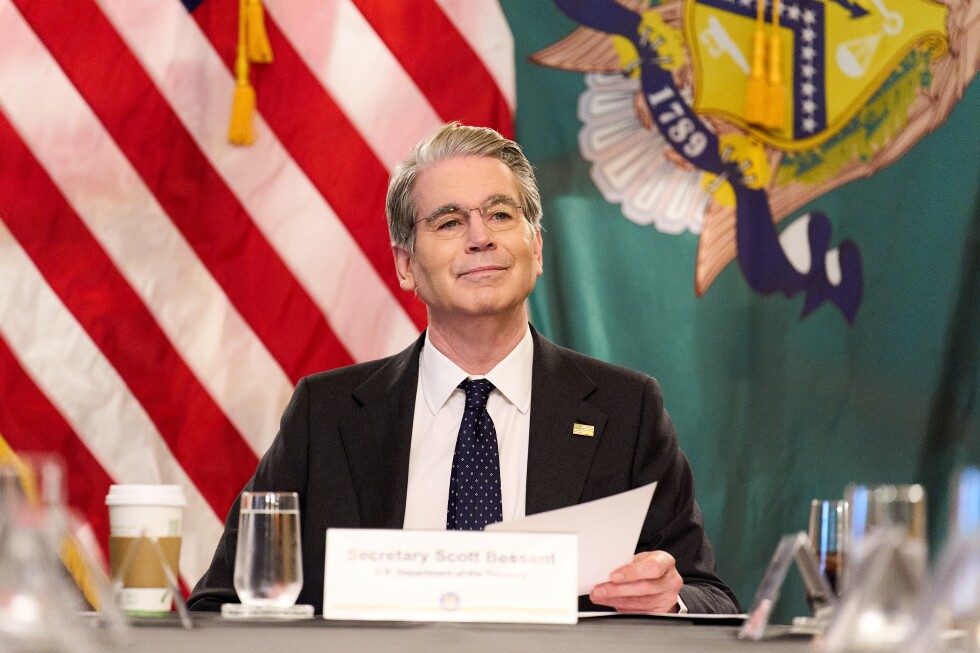
This message has become central to Bessent’s tenure at Treasury, where he has made financial literacy a cornerstone initiative. As Financial Literacy Month draws to a close, Bessent has been particularly active, hosting roundtables with community bankers, meeting with retiree groups, and speaking to students about budgeting, saving and debt management.
Unlike his predecessors who focused on navigating financial crises or implementing tax reform, Bessent hopes his legacy will include empowering Americans with the financial knowledge needed to build long-term wealth.
“Wall Street has grown wealthier than ever before, and it can continue to grow and do well,” Bessent has repeatedly emphasized in his public remarks, “but my work in the Trump administration is focused on Main Street.”
The push comes at a challenging economic moment. Many Americans are struggling with high costs for housing, groceries, and energy. Recent polling data shows President Trump’s approval rating on the economy dropped from 38% in March to 30% in April, reflecting widespread concerns about inflation and financial security.
Bessent’s background gives him a unique perspective on financial struggle. The 63-year-old often speaks about his humble beginnings in rural South Carolina, where at age nine he began working as a busboy and setting up beach chairs after his father, a real estate developer, lost generations of family wealth through excessive leveraging.
“I sit here knowing that President Trump chose me because he believes I’m the best candidate, not because of my sexual preference, not because treasury secretaries with green eyes do better,” Bessent said during his 2025 confirmation hearing, where he became the nation’s first openly gay treasury secretary.
His passion for financial education long predates his government service. Geoff Canada, president of Harlem Children’s Zone, has known Bessent for three decades and says the secretary has personally mentored one of the program’s scholars for over ten years. Canada notes that Bessent has a “deep understanding that financial literacy is essential for fostering real social and economic mobility for America’s children.”
One initiative Bessent frequently highlights is “Trump Accounts,” which provides $1,000 to babies born during the Trump administration. The money is invested in the stock market by private firms, with children gaining access when they turn 18.
“It will encourage a generation of young people to care more about investing as it shows them the power of compounding, because that money is locked up for 18 years,” Bessent explained.
During a recent Treasury roundtable with community financial institutions, Bessent heard concerns about sophisticated fraud schemes targeting customers and bankers’ efforts to engage high school students in saving.
“It could be as simple as a 14-year-old starting a savings account and watching interest compound at 4% a year,” noted Thomas Fraser, CEO of First Mutual Holding Co. in Lakewood, Ohio, who attended the meeting.
Critics question whether Bessent’s financial literacy push addresses the core economic challenges many Americans face. Emily DiVito, senior adviser for economic policy at the left-leaning Groundwork Collaborative, argues the approach misses the mark.
“You cannot preach penny-pinching while making it harder for Americans to pay their grocery, utility and healthcare bills,” DiVito said. “If Secretary Bessent is serious about advancing financial literacy, he should focus on lowering the cost of living for working families.”
Others point to the apparent contradiction between Bessent’s call for fiscal responsibility and the government’s own borrowing practices. The national debt surpassed $39 trillion in March after hitting $37 trillion in August and $38 trillion just two months later, now exceeding the size of the economy.
“The Trump administration in particular has a problematic record on cutting taxes without offsets and growing spending,” said Maya MacGuineas, president of the Committee for a Responsible Federal Budget.
MacGuineas praised Bessent’s goal to cut deficits in half and bring them down to 3% of gross domestic product, but cautioned that “it’s going to take a combination of spending reductions, revenue increases and economic growth” to accomplish that goal.
The Treasury counters that the federal deficit decreased during Trump’s first year back in office and that Republican tax cuts have put money back in Americans’ pockets.
As Bessent continues his financial literacy crusade, MacGuineas offers a wry observation: “It’s hard to disagree with the fact that we need more financial literacy in this country. The bigger picture, of course, is that we should also probably give a financial literacy class to our lawmakers.”
Fact Checker
Verify the accuracy of this article using The Disinformation Commission analysis and real-time sources.

10 Comments
Lottery tickets and crypto fads are ultimately a waste of money that could be much better invested for the future. Bessent is right to urge people to be more responsible with their finances.
Exactly. Slow and steady wins the race when it comes to personal finance.
I appreciate Bessent’s focus on encouraging people to save and invest rather than chase quick riches. Building true wealth takes time and discipline, but the payoff is so much more meaningful and secure.
It’s refreshing to see a Treasury Secretary taking financial education so seriously. Helping Americans, especially the younger generation, develop healthy money management habits is critical for the country’s long-term economic health.
While lottery tickets and crypto speculation may seem tempting, they are ultimately a distraction from the hard work of budgeting, saving, and prudent investing. Bessent is right to emphasize the value of slow and steady wealth-building.
Absolutely. Sustainable personal finance is built on discipline, not luck or speculation.
Financial literacy is such an important but often overlooked topic. Kudos to Bessent for making it a priority and trying to steer people away from risky get-rich-quick schemes.
Bessent’s message is an important one, especially for young people just starting to build their financial futures. Avoiding the temptation of easy money and instead focusing on prudent money management is the surest path to lasting wealth.
Promoting financial literacy is so important, especially for young people. Getting them to save and invest responsibly instead of chasing risky get-rich-quick schemes is crucial for long-term stability and growth.
I agree that Bessent’s emphasis on budgeting, saving, and responsible investing is the right approach. Chasing the latest investment fad is a recipe for disappointment. Solid financial habits are the key to long-term prosperity.