


Listen to the article
Obama Faces Criticism Over Supreme Court Redistricting Stance After Supporting Virginia Gerrymandering
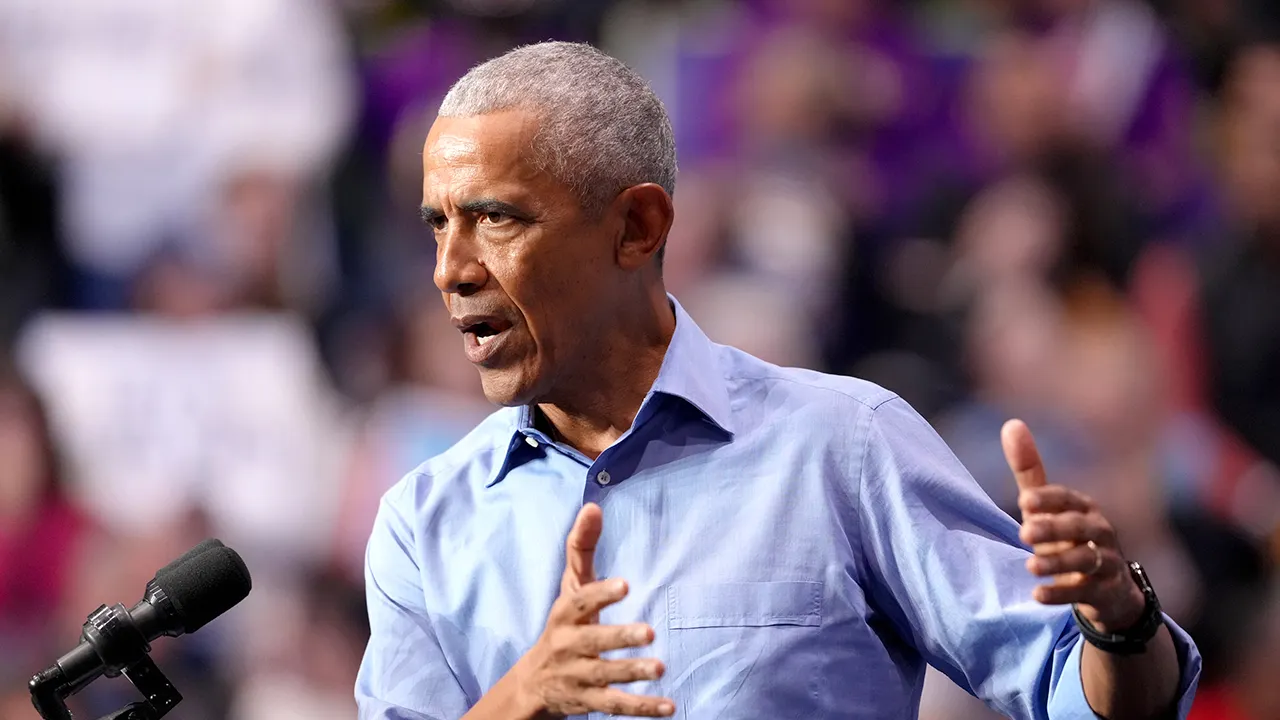
Former President Barack Obama has drawn sharp criticism for his condemnation of a recent Supreme Court ruling against race-based redistricting in Louisiana, just days after he publicly supported a Democratic-led effort in Virginia that created a heavily partisan congressional map.
The Supreme Court ruled 6-3 against Louisiana’s 2024 mid-decade redistricting plan, which had created a serpentine district represented by Rep. Cleo Fields of Baton Rouge. The majority opinion deemed the map an “illegal” racial gerrymander, while Obama argued the decision undermined a key provision of the Voting Rights Act prohibiting race-based discrimination.
“Today’s Supreme Court decision effectively guts a key pillar of the Voting Rights Act, freeing state legislatures to gerrymander legislative districts to systematically dilute and weaken the voting power of racial minorities — so long as they do it under the guise of ‘partisanship’ rather than explicit ‘racial bias’,” Obama said in a statement following the ruling.
Critics were quick to point out what they viewed as hypocrisy in Obama’s position, given his recent support for Virginia’s redistricting referendum. The Virginia plan, which narrowly passed, is expected to transform the state’s current 6-5 Democratic advantage in congressional representation to a 10-1 Democratic majority.
“Unless it’s Virginia. In that case, it’s great to have a 10-1 gerrymander,” former Bush White House press secretary Ari Fleischer remarked on social media. Former North Carolina Congressman and ex-Trump aide Mark Meadows added that Obama’s rebuke was “beneath you.”
Former DHS Assistant Secretary Tricia McLaughlin criticized Obama’s stance as contradictory, saying: “Disenfranchising millions of voters and forcing 45% of Virginians to be represented by one congressional district and 55% represented by 10 is now ‘standing up for Democracy.’ Is that ‘equity’? What a farce.”
Just days before his criticism of the Supreme Court ruling, Obama had featured prominently in Virginia’s “Vote Yes” campaign. In promotional materials, he urged Virginians to support the redistricting plan, claiming it would “level the playing field” and push back against Republicans trying to gain “an unfair advantage in the midterms.”
The Virginia redistricting plan redraws rural districts to include Washington D.C. suburbs or the Richmond-Petersburg metro area, effectively diluting Republican voting power across the state. Proponents argued the changes were necessary to restore fairness at a national level.
Critics also highlighted that Obama has remained silent about gerrymandered maps in his home state of Illinois, which features several zigzagging districts connecting disparate neighborhoods and suburbs of Chicago, as well as serpentine districts linking Democratic-leaning urban areas.
Some observers pointed out that Democrats control every congressional district in New England plus Hawaii, despite Republican populations in those states ranging from 32% to 48% — leaving conservative voters without like-minded representation in Washington.
Justice Samuel Alito, writing for the majority in the Louisiana case, stated that when “correctly understood, [Section 2 of the Voting Rights Act] does not impose liability at odds with the Constitution, and it should not have imposed liability on Louisiana for its 2022 map.”
In his statement, Obama criticized the current composition of the Supreme Court and its conservative majority, claiming the decision was another example of the Court “abandoning its vital role in ensuring equal participation in our democracy and protecting the rights of minority groups against majority overreach.”
Representative Fields expressed similar disappointment, saying the decision “dismantled” decades of settled law and would make it “far harder for minority communities to challenge redistricting maps that dilute their political voice.”
The Virginia redistricting plan remains subject to ongoing litigation, including a recent move by a circuit judge in Tazewell County to place a hold on certification of the vote, while the state Supreme Court considers challenges to the referendum’s legislative process and legitimacy.
Fact Checker
Verify the accuracy of this article using The Disinformation Commission analysis and real-time sources.

16 Comments
While I appreciate Obama’s stance on voting rights, I do think there’s a valid criticism around potential hypocrisy here given his support for the Democratic-led gerrymandering in Virginia. These are nuanced issues without easy answers.
Well said. It’s important to look at these issues objectively and avoid knee-jerk partisan stances. There are valid arguments and concerns on multiple sides of the redistricting debate.
As a mining and commodities investor, I’m more interested in the implications for the energy and materials sectors. Shifts in district lines can impact policies around things like mining permits, energy production, and commodity supply chains.
Good point. Redistricting can have ripple effects on regulations and legislation that affect the mining and energy industries. Investors will want to follow these developments closely.
From what I understand, the Supreme Court ruling was focused on racial gerrymandering, not partisan gerrymandering more broadly. I’m curious to hear legal experts weigh in on the nuances and potential impacts.
Yes, the distinction between racial and partisan gerrymandering is an important one. It will be interesting to see how this gets interpreted and applied going forward.
As someone with a background in mining and geology, I’m particularly interested in how this redistricting fight could impact policies around extractive industries, land use, and environmental regulations. It’s a complex issue with high stakes for the commodities sector.
Absolutely, the mining and energy industries have a major vested interest in these kinds of political battles over district lines and voting power. It’s an issue that merits close attention from industry experts.
I have mixed feelings about Obama’s position here. While I agree that racial gerrymandering is problematic, I’m also concerned about the potential for partisan gerrymandering to skew election results and undermine democratic representation.
It’s a complex issue without easy answers. I respect Obama’s stance on voting rights, but can also see the valid criticisms around potential hypocrisy on gerrymandering.
Interesting to see the debate around redistricting and voting rights. While partisan gerrymandering is concerning, it’s a complex issue with valid arguments on both sides. I’ll be curious to see how this plays out and impacts future elections.
Agreed, this is a highly charged political issue. It will be important for the courts and lawmakers to strike a careful balance between voting rights and fair district boundaries.
As an energy analyst, I’m keeping a close eye on how this redistricting debate could impact things like mining permits, fossil fuel regulations, and renewable energy policies. Shifts in district boundaries can definitely influence the political landscape around these issues.
Absolutely, the energy and mining sectors have a big stake in these redistricting battles. The impact on related legislation and regulations will be crucial to monitor.
From a commodities perspective, this redistricting debate could have ripple effects on things like mining permits, energy policy, and infrastructure investments. I’ll be watching closely to see how it plays out.
Agreed, the political landscape around natural resources and energy is heavily influenced by district boundaries and the balance of power. This is an important issue for industry stakeholders to follow.