


Listen to the article
Australia’s youth social media ban has sparked calls for similar U.S. legislation, with lawmakers across party lines expressing concern about the impact of platforms on children’s mental health.
This week, Australian teenagers under 16 were removed from major social media platforms following the implementation of a nationwide ban. The unprecedented move has prompted American lawmakers to question whether the United States should implement similar restrictions to protect young users.
While Congress has previously established some general online safety measures, such as limiting how social media platforms collect minors’ information, it has not yet enacted legislation that would fundamentally change who can access these platforms or how they’re designed for young users.
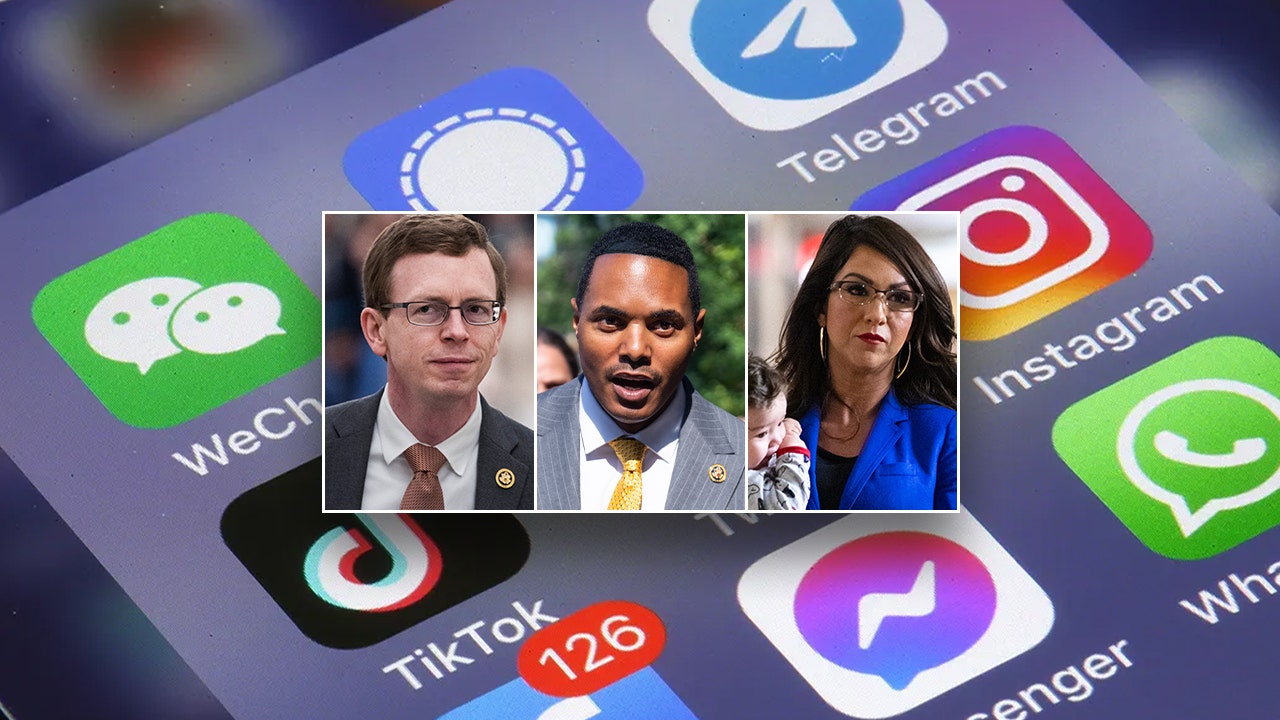
Rep. Ritchie Torres (D-N.Y.) attributes this legislative gap to opposition from technology companies. “I see social media as a catastrophe for the mental health of the next generation,” Torres said. “Society is conducting an unprecedented experiment on the psyche of young Americans.” He acknowledged that creating effective regulations is complicated, particularly given First Amendment considerations.
Rep. Dusty Johnson (R-S.D.) expressed similar sentiments, telling Fox News Digital that more congressional action would be “wise.” Johnson noted that while America values freedom, with many believing regulation should be left to states or parents, social media platforms already possess technological tools they could “very easily use to keep kids safe” but often don’t implement them.
The Australian ban has galvanized support from prominent political figures across the political spectrum. Former Obama chief of staff Rahm Emanuel joined Republican Senators Katie Britt (Ala.) and John Cornyn (Texas), as well as Democratic Senator Brian Schatz (Hawaii), in calling for stronger safety measures for American children on social platforms.
Rep. Ralph Norman (R-S.C.) suggested that part of the reason for congressional inaction is a lack of awareness about the dangers social media poses to young users. “I think it’s gotten worse,” Norman said regarding these risks. “Got to have an age and got to track down something that is destroying our children.”
However, not all lawmakers support strict age restrictions on social media access. Rep. Lauren Boebert (R-Colo.) expressed reservations about implementing “an all-out ban” similar to Australia’s approach. “I’m still a capitalist and there’s federalism and we have freedom here,” Boebert said, though she acknowledged that “good legislation for solutions” exists but hasn’t been prioritized by congressional leadership.
The debate highlights growing concerns about social media’s impact on youth mental health, which has become a rare bipartisan issue in an otherwise divided Congress. Research has increasingly linked excessive social media use among adolescents to higher rates of anxiety, depression, and other mental health challenges.
Tech companies have faced mounting pressure to address these concerns through self-regulation, with some implementing limited safety features. However, critics argue these voluntary measures are insufficient to protect vulnerable young users from harmful content, addiction-forming design features, and online predators.
The Australian model represents one of the most aggressive regulatory approaches globally. Unlike the U.S., Australia’s parliamentary system allowed for quicker passage of comprehensive legislation without the same constitutional barriers American lawmakers face.
As the debate continues, mental health advocates emphasize that any effective solution must balance protection with the reality that digital platforms are increasingly central to how young people communicate, learn, and socialize. Whether Congress will ultimately follow Australia’s lead or develop its own approach to youth social media regulation remains uncertain, but the conversation has clearly intensified.
Fact Checker
Verify the accuracy of this article using The Disinformation Commission analysis and real-time sources.

9 Comments
As a mining and commodities investor, I’m curious how this social media policy shift in Australia could impact the digital communication and marketing strategies of companies in our sector. Protecting young people is important, but carefully balancing regulation with business needs will be crucial.
While I appreciate the intent behind Australia’s social media ban for kids, I worry that it could have unintended consequences, like driving more young people to use less-regulated platforms. A more holistic approach focusing on education, privacy, and age-appropriate design may be preferable.
This is an interesting move by Australia to protect kids from the potential harms of social media. It raises important questions about how to balance privacy, free speech, and child wellbeing in the digital age. Curious to see if the US follows suit with similar legislation.
This is a bold move by Australia, but I’m skeptical it will be easily replicated in the US given the power of the tech giants and free speech concerns. A nuanced, evidence-based approach focusing on age limits, design safeguards, and parental empowerment may be more realistic.
Agreed. The US political landscape makes comprehensive social media reform a heavy lift. Incremental progress focused on the most harmful elements and leveraging existing child protection laws could be a pragmatic path forward.
This is a complex issue with valid arguments on both sides. I’m hopeful that policymakers in the US can learn from the Australian experience and craft sensible legislation to safeguard children online, while also preserving reasonable digital access and protections for free expression.
As a parent, I welcome efforts to protect kids from social media harms. However, the US Congress seems paralyzed on this issue due to tech industry lobbying. Perhaps public pressure and bipartisan cooperation can break the gridlock and produce meaningful legislation.
I’m torn on this issue. While I agree social media can be detrimental to young people’s mental health, outright bans may not be the right approach. Perhaps a more nuanced regulatory framework could empower parents while preserving some online access for teens.
That’s a fair point. A balanced approach focused on education, age restrictions, and parental controls could be more effective than a blanket ban. Careful policy design will be key to address this complex challenge.