


Listen to the article
A legal battle over the future site of former President Donald Trump’s presidential library will continue for at least two more years, as a Miami judge has set an August 2026 trial date for a lawsuit challenging the transfer of valuable downtown real estate.
Circuit Judge Mavel Ruiz established the trial timeline on Monday, rejecting requests from Miami Dade College attorneys to pause proceedings while an appellate court reviews the case. The decision further delays the college’s plans to transfer a prime 3-acre parcel to the state of Florida, which intends to donate the land for Trump’s presidential library.
The lawsuit was filed by Marvin Dunn, a prominent Miami activist and retired professor known for documenting local Black history. Dunn contends that the college’s board of trustees violated Florida’s Government in the Sunshine law during a special meeting on September 23, when it voted to relinquish the property. He argues the board failed to provide adequate public notice before making the decision.
Judge Ruiz had previously sided with Dunn last month, granting a temporary injunction that blocks the property transfer while the case proceeds. While setting the August 3, 2026 trial date, Ruiz acknowledged the schedule could shift depending on rulings from the appeals court.
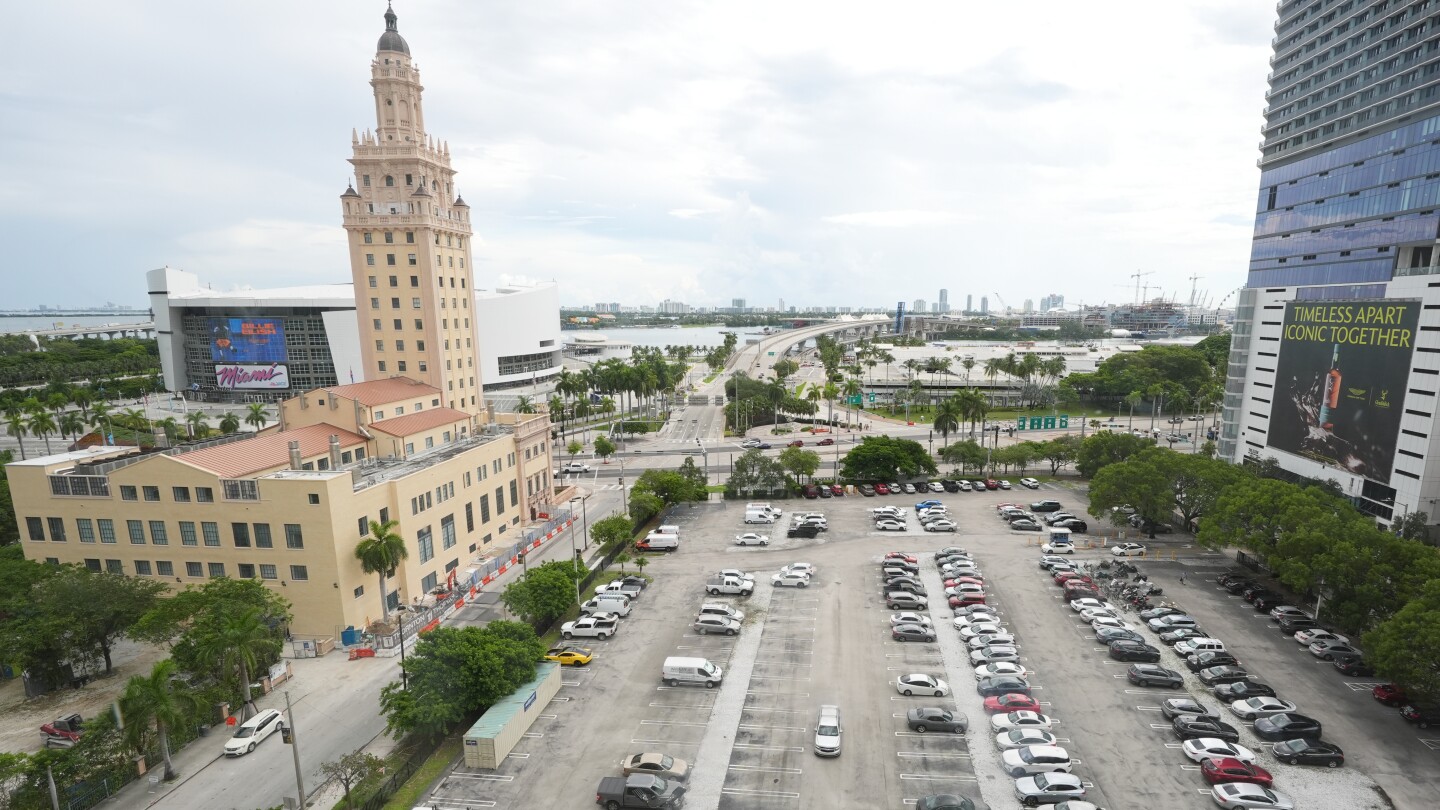
The disputed property represents one of Miami’s most coveted undeveloped parcels, situated along a prestigious stretch of Biscayne Boulevard known for its iconic row of palm trees. According to the Miami-Dade County property appraiser’s 2025 assessment, the land is valued at more than $67 million, though real estate experts suggest its true market value could reach hundreds of millions given its prime location and development potential.
The case highlights the often contentious process surrounding presidential libraries, which serve as repositories for presidential papers, records, and historical materials while also functioning as museums and educational centers. These institutions typically require significant funding and prime real estate, often sparking debates over land use and public resources.
For Trump, establishing a presidential library would follow a tradition dating back to Franklin D. Roosevelt, who established the first such institution in 1941. Modern presidential libraries are typically funded through private foundations but are operated by the National Archives and Records Administration once completed.
The Miami lawsuit also underscores Florida’s Government in the Sunshine law, one of the nation’s most comprehensive open-government laws. The statute requires that meetings of public boards be open to the public with reasonable notice provided. Violations can result in nullification of actions taken during improperly noticed meetings.
Miami Dade College, one of the largest public colleges in the United States with multiple campuses throughout Miami-Dade County, has not commented publicly on the litigation beyond its court filings requesting a stay of proceedings.
The extended timeline for trial means that decisions about the property’s future will remain unresolved well into Trump’s post-presidency years, potentially affecting fundraising and planning efforts for his presidential library foundation.
The reporting on this ongoing legal dispute comes from Kate Payne, a journalist with The Associated Press/Report for America Statehouse News Initiative, a nonprofit program that places reporters in local newsrooms to cover underreported issues.
Fact Checker
Verify the accuracy of this article using The Disinformation Commission analysis and real-time sources.

16 Comments
The lawsuit challenging the land transfer for Trump’s presidential library raises some valid concerns about due process and transparency. It’s important for these decisions to have proper public oversight, even for high-profile projects.
I agree. The long timeline for this trial suggests it will be a closely watched case with significant implications for the future of the library project and the community.
While presidential libraries are important historical sites, the land transfer process here seems to have lacked sufficient public oversight. I hope the courts can find a fair resolution that balances the needs of the project with community concerns.
Agreed. Transparency and community engagement should be priorities, even for high-profile initiatives like this. It will be interesting to see how the judge weighs the different arguments.
This case highlights the complexity of urban land use decisions, especially when they involve prominent political figures. I’m curious to see how the courts navigate the competing interests and legal arguments.
Absolutely. These types of issues often have nuanced considerations beyond just the legal technicalities. The judge will have to carefully weigh all the factors at play.
This case touches on some interesting intersections between politics, land use, and community engagement. I’ll be following the developments with an open mind as the trial date approaches.
Agreed. It’s a complex issue that likely has nuances beyond just the legal arguments. I’m curious to see how the different perspectives are represented.
This legal battle over the site for Trump’s presidential library seems complex. I’m curious to see how the court case unfolds and whether the land transfer is ultimately approved or blocked.
The timing of the trial, set for 2026, suggests this will be a drawn-out process. It’ll be interesting to follow the arguments on both sides.
The timing of this trial, set for 2026, suggests the legal battle over the Trump presidential library site could drag on for quite some time. These types of high-profile projects often face intense scrutiny.
You’re right. With so much at stake, both sides will likely fight vigorously to protect their interests. The court’s decision could have far-reaching implications.
While presidential libraries are important historical sites, the land transfer here seems to have stirred up some controversy. I hope the courts can balance the public interest with the needs of the library project.
Absolutely. Careful consideration of all stakeholders and the long-term implications will be crucial in resolving this case.
The lawsuit filed by the Miami activist raises some valid concerns about transparency and due process in the land transfer decision. It’s important for these types of decisions to have proper public oversight.
I agree. Even for high-profile projects like presidential libraries, the decision-making process should be open and accountable to the community.