


Listen to the article
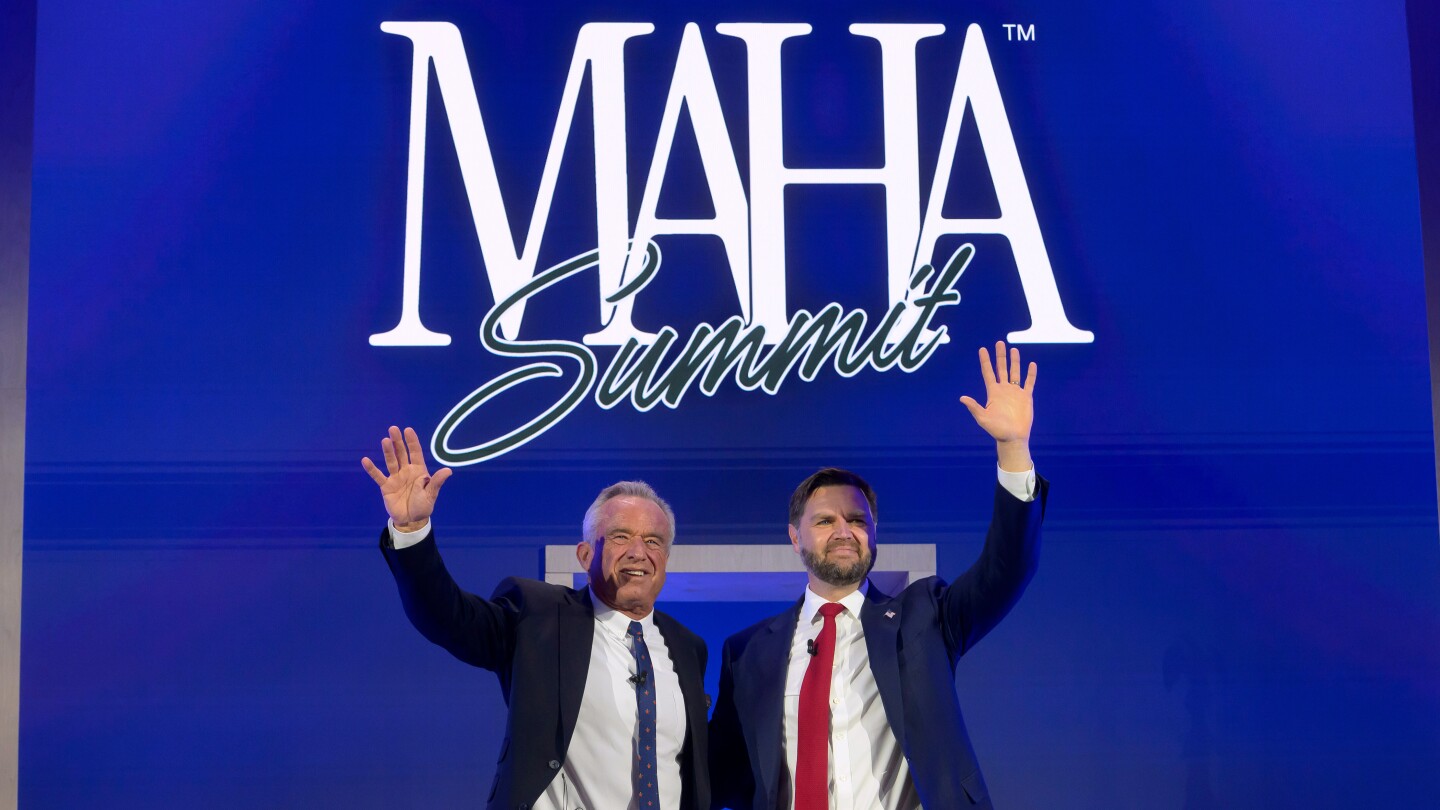
Vice President JD Vance publicly endorsed Health Secretary Robert F. Kennedy Jr.’s unconventional approach to health policy on Wednesday, praising Kennedy’s willingness to challenge established scientific consensus during a “Make America Healthy Again” summit in Washington, D.C.
“Of all the specific initiatives that you guys have worked on effectively, the most important thing is that your team is willing to ask questions that people in government haven’t been asking in a long time,” Vance told Kennedy during their fireside chat, which was livestreamed while the remainder of the summit was closed to press.
Vance’s remarks highlighted how Kennedy, despite being a polarizing figure in public health circles, has become an influential voice within the Trump administration. The Vice President specifically lauded Kennedy’s MAHA movement as “a critical part of our success in Washington,” signaling the administration’s embrace of Kennedy’s approach despite his controversial stances on vaccines and other public health issues.
During the conversation, Vance defended Kennedy’s tendency to question scientific orthodoxy, suggesting that throughout history, there have been instances where “all the experts were wrong.” This perspective aligns with President Donald Trump’s own reputation for challenging established institutions, with Vance noting that Trump “takes a bulldozer to Overton windows every single day.”
Since his appointment, Kennedy has implemented sweeping changes at the Department of Health and Human Services, including laying off thousands of workers, dismissing scientific advisors, and revising vaccine guidelines. Despite occasional disagreements between Trump and Kennedy on issues including COVID-19 vaccines and abortion, the administration has largely allowed Kennedy to pursue his agenda with minimal interference.
The Trump administration has particularly highlighted Kennedy’s efforts to phase out artificial dyes in food products, combat ultra-processed foods, and update national dietary guidelines. Kennedy has stated that his primary focus is identifying root causes of chronic diseases and reducing Americans’ exposure to environmental toxins.
Critics, however, have expressed serious concerns about Kennedy’s approach. Major medical associations argue that his skepticism toward established medical science undermines public trust in healthcare institutions. Erik Polyak, executive director of 314 Action, a progressive political action committee that supports electing Democratic scientists to office, described the summit as “nothing more than an ego-stroking symposium of ‘wellbeing influencers’ and ‘MAHA moms’ whose rejection of scientific expertise puts our public health at risk.”
Kennedy and his supporters reject the characterization that their approach is anti-science, though many of Kennedy’s closest allies and recent hires have openly challenged medical consensus on vaccines and chronic disease treatment. Vance acknowledged this unconventional approach, stating, “We’ve got to be comfortable challenging some of these old orthodoxies, and part of that is welcoming people that are a little unusual.”
The MAHA summit in Washington followed closely after the annual conference of Children’s Health Defense in Austin, Texas—the anti-vaccine organization Kennedy previously led. While his wife, Cheryl Hines, was a featured speaker at the Texas event, which included sessions like “The Enduring Nightmare of COVID mRNA Technology,” the Washington summit covered broader topics including artificial intelligence in healthcare, anti-aging technologies, and food policy.
MAHA Action, the group hosting the Washington summit, characterized Trump’s support for Kennedy’s health initiatives as “a decisive turning point in U.S. health policy.” Tony Lyons, president of MAHA Action, described the event as “the culmination of a movement that was 40 years in the making.”
The alliance between Kennedy and the Trump administration represents a significant shift in federal health policy, with Kennedy’s previously fringe views now commanding substantial influence from his position as Health Secretary.
Fact Checker
Verify the accuracy of this article using The Disinformation Commission analysis and real-time sources.

16 Comments
This is a concerning development. Questioning scientific consensus is one thing, but appearing to endorse fringe views on public health issues is highly problematic. I hope the administration will take a more measured, evidence-based approach moving forward.
Absolutely. Healthy debate is important, but it needs to be grounded in rigorous research and a genuine commitment to public health, not just political agendas.
This summit and the VP’s comments raise some red flags for me. Questioning scientific consensus is one thing, but appearing to endorse fringe views on public health is concerning. I hope the administration takes a more measured approach moving forward.
Healthy skepticism is good, but we need to be very careful not to veer into anti-science territory, especially on issues that impact public health and safety.
While I appreciate the desire to challenge the status quo, I worry that this administration’s embrace of Kennedy’s unconventional views could have serious consequences. Science should be the guiding principle, not political expediency.
Agreed. Balancing innovation and evidence-based policymaking is a delicate act, and I hope the administration can find that balance without compromising public health.
I’m troubled by the VP’s comments praising Kennedy’s unconventional approach. While innovation is important, public health should be guided by sound science, not political interests. I hope the administration will reconsider this direction.
Agreed. Questioning orthodoxy is fine, but it needs to be done responsibly and with strong justification. Undermining public trust in science could have disastrous consequences.
The VP’s endorsement of Kennedy’s approach is concerning. While I appreciate the desire to challenge the status quo, public health policy should be rooted in evidence, not just political agendas. I hope the administration will take a more balanced, science-based approach.
Well said. Healthy debate is important, but it must be grounded in rigorous research and a genuine commitment to protecting public health, not just scoring political points.
Interesting to see the VP praising Kennedy’s unconventional approach to health policy. I’m curious to learn more about the specific initiatives they’ve worked on and how they aim to challenge the status quo in Washington.
It’s good to see the administration embracing new perspectives, even if they are controversial. Healthy debate is important for progress.
While I appreciate the desire to explore new ideas, I’m worried about the potential risks of undermining public trust in science and health authorities. Careful consideration of the evidence should guide policy, not just political expediency.
Agreed. Promoting alternative views is fine, but it’s crucial that they’re grounded in rigorous research and not just contrarian for the sake of it.
The VP’s remarks highlight the administration’s willingness to challenge established scientific consensus, which could be concerning for public health. I hope they maintain a balanced, evidence-based approach despite the political pressures.
Questioning orthodoxy can be valuable, but it needs to be done responsibly and with strong scientific justification. I’ll be watching closely to see how this plays out.