


Listen to the article
The United States is not planning immediate military action against Cuba despite President Donald Trump’s repeated threats suggesting intervention, according to U.S. officials familiar with ongoing diplomatic discussions. These officials, speaking on condition of anonymity, revealed that preliminary talks with Cuban authorities have been underway, though they remain pessimistic about Havana’s willingness to accept American conditions.
The Trump administration has offered Cuba a substantial aid package that includes tens of millions of dollars in humanitarian assistance, two years of free Starlink internet access for all Cubans, agricultural support, and infrastructure development. However, this offer comes with stringent conditions that the Cuban government has historically rejected, including the release of political prisoners, ending political and religious repression, and opening the country to American private investment.
Cuban officials have not yet formally rejected the offer, though the prospects for acceptance appear slim. Last week, Trump signed an executive order expanding the administration’s authority to impose sanctions on Cuba, which was followed by new Treasury and State Department penalties against Havana.
Cuban Foreign Minister Bruno Rodríguez characterized these measures as “collective punishment” with “genocidal intent against Cuba.” On social media, he accused the United States of attempting to “impose its will on the world while threatening foreign citizens and businesses with illegitimate coercion.”
Trump has made several public comments suggesting potential military action. In a recent speech, he claimed one of the U.S. aircraft carriers returning from the Middle East could “come in, stop about 100 yards offshore, and they’ll say: ‘Thank you very much. We give up.'” Despite this rhetoric, U.S. officials maintain that the immediate goal is “not regime change, but changing the regime’s failed policies.”
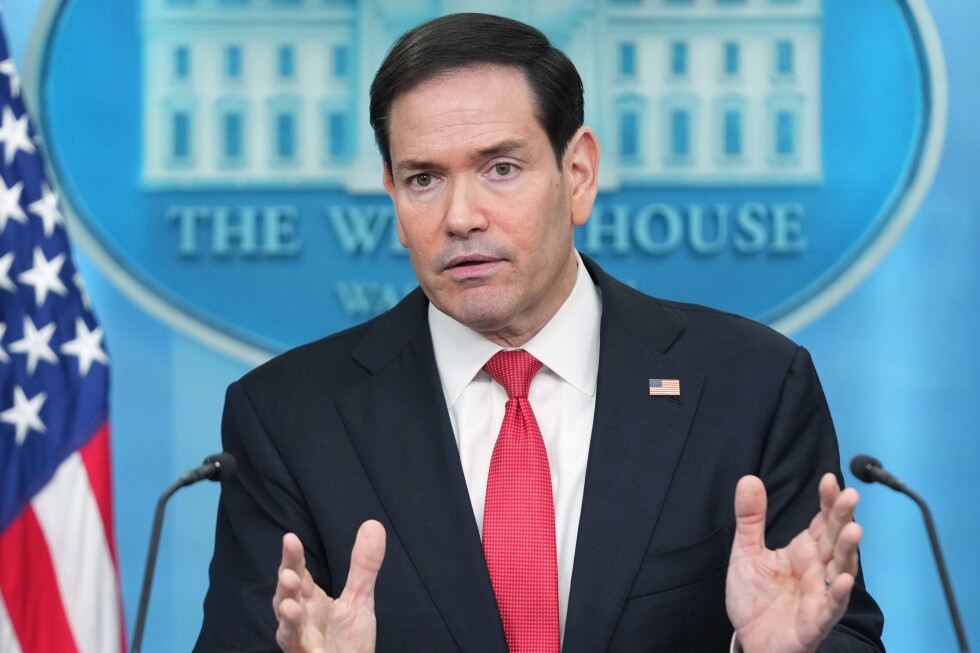
Secretary of State Marco Rubio, a Cuban-American who has consistently taken a hard stance against Cuba’s leadership, recently described the country’s leaders as “incompetent communists.” Rubio visited Rome and Vatican City this week, meeting with Pope Leo XIV in part to discuss the situation in Cuba, where the Catholic Church maintains significant influence.
While dialogue continues, the gap between U.S. demands and Cuban positions remains substantial. Cuban Ambassador to the United Nations Ernesto Soberón Guzmán has firmly stated that “negotiations on issues like regime change or removing the president are out of the question” and that “no internal affairs of Cuba are on the table.” He added that Havana will not respond to American “ultimatums” regarding political prisoners.
U.S. officials disclosed that diplomatic contacts have increased recently, including a previously undisclosed meeting between Rubio and Raúl Guillermo Rodríguez Castro, grandson of former Cuban leader Raúl Castro, in St. Kitts and Nevis. More recently, a high-level State Department delegation led by Jeremy Lewin, who oversees U.S. foreign assistance, and Michael Kozak, the top U.S. diplomat for Latin America, traveled to Havana on April 10. This marked the first U.S. government flight to Cuba outside of the Guantanamo Bay Naval Base since 2016.
According to officials familiar with the discussions, the Havana meeting was “professional and cordial” but produced no concrete results. The U.S. delegation left skeptical about Cuban willingness to consider even modest reforms to address deteriorating humanitarian conditions on the island.
Cuba’s economic crisis has deepened following a U.S. energy blockade implemented after the Trump administration removed Nicolás Maduro as Venezuela’s leader in January. Venezuela had been Cuba’s primary energy supplier, and the blockade has exacerbated the island’s already difficult economic situation.
Cuban officials have condemned U.S. officials for denying the impact of sanctions. In response to Rubio’s Vatican visit, Guzmán issued a statement calling it “a blatant insult to human intelligence” to request the Pope’s assistance in delivering humanitarian aid “while at the same time claiming that the blockade does not exist.”
U.S. officials emphasize that while military options remain on the table and Trump could change course at any time, diplomatic channels remain open, partly due to concerns about growing Chinese and Russian influence in Cuba, including intelligence and logistics cooperation that could pose security challenges given the island’s proximity to U.S. shores.
Fact Checker
Verify the accuracy of this article using The Disinformation Commission analysis and real-time sources.

8 Comments
The long-standing US-Cuba conflict has certainly impacted the mining and energy sectors in the region. Thawing relations and opening up Cuba could unlock new opportunities, but the path forward remains uncertain. Cautiously optimistic this latest diplomatic effort may yield progress.
Agreed, the potential upside for mining and energy companies in Cuba is significant if relations can be normalized. But the political realities make the path forward very unclear.
As an investor in mining and commodities, I’ll be watching this situation closely. Stability in Cuba could open up new opportunities, but political tensions always bring uncertainty. Curious to see if this aid package materializes and what impact it might have.
This news is interesting but not surprising. The US has a long history of political and economic pressure on Cuba. Providing aid with stringent conditions seems like a typical negotiating tactic, though it’s unclear if it will lead to meaningful change in Cuba.
As an expert in the mining and commodities space, I’ll be keeping a close eye on how this Cuba situation evolves. Stability and access to new markets are always welcome, but the US-Cuba dynamic is so fraught it’s hard to predict the outcome.
The geopolitics around Cuba are complex and delicate. Pursuing diplomacy and gradual reform may be a more prudent approach than threats of military action, which could further destabilize the region. Curious to see if this latest aid offer gains any traction.
I agree, diplomacy and incremental change are likely the best path forward. Outright military intervention would be extremely risky and unlikely to achieve the US’s desired outcomes.
Interesting to see the US take a more carrot-and-stick approach with Cuba, rather than just sticks. The offer of aid and internet access could be impactful, if the Cuban government is willing to accept the conditions. Skeptical they will, but it’s worth a try.