


Listen to the article
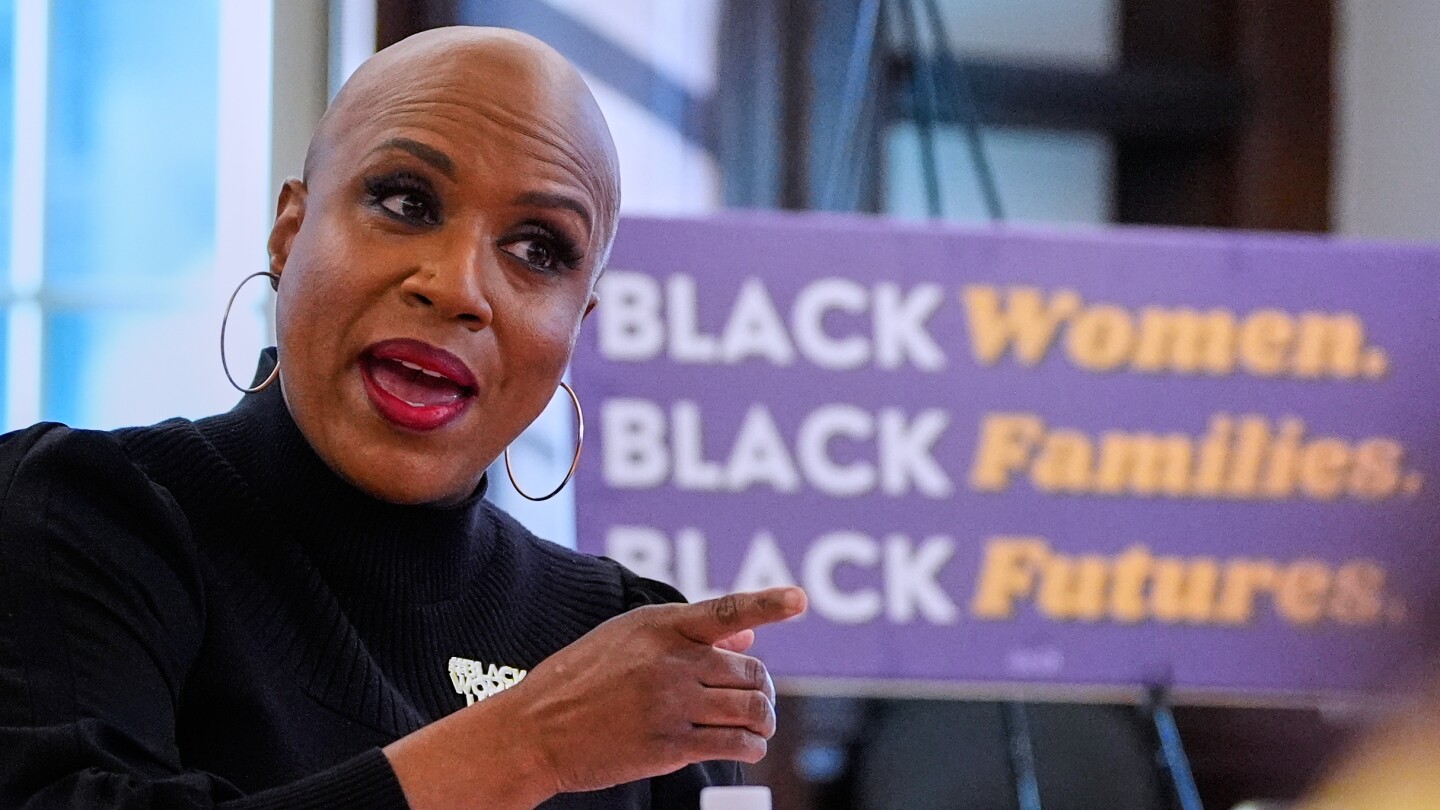
In a packed room at a downtown Boston library, Rep. Ayanna Pressley raised a troubling economic question that has implications far beyond her constituency: Why are Black women, who historically show some of the highest labor force participation rates in America, now experiencing a disproportionate rise in unemployment?
The gathering on Monday brought together policymakers, academics, business owners, and community organizers to examine this concerning trend and its potential to signal broader economic challenges ahead.
Recent labor statistics paint a stark picture. Between August and September this year, the unemployment rate for Black women jumped from 6.7% to 7.5% – more than double the increase seen among white women, whose unemployment rate edged up from 3.2% to 3.4% during the same period. This acceleration continues a year-long pattern occurring against a backdrop of general economic uncertainty.
“Everyone is missing out when we’re pushed out of the workforce,” said Pressley, highlighting both the personal and societal costs. “That is something that I worry about now, that you have all these women with specific expertise and specializations that we’re being deprived of.”
The congresswoman also emphasized the problem of underemployment, noting that when Black women do secure work, they often face positions beneath their qualifications and capabilities.
Bureau of Labor Statistics data from 2024 confirms that Black women maintain the highest labor force participation rate among female demographic groups. Yet paradoxically, they continue to experience higher unemployment rates than their counterparts from other demographics.
This pattern isn’t entirely new. Historically, unemployment rates for Black women have typically run above the national average, with the gap widening during economic slowdowns. According to the Bureau’s 2024 survey, Black Americans are overrepresented in specific economic sectors including retail, health and social services, and government administration – industries sometimes vulnerable to economic fluctuations and budget cuts.
“Black women are at the center of the Venn diagram that is our society,” explained Anna Gifty Opoku-Agyeman, a PhD candidate in public policy and economics at the Harvard Kennedy School. She identified April as a critical turning point when Black women’s unemployment began diverging more dramatically from other groups, warning that policy approaches ignoring these causes could ultimately harm the broader economy.
Participants at the roundtable attributed the recent divergence to several factors, with many pointing to specific Trump administration policies. Among the cited causes were the downsizing of the Minority Business Development Agency and the cancellation of federal contracts with non-profits and small businesses – actions they believe have disproportionately affected Black women entrepreneurs and workers.
The administration’s opposition to diversity, equity, and inclusion (DEI) initiatives was repeatedly highlighted as creating a more challenging environment for Black women seeking employment, customers, or government contracting opportunities. Additional contributing factors mentioned included tariff policies and federal workforce reductions, though participants noted the absence of concrete data on how many Black federal workers were affected by the administration’s government cuts.
The discussion yielded various potential solutions to address rising unemployment among Black women. Proposals included redirecting state budgets to support business development initiatives for Black women, expanding access to microloans in underserved communities, increasing transparency requirements for corporate hiring practices, and strengthening enforcement of anti-discrimination policies at both state and federal levels.
Boston City Council President Ruthzee Louijeune concluded the meeting with a passionate defense of DEI policies, characterizing them as essential components of a healthy workforce and political system. “Any space that does not look like our country and like our cities is not normal,” the Democrat said, “and not the city or country we are trying to build.”
The roundtable’s focus on Black women’s unemployment highlights how this demographic often experiences economic shifts earlier and more intensely than other groups – potentially serving as an important economic indicator that policymakers would be wise to monitor closely.
Fact Checker
Verify the accuracy of this article using The Disinformation Commission analysis and real-time sources.

12 Comments
This is a concerning trend that highlights the ongoing employment challenges faced by Black women. It’s critical that policymakers and community leaders work together to address the root causes and create more equitable opportunities.
Agreed. Targeted solutions and investments are needed to support Black women’s participation in the workforce and ensure they can fully contribute their skills and expertise.
It’s concerning to see the unemployment rate for Black women jump so sharply compared to other demographics. This speaks to systemic barriers and inequities that need to be addressed head-on.
Agreed. Policymakers must take an intersectional approach and examine how factors like race, gender, and socioeconomic status intersect to create these disparities.
This roundtable discussion is an important step, but the real challenge will be in translating the insights and recommendations into tangible, impactful policies and programs. I hope the participants are able to identify concrete solutions.
Definitely. The proof will be in the pudding, as they say. I’m curious to see what specific action items and accountability measures come out of this gathering.
The employment challenges faced by Black women are a microcosm of broader economic inequities. I’m glad to see policymakers taking this issue seriously and convening a diverse group to search for solutions.
Absolutely. Addressing this problem requires a holistic, intersectional approach that looks at the interconnected factors driving these disparities.
The disproportionate rise in unemployment for Black women is deeply troubling and indicative of broader economic disparities. I’m glad to see policymakers convening to search for solutions to this complex issue.
Absolutely. This roundtable discussion seems like a positive step, but the real test will be in the concrete actions and policies that emerge from it.
This is a complex issue with no easy answers, but I’m encouraged to see policymakers, academics, and community leaders coming together to tackle it head-on. Innovative, evidence-based solutions will be key.
Agreed. I hope this roundtable discussion leads to a comprehensive policy agenda that creates more equitable pathways to employment and economic security for Black women.