


Listen to the article
Appeals Court Suspends Restrictions on Federal Agents’ Crowd Control Tactics at Portland Protests
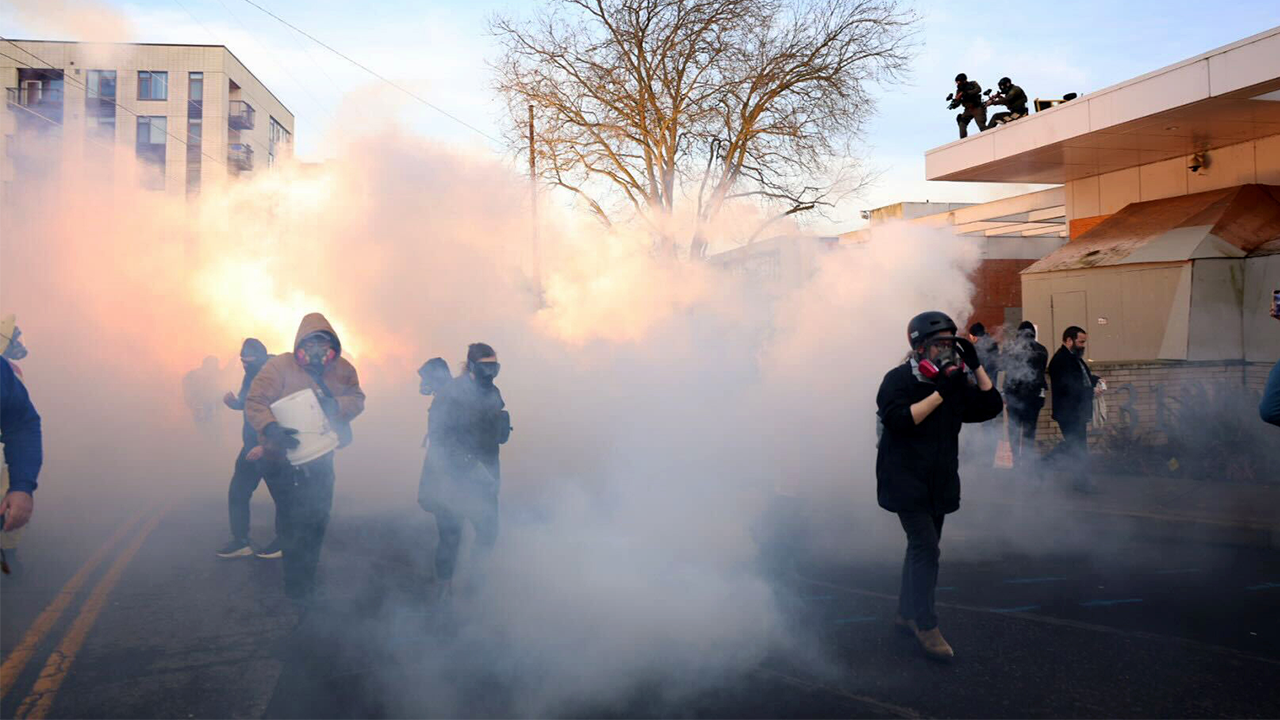
The U.S. Court of Appeals for the Ninth Circuit has temporarily paused lower court rulings that limited federal agents’ use of tear gas and other crowd-control measures during anti-immigration protests in Portland, Oregon. In a 2-1 decision, the appeals court granted the Trump administration’s request for administrative stays in two separate cases.
The ruling temporarily suspends preliminary injunctions issued by federal judges in Portland that had placed significant limitations on how Department of Homeland Security officers could respond to demonstrations outside the U.S. Immigration and Customs Enforcement (ICE) building.
Since June, Portland has been a focal point for nationwide protests challenging the Trump administration’s deportation policies. The demonstrations have frequently resulted in confrontations between protesters and federal agents, raising questions about appropriate use of force against largely peaceful demonstrators.
Two lawsuits prompted the original court restrictions. One was filed by the American Civil Liberties Union of Oregon on behalf of protesters and freelance journalists, while residents of an affordable housing complex across from the ICE building brought the second. Plaintiffs include a demonstrator known for wearing a chicken costume, an elderly married couple in their 80s, and journalists who reported being targeted with chemical spray and projectiles.
U.S. District Judge Michael Simon, in his March 9 ruling, cited “numerous videos” showing federal officers “spraying OC Spray directly into the faces of peaceful and nonviolent protesters” and “discharging tear gas and firing pepper-ball munitions into crowds.” He wrote that such actions were “objectively chilling” to First Amendment rights.
The preliminary injunctions had prohibited federal agents from using tear gas, pepper spray, and similar munitions unless someone posed an imminent threat of physical harm. The orders also banned firing projectiles at the head, neck or torso except in situations warranting deadly force.
Additionally, the judges had ordered that agents only target individuals engaging in violent conduct or actively resisting arrest—specifically noting that trespassing, refusing to move, or ignoring dispersal orders constituted passive resistance, not active resistance that would justify such force.
The Department of Homeland Security has defended its officers’ actions, maintaining they “followed their training and used the minimum amount of force necessary to protect themselves, the public, and federal property.”
The dispute has intensified tensions between local and federal authorities. Earlier this year, Portland Mayor Keith Wilson called on ICE to leave the city after agents deployed tear gas against what he described as peaceful demonstrators. Wilson accused federal officials of “trampling the Constitution” and urged ICE employees to resign.
“Federal forces deployed heavy waves of chemical munitions, impacting a peaceful daytime protest where the vast majority of those present violated no laws, made no threat, and posed no danger to federal forces,” Wilson said in a statement at the time.
The Ninth Circuit panel has scheduled consolidated oral arguments for both cases on April 7, indicating the importance of resolving questions about the appropriate boundaries for federal response to protests. The decision will likely have significant implications for how federal agents can respond to demonstrations nationwide, especially those focused on immigration enforcement.
The Portland protests represent a broader national debate about immigration policies, federal authority, and the constitutional rights of demonstrators—issues that continue to polarize political discourse across the country.
Fact Checker
Verify the accuracy of this article using The Disinformation Commission analysis and real-time sources.

16 Comments
The temporary block on restrictions for federal agents’ use of tear gas at the Portland protests underscores the difficulty of policing politically-charged demonstrations. While the government has a duty to maintain order, the rights of peaceful protesters must also be respected. It will be interesting to see how the appeals court rules on this complex issue.
Well said. These situations require nuanced decision-making to uphold the law without unduly infringing on civil liberties. It’s a tough balance, and I’m curious to see if the appeals court can find an appropriate middle ground.
The appeals court’s decision to temporarily suspend restrictions on federal agents’ crowd control tactics at the Portland protests is sure to be contentious. Policing public demonstrations around sensitive political issues like immigration is challenging, and the courts will need to carefully weigh the needs of law enforcement against the rights of protesters.
Agreed, this is a delicate balancing act. The courts face tough choices in trying to maintain public safety while also protecting civil liberties. I’ll be following this case closely to see how they navigate these complex tradeoffs.
The temporary block on restrictions for federal agents’ use of tear gas at the Portland protests highlights the challenges of policing sensitive political demonstrations. While maintaining public order is crucial, the rights of peaceful protesters must also be protected. I’ll be following this case closely to see how the courts balance these competing priorities.
Well said. These situations require nuanced decision-making to uphold the rule of law without unduly infringing on civil liberties. It will be interesting to see if the appeals court can find an appropriate middle ground.
This is a complex and contentious issue. While the protesters’ concerns about immigration policies are understandable, the use of force by federal agents must be carefully weighed against the need to maintain public order. I’m curious to see how the appeals court will ultimately rule on this matter.
Agreed, it’s a delicate balance. Hopefully the courts can find a reasonable compromise that respects both the right to peaceful protest and the government’s duty to protect public safety.
The appeals court’s decision to temporarily suspend the restrictions on federal agents’ crowd control tactics is sure to be controversial. Protests over immigration policies are emotive and fraught, and finding the right balance between public safety and civil liberties is tricky. I’m interested to see how this plays out.
Absolutely. These are delicate and high-stakes situations. The courts will need to weigh the legitimate concerns of all stakeholders very carefully. Hopefully they can reach a fair and effective resolution.
The temporary block on restrictions for federal agents’ use of tear gas raises questions about proportionate response to protests. While public safety is crucial, the impact on largely peaceful demonstrators is also a concern. I’ll be following this case closely to see how the courts navigate these competing priorities.
Well said. It’s a complex issue without easy answers. Reasonable people can disagree on where to draw the line between law enforcement needs and civil liberties. Careful consideration of all perspectives will be important.
The temporary block on restrictions for federal agents’ use of tear gas at the Portland protests is sure to be controversial. Policing political demonstrations is inherently complex, with legitimate concerns on both sides. The courts will need to weigh public safety against the rights of peaceful protesters in their final decision. I’m curious to see how this plays out.
Well said. These situations require nuanced decision-making that respects the needs of law enforcement as well as the civil liberties of citizens. It’s a delicate balance, and I’m interested to see if the appeals court can find an appropriate compromise.
The appeals court’s temporary suspension of restrictions on federal agents’ crowd control tactics at the Portland protests raises important questions about the appropriate use of force against demonstrators. While public safety is crucial, the rights of peaceful protesters must also be protected. I’ll be following this case closely to see how the courts navigate this delicate issue.
Absolutely. These are high-stakes situations that require careful consideration of all perspectives. The courts face a difficult challenge in striking the right balance between law enforcement needs and civil liberties. It will be interesting to see their ultimate ruling.