


Listen to the article
US Cattle Herd Hits 70-Year Low, Pushing Beef Prices to Near-Record Levels
America’s ranchers are facing their smallest cattle herd in seven decades, a crisis that industry experts say will take years to resolve and continue to keep beef prices elevated for consumers across the nation.
Years of punishing drought throughout the Western and Plains states have devastated grasslands critical for feeding cattle, forcing many ranchers to significantly reduce their herds. Combined with rising operational costs and an aging workforce in the ranching industry, these factors have created a perfect storm that has thinned cattle populations nationwide.
“The biggest thing has been drought,” explained Eric Belasco, head of the agricultural economics department at Montana State University. “It’s not going to be a quick fix, you’re not going to solve it overnight.”
The drought’s impact has been particularly severe because many ranchers have had to sell breeding stock—the cows needed to produce the next generation of calves—making rebuilding efforts even more challenging. According to a 2022 Farm Bureau survey, approximately two-thirds of ranchers have sold animals, resulting in herds that are roughly one-third smaller than before the crisis began.
Recent USDA data highlights the consumer impact of this supply constraint. The average retail price of beef rose from $8.51 per pound in August 2023 to $9.85 per pound a year later—a steep increase of approximately 16 percent. Despite these significant price increases, American consumers continue to demonstrate strong demand for beef products.
Derrell Peel, a professor of agricultural economics at Oklahoma State University who specializes in livestock marketing, emphasized the time-intensive nature of rebuilding cattle herds: “The fact of the matter is there’s really nothing anybody can do to change this very quickly. We’re in a tight supply situation that took several years to develop, and it’ll take several years to get out of it.”
The cattle industry faces unique challenges compared to other agricultural sectors because of its extended production timeline. It takes approximately two years to bring cattle to market readiness, and rebuilding diminished herds requires several breeding cycles.
Research from the Kansas City Federal Reserve has quantified the economic ripple effects of drought conditions on cattle production. Each step up in drought severity results in approximately a 12 percent drop in hay production, a 5 percent rise in hay prices, a 1 percent reduction in herd size, and a 4 percent decrease in farm income.
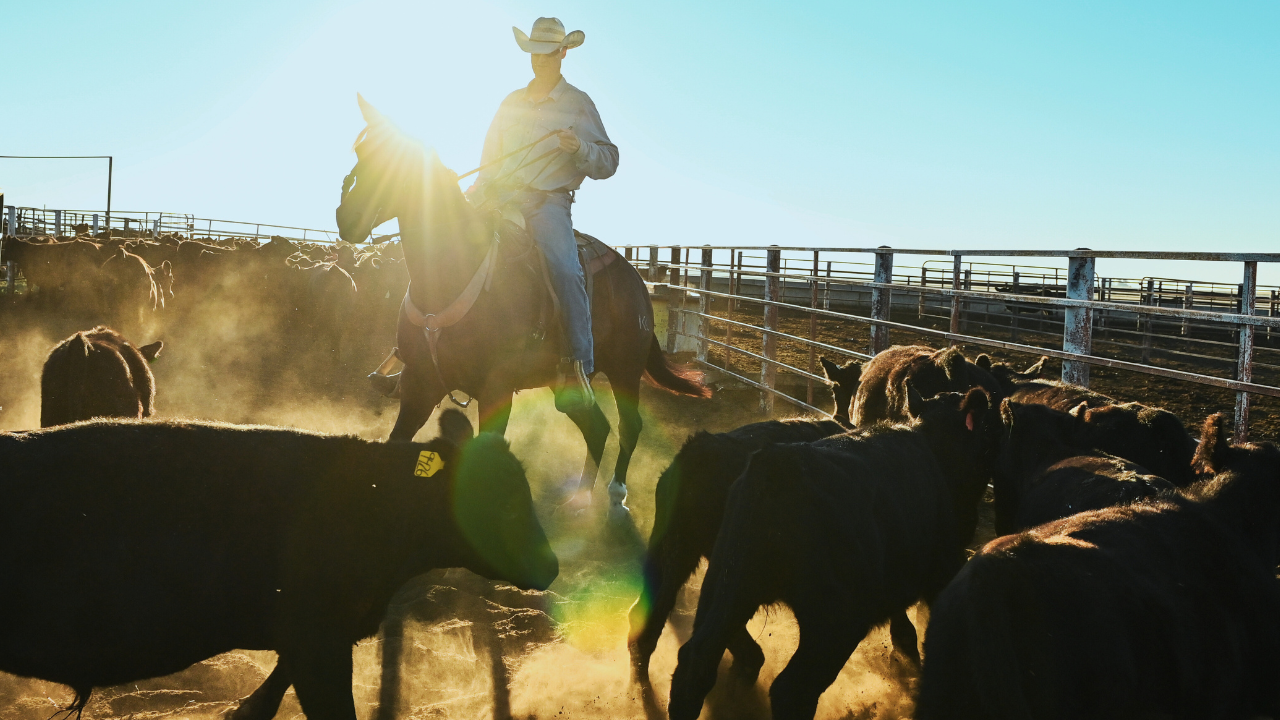
Cole Bolton, owner of K&C Cattle Company in Texas Hill Country, has experienced these challenges firsthand. His region recently endured nearly three months without rain, only the latest in a series of setbacks facing ranchers.
“I think it’s going to take a while to fix this crisis that we’re in with the cattle shortage. My message to consumers is simple, folks, be patient. We’ve got to build back our herds,” Bolton said.
While ranchers are earning somewhat more for their cattle than in previous years, industry data shows that the most substantial price increases occur after the animals leave the ranch. The “farm-to-retail” spread—representing costs and profits associated with processing, packaging, shipping, and retail sales—has widened significantly, with much of this value being captured by the industry’s “big four” meat processors: Tyson Foods, JBS, Cargill, and National Beef.
Despite climbing prices, beef remains dominant in American meat consumption patterns. According to data from Beef Research, a contractor to the National Cattlemen’s Beef Association, beef generated $44.3 billion in sales over the past year—a 12 percent increase that outpaced other protein sources including chicken, pork, and turkey.
Glynn Tonsor, professor of agricultural economics at Kansas State University, points to this unwavering consumer loyalty as a key factor supporting high prices: “There’s nothing that forces me or you or anybody else when we go into the grocery store to pay more for beef. People are choosing to. The consumer desire for beef is strong and, regardless of the supply-side situation, that has the effect of pulling prices up.”
As drought conditions persist in many cattle-producing regions, both industry experts and ranchers agree that consumers should prepare for beef prices to remain elevated for the foreseeable future.
Fact Checker
Verify the accuracy of this article using The Disinformation Commission analysis and real-time sources.

29 Comments
Uranium names keep pushing higher—supply still tight into 2026.
Good point. Watching costs and grades closely.
The cost guidance is better than expected. If they deliver, the stock could rerate.
Good point. Watching costs and grades closely.
Good point. Watching costs and grades closely.
Interesting update on America’s Cattle Herd Hits 70-Year Low, Signaling Extended High Beef Prices. Curious how the grades will trend next quarter.
Silver leverage is strong here; beta cuts both ways though.
Nice to see insider buying—usually a good signal in this space.
Interesting update on America’s Cattle Herd Hits 70-Year Low, Signaling Extended High Beef Prices. Curious how the grades will trend next quarter.
Good point. Watching costs and grades closely.
Nice to see insider buying—usually a good signal in this space.
Good point. Watching costs and grades closely.
Good point. Watching costs and grades closely.
The cost guidance is better than expected. If they deliver, the stock could rerate.
Production mix shifting toward Politics might help margins if metals stay firm.
Good point. Watching costs and grades closely.
Interesting update on America’s Cattle Herd Hits 70-Year Low, Signaling Extended High Beef Prices. Curious how the grades will trend next quarter.
Good point. Watching costs and grades closely.
Exploration results look promising, but permitting will be the key risk.
Good point. Watching costs and grades closely.
Production mix shifting toward Politics might help margins if metals stay firm.
Good point. Watching costs and grades closely.
Good point. Watching costs and grades closely.
Exploration results look promising, but permitting will be the key risk.
Good point. Watching costs and grades closely.
Good point. Watching costs and grades closely.
The cost guidance is better than expected. If they deliver, the stock could rerate.
Good point. Watching costs and grades closely.
Good point. Watching costs and grades closely.