


Listen to the article
U.S. Races to Reclaim Rare Earth Dominance from China’s Grip
At the edge of California’s Mojave Desert, the Mountain Pass mine stands as a symbol of both America’s strategic negligence and its renewed determination. For decades, this unassuming pit supplied the world with rare-earth elements essential to modern technology and warfare, meeting nearly two-thirds of global demand at its peak.
Then, almost overnight, it went silent.
As environmental regulations tightened and global prices collapsed under China’s state-subsidized production, the United States abandoned what had once been its mineral lifeline. Equipment rusted in the desert sun as the world’s most powerful economy became dependent on a rival for elements critical to its defense systems.
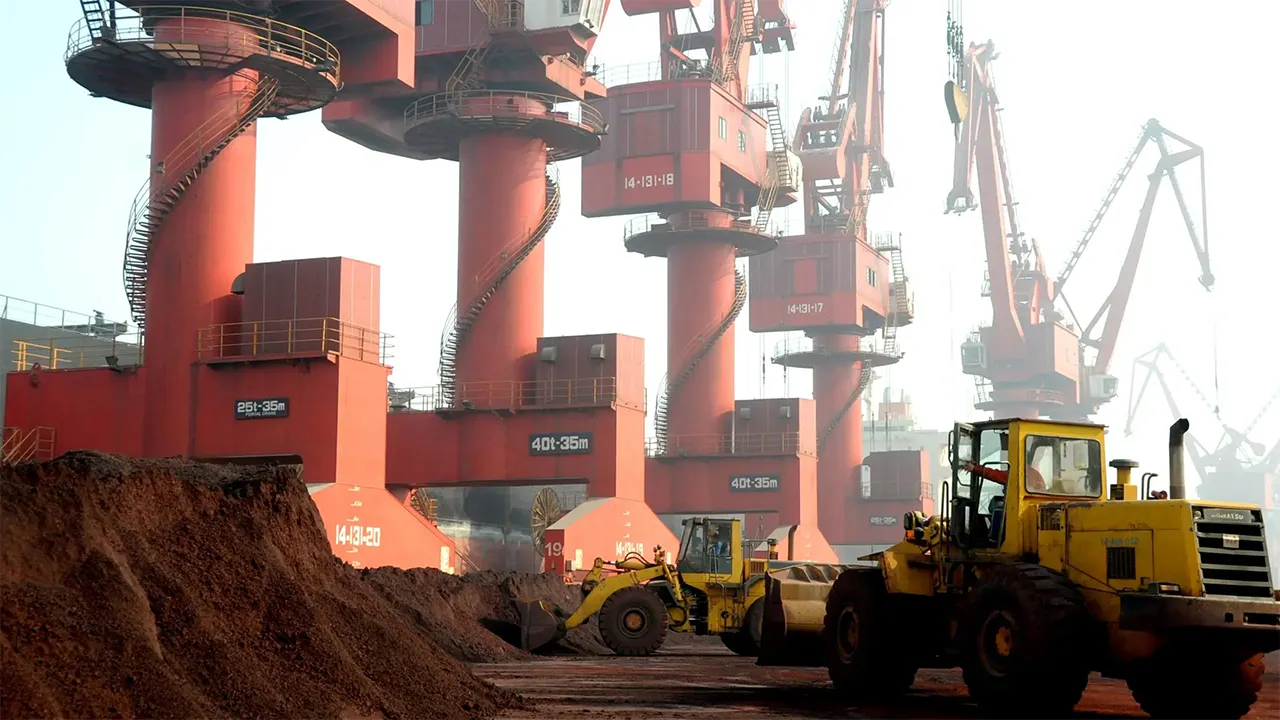
“The Middle East has oil; China has rare earths,” former Chinese leader Deng Xiaoping declared in 1987. Four decades later, that strategic vision has paid dividends for Beijing, which now controls approximately 70 percent of global rare-earth mining and nearly 90 percent of the refining process—the most strategic and profitable segment of the supply chain.
The U.S. didn’t merely lose ground in mining operations; it effectively handed Beijing the technology that made rare earths valuable. In the early 1990s, a General Motors subsidiary called Magnaquench produced 85 percent of the magnets used in precision-guided missiles and other defense systems. When GM sold the company in 1995 to a consortium including Chinese entities, the consequences were swift and far-reaching.
“Within a year, the entire product line had been replicated in China, and the U.S. had lost its magnet-making process almost overnight,” explains Abigail Hunter, executive director of the Ambassador Alfred Hoffman Jr. Center for Critical Mineral Strategy at SAFE. “We were focused on the internet and globalization, not on where our materials were coming from. Policy became episodic. We stopped thinking about the supply chain from the ground up.”
While Washington debated environmental regulations and trade policy throughout the 2000s, China moved aggressively, investing heavily in mining, refining, and manufacturing capabilities. Wade Senti, president of Advanced Magnet Lab, notes that America’s total capacity was under 2,000 metric tons annually while “China poured money into innovation, refining and manufacturing at a scale that far exceeded what we ever had.”
The strategic implications are profound. Rare-earth elements now underpin virtually every modern weapons system. “They steer missiles, power radar and drive the night-vision goggles Marines wear in the field,” Hunter explains. “If it moves, sees or communicates in today’s military, there’s probably a rare-earth element in it.”
The wake-up call came this spring when Beijing briefly restricted exports of rare-earth products—a warning that reverberated through supply chains from Detroit to the Pentagon.
“When China required export licenses, some U.S. factory lines literally stopped,” Hunter says. “The administration scrambled to negotiate with Beijing and simultaneously rolled out emergency support for MP Materials, the operator of Mountain Pass.”
That deal marked a turning point, with the federal government backing an entire supply chain—from mine to magnet—using grants, loans, price supports and guaranteed purchases to jump-start domestic production. MP Materials has since resumed mining operations in California and is building a magnet plant in Texas, while another U.S. manufacturer has begun producing magnets in South Carolina.
But rebuilding America’s rare earth ecosystem will require time. “It’s a ten-year project, not a ten-month one,” Hunter cautions. “We’re starting to see progress, but we’re nowhere near self-sufficiency.”
The Trump administration has taken unprecedented steps, including acquiring a 15 percent stake in MP Materials and negotiating international critical-minerals agreements designed to reduce dependency on Chinese supply chains. Over the past year, Washington has signed multi-billion dollar partnerships across five continents, including a landmark $1 billion co-investment framework with Australia and similar agreements with Japan and South Korea focused on securing non-Chinese refining and magnet production.
The administration has also expanded into Africa, signing deals with Rwanda and the Democratic Republic of Congo, and into Ukraine, where a 2025 reconstruction fund gives U.S. companies preferred access to future mining projects. Together, these agreements represent the most aggressive U.S. mineral diplomacy effort since the Cold War.
Yet domestic challenges remain formidable. Under a 2027 mandate, the Pentagon must establish a fully domestic rare-earth supply chain for defense production that entirely avoids Chinese inputs. Meeting this goal requires not only international partnerships but also streamlining America’s permitting processes, financing new refineries, and rebuilding a skilled workforce that largely disappeared when the industry collapsed.
“The international deals may buy time,” Senti notes, “but they’re no substitute for restoring the industrial base that once made us the world’s undisputed source of strategic minerals.”
Both Hunter and Senti view the next few years as decisive. “We have to reform permitting so we can actually build mines and refineries here,” Hunter emphasizes. “We can’t keep living in a ‘hear no evil, see no evil’ way where we import everything and pretend it’s someone else’s problem.”
Today, the trucks at Mountain Pass are running again—small symbols of a nation attempting to reclaim what it lost. But as China continues to tighten its grip on the minerals driving modern technology and defense systems, America’s comeback in this crucial resource race is only beginning.
Fact Checker
Verify the accuracy of this article using The Disinformation Commission analysis and real-time sources.

9 Comments
The geopolitical implications of China’s rare earth monopoly are concerning. This could give Beijing leverage over the U.S. and its allies in areas like defense and technology. Diversifying supply chains is essential for national security.
The rare earth race is a prime example of how economic and geopolitical interests are increasingly intertwined. The U.S. needs to develop a comprehensive strategy to address this challenge and reduce its vulnerability to supply chain disruptions.
Rebuilding America’s rare earth industry is crucial, but it will require substantial investment and a long-term commitment. I hope policymakers recognize the strategic importance of this issue and take the necessary steps to secure the country’s technological and military advantages.
Rare earth elements are essential for a wide range of high-tech applications, from defense systems to renewable energy. It’s troubling to see the U.S. becoming so dependent on China for these vital resources. This is an issue that deserves urgent attention from policymakers.
I’m curious to learn more about the specific steps the U.S. government is taking to reclaim its dominance in rare earth production. Reducing reliance on China for these critical materials should be a top national security priority.
From what I’ve read, the U.S. is looking to reopen the Mountain Pass mine and invest in new processing facilities. But it will take time and significant resources to rebuild this strategic industry.
It’s disappointing to see the U.S. lose such a critical industry. Rare earth elements are the building blocks of modern technology, and ceding control to China is a troubling development. We need a robust, domestic rare earth supply chain to safeguard our economic and military advantages.
This is a complex issue with significant national security implications. While the U.S. has taken steps to revive its rare earth industry, it faces an uphill battle against China’s state-backed dominance. Effective policymaking and public-private coordination will be crucial to regaining a strategic foothold in this crucial sector.
This is a concerning development for American strategic interests. Rare earth elements are critical to modern technology, and ceding control to China poses significant risks. The U.S. needs to act quickly to rebuild its domestic rare earth mining and processing capabilities.