


Listen to the article
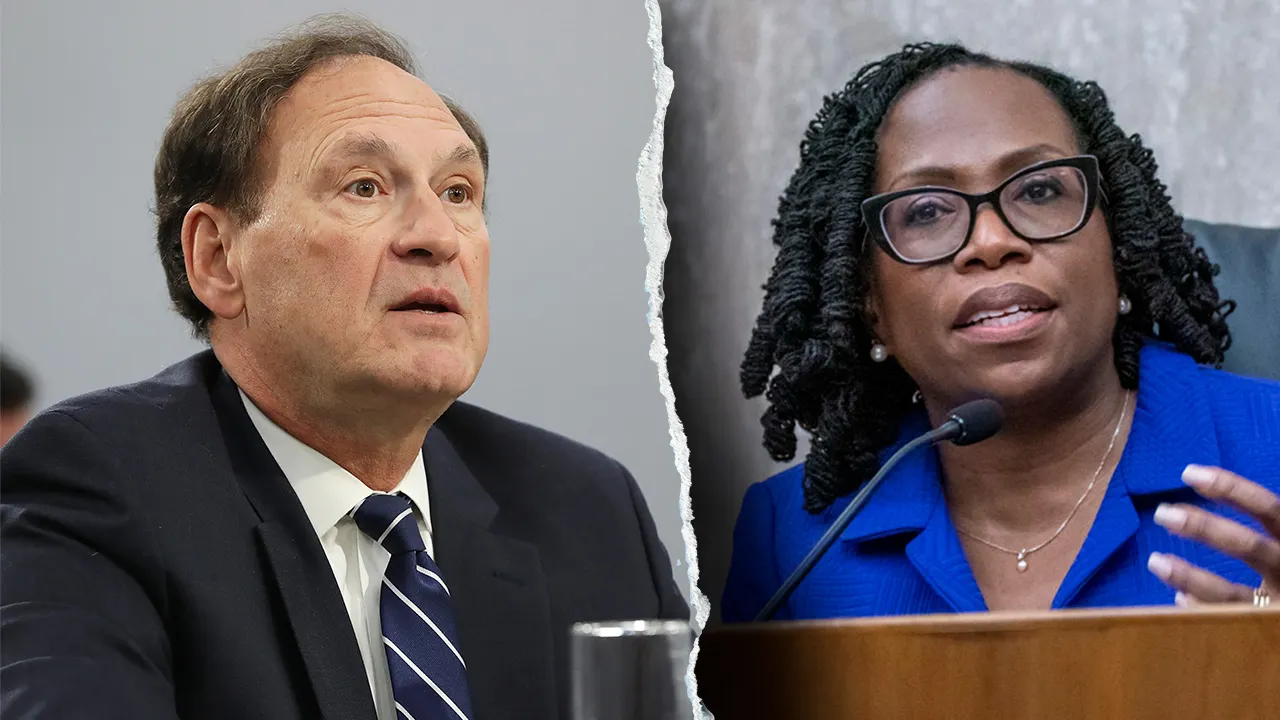
In a rare public clash between Supreme Court justices, Samuel Alito delivered a scathing rebuke of Justice Ketanji Brown Jackson’s lone dissent in a Louisiana redistricting case on Monday, calling her arguments “baseless and insulting” as the court fast-tracked implementation of its recent ruling ahead of the 2026 midterm elections.
The unusually pointed exchange highlighted growing tensions within the nation’s highest court, with Alito’s concurring opinion—joined by Justices Neil Gorsuch and Clarence Thomas—directly confronting Jackson’s accusations that the court’s action represented “unprincipled use of power,” a charge Alito labeled as “groundless and utterly irresponsible.”
“The dissent accuses the Court of ‘unshackl[ing]’ itself from ‘constraints,'” Alito wrote. “It is the dissent’s rhetoric that lacks restraint.”
The dispute centers on the Supreme Court’s recent 6-3 decision that significantly narrowed Section Two of the Voting Rights Act by finding Louisiana’s congressional map constituted an unconstitutional racial gerrymander. Monday’s unsigned ruling allows Louisiana officials to quickly implement changes to the state’s electoral map, a move expected to reshape congressional representation in favor of Republicans.
Jackson’s isolation in this case proved particularly notable, as she broke not only from the conservative majority but also from her two liberal colleagues, Justices Sonia Sotomayor and Elena Kagan, who did not join her dissent. In her solo opinion, Jackson warned that the court’s intervention risked improperly inserting itself into an active election and creating the “appearance of partiality,” pointing to ongoing voting and legal challenges already underway in Louisiana.
At issue was the Supreme Court’s procedural rule that typically allows approximately 32 days before a judgment is formally transmitted to lower courts. Alito emphasized that this rule is flexible and primarily intended to allow time for rehearing petitions, which he indicated were not expected in this case. He argued that delaying implementation of the high court’s landmark ruling served “no practical purpose” and that Jackson’s reasons for wanting to prolong the process were “trivial at best.”
The heated exchange has drawn attention from legal scholars. George Washington University law professor Jonathan Turley suggested that Alito had “reached a breaking point” in responding to Jackson’s criticism.
“Justice Alito had had enough,” Turley wrote. “He noted that her reliance on the 32-day period was a ‘trivial’ objection that put form above substance since no party had asked for reconsideration. It would be waiting for 32 days for no purpose, while the other parties had stated a reasonable and pressing need to finalize the opinion.”
This clash marks the latest in a pattern of solo dissents by Jackson, who was appointed by President Biden in 2022. The first Black woman to serve on the Supreme Court has increasingly found herself at odds with the conservative majority in high-profile decisions that have frequently favored Republican interests.
The court’s decision on Monday creates significant challenges for Louisiana, which must now scramble to implement a new congressional map even as ballots have already been sent to voters and the state’s primary election has been paused. Electoral officials must now work under tight deadlines to finalize new district boundaries that comply with the court’s interpretation of the Voting Rights Act.
The ruling is expected to reverberate beyond Louisiana, affecting other states where redistricting disputes remain active ahead of the 2026 midterms. The Supreme Court’s narrowing of the Voting Rights Act gives states more latitude in drawing congressional districts without creating majority-minority districts in some circumstances.
Legal experts note that the tensions displayed in this exchange reflect broader ideological divisions on the 6-3 conservative-majority court, where disagreements over fundamental legal principles—particularly regarding voting rights and racial equity—have become increasingly pronounced and public.
As states across the country continue finalizing their electoral maps, the Louisiana decision signals the court’s willingness to intervene quickly in redistricting disputes, potentially setting the stage for further contentious rulings as the 2026 election cycle approaches.
Fact Checker
Verify the accuracy of this article using The Disinformation Commission analysis and real-time sources.

4 Comments
Redistricting is always a contentious issue, as it can significantly impact the political landscape. I’m curious to see how the Louisiana case unfolds and what implications it may have for future elections. It’s important to rely on authoritative sources when following these developments.
Interesting to see the Supreme Court dispute over voting rights and redistricting. These are complex issues with valid arguments on both sides. It will be important to closely follow how this plays out in the lead-up to the 2026 elections.
The clash between Justices Alito and Jackson highlights the growing tensions on the Court. While I don’t have a strong opinion on the specifics, I hope they can find a way to have a constructive dialogue and uphold the integrity of the judicial process.
The Supreme Court’s role in shaping electoral maps is a critical issue that deserves thoughtful consideration. While I don’t have a strong opinion on this particular case, I hope the justices can find a fair and principled way to uphold the integrity of the democratic process.