


Listen to the article
In a closely watched case with potential nationwide impact, the Supreme Court heard arguments Monday regarding whether states can legally count mail-in ballots that arrive after Election Day but are postmarked by that date.
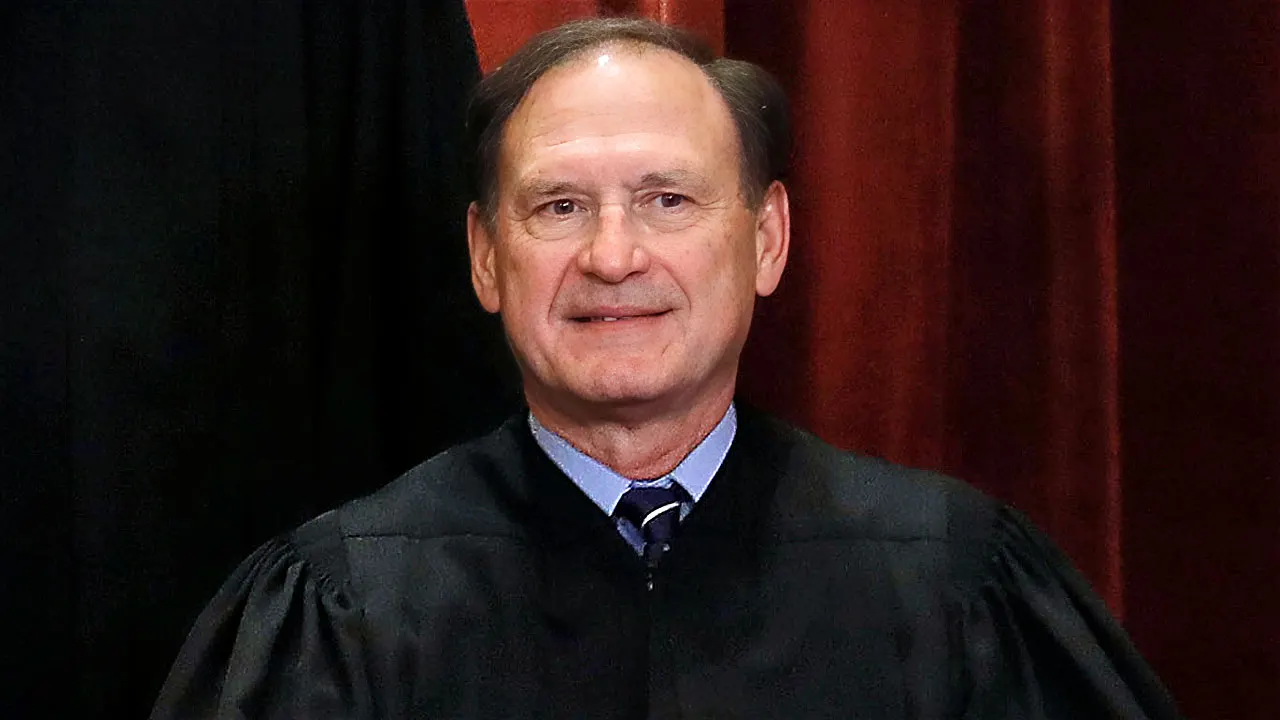
Justice Samuel Alito emerged as a vocal skeptic of such provisions, emphasizing a strict interpretation of the term “Election Day” during oral arguments.
“We have lots of phrases that involve two words, the last of which, the second of which is ‘day,'” Alito said. “Labor Day, Memorial Day, George Washington’s birthday, Independence Day, birthday and Election Day, and they’re all particular days.”
He added, “If I have nothing more to look at than the phrase ‘Election Day,’ I think this is the day in which everything is going to take place, or almost everything.”
The case before the high court stems from a Republican National Committee challenge to a Mississippi law that allows mail ballots postmarked by Election Day to be counted if received within five days afterward. The U.S. Court of Appeals for the 5th Circuit sided with the RNC earlier this year, prompting Mississippi officials to seek Supreme Court review.
The justices’ decision, expected by summer, could have sweeping implications for at least 14 states and Washington, D.C., which currently accept ballots received after Election Day if properly postmarked. Should the court uphold the 5th Circuit’s ruling, these states would need to change their laws to require all ballots be in election officials’ hands by the close of polls on Election Day.
Several conservative justices appeared skeptical of Mississippi’s position during Monday’s arguments. However, Chief Justice John Roberts and Justice Elena Kagan raised concerns about potential unintended consequences, questioning whether a strict interpretation might also affect early voting practices.
“If ‘day’ includes a period after a particular day of the election, does it include a particular day before the day of the election?” Roberts asked Mississippi Solicitor General Scott Stewart. “Or does your logic require a different consideration?”
Former U.S. Solicitor General Paul Clement, representing the RNC, argued that the original meaning of an election involved the “combined action” of casting and receiving a vote on the same day.
“All agree that elections for federal office have to end on the day of the election specified by Congress, and all agree that you can’t have an election unless you receive ballots, and there must be some deadline for ballot receipt,” Clement told the court. “Nonetheless, Mississippi insists that ballots can trickle in days or even weeks after Election Day. That position is wrong as a matter of text, precedent, history and common sense.”
Election integrity has become a focal point in American politics, particularly since the 2020 presidential election. Advocacy groups supporting the RNC’s position argue that late-arriving ballots create opportunities for confusion and undermine public trust in the electoral process.
“Today’s oral arguments in Watson v. RNC clearly show where the Supreme Court should come down: state laws that count ballots received after Election Day violate federal law, expose elections to delays, invite fraud, and fuel public doubt in the democratic process,” said Jason Snead, executive director of the Honest Elections Project, in a statement.
The trend already appears to be moving toward stricter ballot receipt deadlines. Since the 2022 midterm elections, four Republican-controlled states—Kansas, Ohio, Utah and North Dakota—have enacted new requirements that ballots must be received by Election Day to be counted.
The pending Supreme Court decision would not affect military and overseas ballots, which are governed by the Uniformed and Overseas Citizens Absentee Voting Act and have separate provisions.
Critics of the RNC’s position point out that even if all ballots must be received by Election Day, many states would still be counting votes well after polls close due to varying state-level tabulation procedures and the volume of mail ballots.
The court’s ruling could significantly reshape election administration for the 2024 presidential election and future contests, potentially forcing states to adjust their ballot collection timelines and voters to mail their ballots earlier to ensure they arrive by Election Day.
Fact Checker
Verify the accuracy of this article using The Disinformation Commission analysis and real-time sources.

6 Comments
This case touches on fundamental questions about the meaning of ‘Election Day’ and the extent to which mail-in ballots should be accepted. It will be interesting to see how the court navigates these complex issues.
The Supreme Court’s interpretation of ‘Election Day’ could have major ramifications for election integrity and voter access. It’s a delicate balance that the justices will need to carefully consider.
The Supreme Court’s definition of ‘Election Day’ will be crucial in determining the legality of counting mail-in ballots received after that date. It’s a complex issue with valid arguments on both sides.
I agree, this is a nuanced and politically charged case. The court’s ruling could significantly shape future election procedures.
Interesting to see Justice Alito’s strict interpretation of ‘Election Day’ and how that could impact mail-in ballot counting. This case could have far-reaching implications for election processes across the country.
Alito’s focus on the strict meaning of ‘Election Day’ highlights the need for clear, consistent election laws. Voters deserve certainty, but there are tradeoffs between accessibility and security that the court must weigh.