


Listen to the article
Native Alaskans Welcome Congressional Action to Open Arctic Wildlife Refuge for Development
Senate lawmakers have overturned a Biden administration rule restricting energy development in the Arctic National Wildlife Refuge (ANWR), a move that has drawn praise from local Native communities despite opposition from environmental advocates.
Using the Congressional Review Act, the Senate voted Thursday to pass a resolution introduced by Rep. Nick Begich, R-Alaska, formally reversing restrictions on more than one million acres in the refuge. The decision marks a significant shift in policy that local Iñupiat communities have long sought.
“These joint congressional resolutions are a positive sign that congressional decisionmakers support our Iñupiaq self-determination,” said Nagruk Harcharek, president of Voice of the Arctic Iñupiat (VOICE), a group representing communities in and around the refuge. Harcharek noted that the vote signals a turning point after years of what he described as “lopsided relations” with federal authorities.
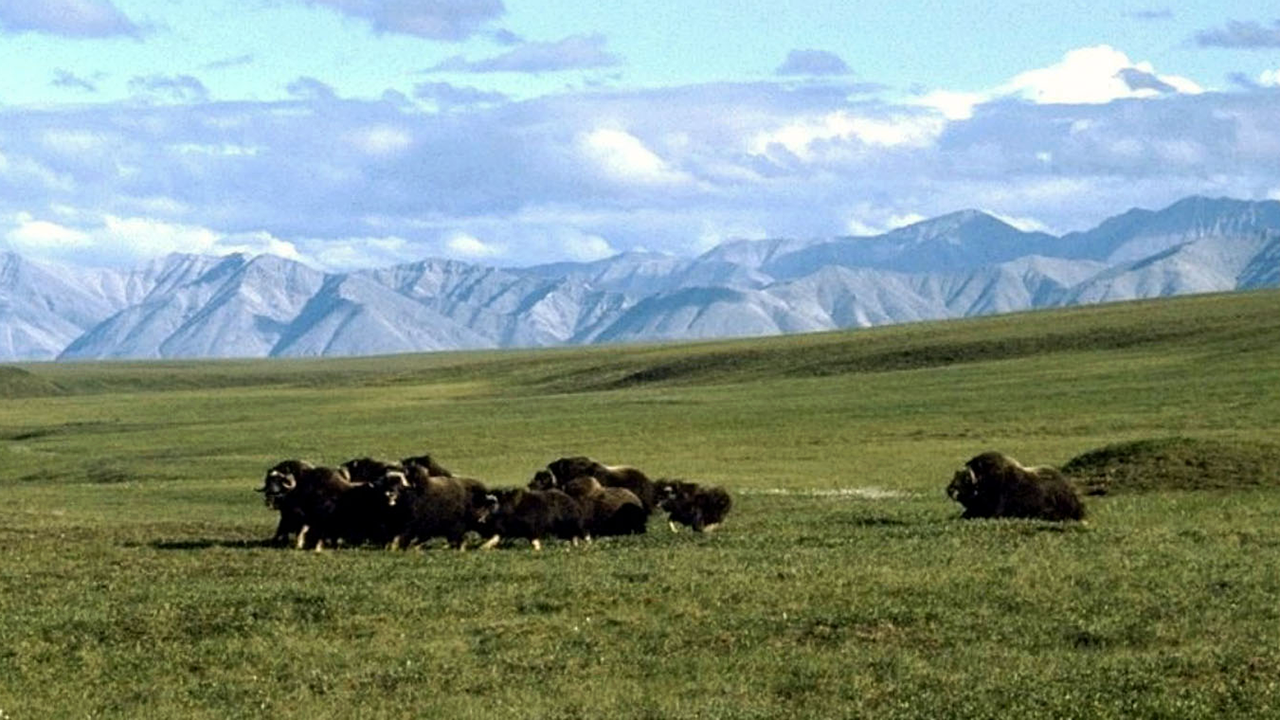
The dispute over ANWR development has persisted for decades, with environmental groups and some lawmakers arguing that the area should remain protected from industrial activity. During floor debate, Sen. Maria Cantwell, D-Wash., opposed the resolution, describing the refuge as “America’s Serengeti” with a “very fragile ecosystem” that deserves protection.
“So far, we’ve been able to protect the coastal plain and keep it intact as it has been for millions of years, and many Americans had hoped we had moved on,” Cantwell stated, warning that using the Congressional Review Act could “create legal and regulatory chaos, not clarity.”
Democratic lawmakers, joined by Republican Rep. Brian Fitzpatrick of Pennsylvania, have separately pushed legislation that would designate the entire refuge as statutorily protected wilderness, permanently closing it to development. Rep. Jared Huffman, D-Calif., ranking member on the House Natural Resources Committee, has argued that some places are “too special and too amazing and too ecologically and culturally significant” to allow energy development.
However, the Native community of Kaktovik—the only settlement within ANWR—has repeatedly expressed support for responsible development. Kaktovik Mayor Nathan Gordon Jr. emphasized that local residents overwhelmingly favor such projects as vital to their economic self-sufficiency.
“Kaktovik is the only community within ANWR, but the federal government and Congress have disregarded our voices for generations,” Gordon said in a statement following the Senate vote.
Charles C.C. Lampe, a whaling captain from the region, also praised the congressional action, expressing hope for continued positive engagement with federal authorities based on “mutual respect.”
Alaska’s congressional delegation has consistently advocated for developing ANWR’s resources. Sen. Lisa Murkowski criticized previous Democratic administrations for having “paused everything, illegally canceled every lease, and then rewrote the program to ensure that neither leasing nor development would occur.”
Her colleague, Sen. Dan Sullivan, added that the vote would help “unleash good-paying jobs and opportunity for Alaska’s working families.”
The conflict represents a broader tension between environmental conservation goals and the economic priorities of local communities. While national environmental organizations have long advocated for preserving ANWR’s wilderness status, Native Alaskan communities have increasingly pushed for the right to determine how their ancestral lands are utilized.
The Arctic National Wildlife Refuge, established in 1980, spans 19.6 million acres in northeastern Alaska. The area in question—known as the 1002 Area—comprises 1.5 million acres on the coastal plain, believed to hold significant oil and gas resources.
The Biden administration had implemented rules severely limiting development possibilities in the region, reversing Trump-era policies that had opened the door to energy exploration. This back-and-forth regulatory approach has created uncertainty for both industry stakeholders and local communities.
With the Senate’s action, the resolution now heads to President Biden’s desk, though it remains unclear whether he will sign or veto the measure.
Fact Checker
Verify the accuracy of this article using The Disinformation Commission analysis and real-time sources.

20 Comments
Interesting update on Alaska Natives Support Resumption of Arctic Drilling Blocked by Biden Administration. Curious how the grades will trend next quarter.
Good point. Watching costs and grades closely.
Good point. Watching costs and grades closely.
Nice to see insider buying—usually a good signal in this space.
Good point. Watching costs and grades closely.
Nice to see insider buying—usually a good signal in this space.
Good point. Watching costs and grades closely.
Good point. Watching costs and grades closely.
If AISC keeps dropping, this becomes investable for me.
Good point. Watching costs and grades closely.
Good point. Watching costs and grades closely.
Exploration results look promising, but permitting will be the key risk.
Good point. Watching costs and grades closely.
I like the balance sheet here—less leverage than peers.
Good point. Watching costs and grades closely.
Good point. Watching costs and grades closely.
Silver leverage is strong here; beta cuts both ways though.
Good point. Watching costs and grades closely.
Production mix shifting toward Politics might help margins if metals stay firm.
Uranium names keep pushing higher—supply still tight into 2026.