


Listen to the article
Alaska’s Indigenous Villages Face Mounting Climate Crisis Amid Reduced Federal Support
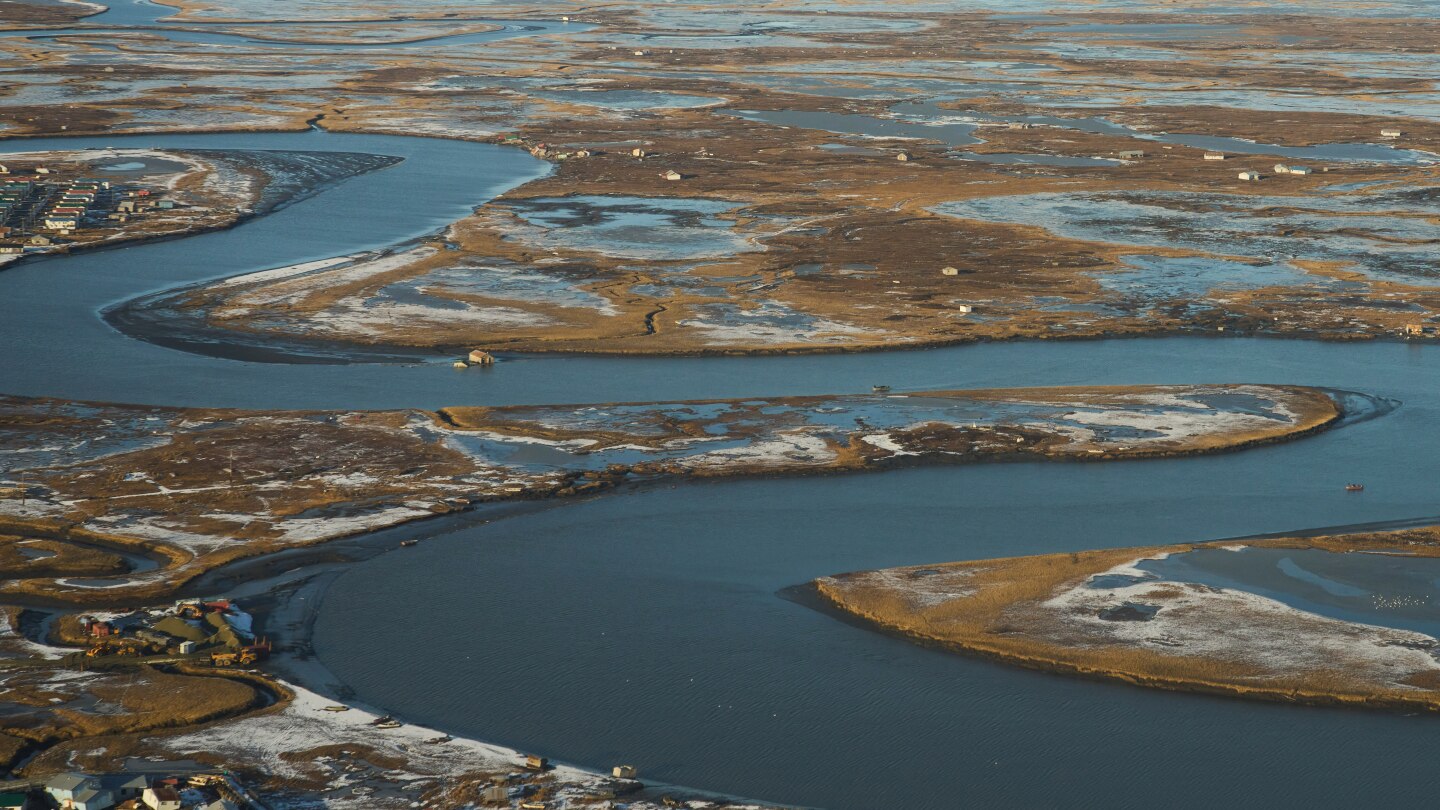
Devastating storms that hammered Alaska’s western coast this fall have highlighted the growing vulnerability of low-lying Indigenous villages to climate change, raising urgent questions about their long-term sustainability. The region, which is experiencing rapid environmental transformation through frequent flooding, permafrost thaw, and severe erosion, now faces difficult decisions about its future.
Emergency repair efforts have slowed with the onset of winter following two powerful October storms, including the remnants of Typhoon Halong, which caused extensive damage to dozens of communities. Residents from the hardest-hit villages of Kipnuk and Kwigillingok could be displaced for months, leaving many uncertain about whether they can ever return to their homes.
Kwigillingok was already pursuing relocation before the latest disaster struck, but such moves typically take decades due to a lack of coordinated planning and limited funding. The situation has been further complicated by the Trump administration’s cuts to grants designed to protect communities from climate threats.
“Where we can support that increased resilience to buy that time, we’re going to do that,” said Bryan Fisher, Alaska’s emergency management director. The immediate strategy focuses on reinforcing rebuilt infrastructure and installing pilings to elevate homes, buying communities time to evaluate longer-term solutions.
Alaska is warming at a rate far exceeding the global average. A 2023 report by the Alaska Native Tribal Health Consortium identified 144 Native communities facing threats from erosion, flooding, thawing permafrost, or combinations of these hazards.
Coastal populations are especially vulnerable, according to climate scientist John Walsh. With less Arctic sea ice, more open water allows storm-driven waves to cause greater damage. When permafrost thaws, previously solid shorelines become vulnerable to rapid erosion. This was evident in Quinhagak, where wind and storm surge from Halong’s remnants consumed dozens of feet of shoreline, damaging a culturally significant archaeological site.
Rick Thoman, a climate specialist with the Alaska Center for Climate Assessment and Preparedness, noted that ex-typhoons hitting the Bering Sea coast north of the Pribilof Islands were rare before 2022, with only one such event between 1970 and 2021. However, three have struck since 2022, beginning with the remnants of Typhoon Merbok.
The destruction caused by ex-typhoon Halong was unprecedented in Fisher’s three-decade career in emergency management. Approximately 700 homes were destroyed or severely damaged. Some homes were washed away with people inside and carried for miles. Kipnuk and Kwigillingok, which together house about 1,100 people, were devastated despite their previous experience with flooding. One person died, and two remain missing.
Communities facing climate threats have limited options: reinforce existing infrastructure, move critical facilities to higher ground through managed retreat, or relocate entirely. The financial needs are staggering—an estimated $4.3 billion over 50 years to protect infrastructure in Native communities from climate impacts, according to the 2020 health consortium report.
The case of Newtok illustrates the challenges of relocation. It took decades and approximately $160 million to move its 300 residents just nine miles to their new village of Mertarvik. Similar climate-driven relocation efforts are underway among tribes in Washington and Louisiana.
“Many villages, including Kipnuk and Kwigillingok, don’t have that kind of time,” warned Sheryl Musgrove, director of the Alaska Climate Justice Program at the Alaska Institute for Justice. Her organization works with ten tribal communities navigating climate adaptation decisions.
Prior to the recent storm, Kipnuk had been planning a protect-in-place strategy but is now reconsidering its options. Musgrove hopes the recent disasters will catalyze changes at the federal level to help these communities. Currently, no federal agency is specifically tasked with coordinating relocation efforts, leaving small communities to navigate multiple agencies and programs independently.
In 2022, the U.S. Bureau of Indian Affairs created the Voluntary Community-Driven Relocation Program with $115 million from infrastructure legislation to assist eleven tribes with relocation efforts. However, this funding falls far short of what’s needed to relocate even a single village completely.
The future of federal support remains uncertain as the Trump administration cuts programs related to climate change and disaster resilience. The administration has proposed cutting $617 million from the Bureau of Indian Affairs’ tribal self-governance and community programs.
Additionally, previously approved Federal Emergency Management Agency awards to Newtok and Kwigillingok for relocation projects were halted in April when the administration suspended billions in unpaid grants. The administration has also stopped approving state and tribal requests for hazard mitigation funding typically provided after major disasters.
Even access to crucial climate data is at risk, with the administration removing climate change information from government websites and dismissing scientists responsible for congressionally mandated climate assessment reports.
As winter sets in across Alaska’s western coast, these communities face not only the immediate challenge of recovery but also profound uncertainty about their ability to adapt to an increasingly hostile environment with diminishing federal support.
Fact Checker
Verify the accuracy of this article using The Disinformation Commission analysis and real-time sources.

8 Comments
This is a sobering example of how climate change disproportionately affects marginalized populations. The lack of coordinated planning and limited funding to protect these Alaska Native villages is unacceptable.
Urgent action is needed to secure the future of these communities. The US must step up and provide the necessary resources and support to help them adapt and relocate if needed.
The situation in Alaska’s coastal villages highlights the devastating human toll of climate change. It’s alarming to see these communities losing their homes and way of life with little support to adapt or relocate.
This crisis demands a robust, coordinated response from the US government to provide the necessary funding and assistance to these vulnerable populations. Failing to act will only worsen their plight.
The climate crisis is devastating these vulnerable Alaska Native communities, who lack the resources and support to respond effectively. It’s heartbreaking to see their homes and way of life threatened by these environmental changes.
Relocation efforts are slow and underfunded, leaving these villages in a very precarious situation. The US government needs to do more to support these communities facing the dire impacts of climate change.
It’s deeply concerning to see how climate change is eroding the land and homes of Alaska’s Indigenous villages. These communities deserve much more support and resources to address this urgent crisis.
These Indigenous communities are on the frontlines of the climate crisis, yet they have few options and little help from the federal government. This is a moral and humanitarian crisis that requires immediate attention and intervention.