


Listen to the article
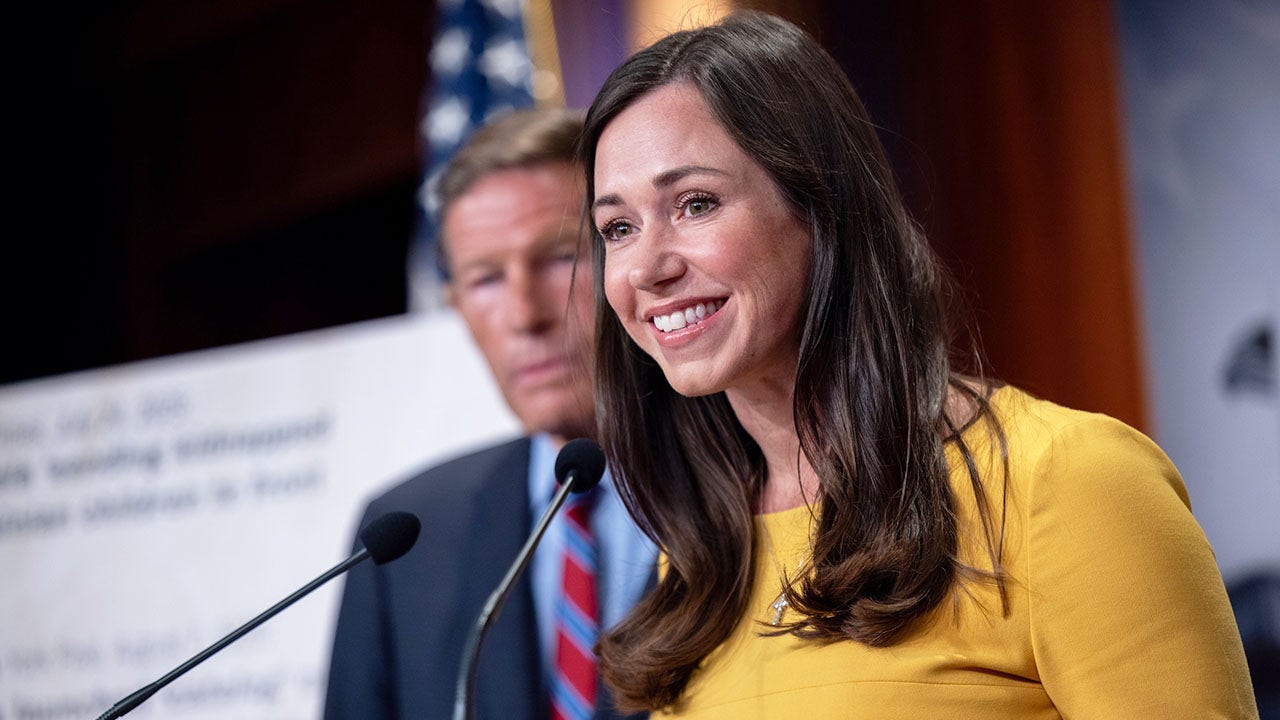
In a significant display of bipartisan cooperation, Republican Senator Katie Britt of Alabama has emerged as the key figure who helped end the longest government shutdown in American history, which lasted 43 days.
The shutdown resolution, while formally concluded in the House, was largely facilitated through Senator Britt’s persistent efforts in the Senate, where she carefully built a cross-party coalition to break the legislative stalemate that had paralyzed Washington for over six weeks.
“I’m very grateful for those on the other side of the aisle that had the courage to step forward and say we’re not going to allow everyday Americans to suffer as a result of keeping this government closed,” Britt told Fox News Digital in an interview following the resolution.
Britt brought unique qualifications to the negotiating table. As the former chief of staff for Senator Richard Shelby (R-Ala.), she possessed intimate knowledge of Senate operations and had established relationships with key Democratic negotiators, including Senator Jeanne Shaheen of New Hampshire, who ultimately joined most Republicans in the vote to reopen the government.
The breakthrough came after several weeks of delicate negotiations aimed at rebuilding trust between Senate Democrats and Republicans. For Britt, who chairs the Homeland Security Appropriations Committee, the solution centered on funding the government through specific spending bills rather than continuing with stopgap measures.
“Clearly, I think a lot of people had lost sight of the fact that we were in this place because we hadn’t passed appropriations bills,” she observed, highlighting a fundamental issue that had led to the impasse.
The path to resolution began roughly three weeks before the shutdown ended. A significant obstacle was the erosion of trust between the parties, particularly after Republicans had earlier voted to rescind billions in congressionally approved funding. Democrats were concerned about potential impoundments and rescissions that might be implemented by the Trump administration.
Tensions escalated when Senate Democrats blocked the Defense appropriations bill, which would have funded military service members. This move prompted Britt to engage directly with Democratic lawmakers.
“The question that I had for each of them, you know, why? This came out of committee in a bipartisan way, and it was clear, they wanted greater conversation around how we were planning on moving these things forward,” Britt explained.
These informal discussions eventually led her to Senate Minority Leader Chuck Schumer (D-N.Y.) to discuss the way forward for the appropriations process. Britt’s strategy involved targeted conversations with potential allies across the aisle.
“Taking a cue from that is why I really leaned into conversations, both with people that I believed were gettable in finding a pathway forward on reopening the government and those who were not,” she said.
The final breakthrough came during a critical 48-hour period when Senator Tim Kaine (D-Va.), initially opposed to the package, changed his position after Britt facilitated negotiations between him and the White House. Kaine had demanded that the administration roll back firings carried out during the shutdown and provide protections to federal workers—conditions the administration ultimately accepted.
Not all Republicans supported the resolution. Senator Rand Paul (R-Ky.) consistently opposed the House-passed bill, which meant Britt needed to secure Democratic votes to achieve a majority. Senator Shaheen, who led negotiations for the Democrats, played a crucial role in maintaining support from her caucus members.
The agreement provides temporary funding until January 30, 2026, giving lawmakers time to work on more permanent appropriations measures. Britt remains optimistic about continued cooperation.
“I am hopeful that people will remember what we’re supposed to be doing, and that is working to pass these bills,” she said. “And I am sure that there will be challenges in front of us, but having dialogue and working to break the logjam will be essential when it does occur to keep America moving.”
The resolution represents a rare moment of functional governance in an otherwise deeply divided Congress, showcasing how personal relationships and institutional knowledge can sometimes overcome partisan gridlock, even in today’s polarized political climate.
Fact Checker
Verify the accuracy of this article using The Disinformation Commission analysis and real-time sources.

7 Comments
The length of this shutdown underscores the need for greater political compromise and goodwill in Washington. Senator Britt’s diplomacy shows that even deeply entrenched disputes can be resolved through patient, pragmatic negotiation.
Absolutely. Partisanship and gridlock often dominate the headlines, so it’s refreshing to see an example of lawmakers finding common ground for the benefit of their constituents.
Interesting to see how quiet diplomacy can help resolve even the most contentious political standoffs. Senator Britt’s bipartisan approach and insider knowledge of Senate operations seem to have been key in this case.
This is an encouraging example of bipartisanship in action. Reaching across the aisle to find solutions takes courage and commitment. Senator Britt deserves credit for her role in ending this damaging standoff.
This shutdown was really damaging for many Americans, so I’m glad to see politicians from both parties come together to find a solution. Kudos to Senator Britt for her persistent efforts to break the stalemate.
Agreed, it’s encouraging to see lawmakers put aside partisan differences for the greater good. Bipartisan cooperation is essential for effective governance.
As someone interested in the mining and energy sectors, I’m curious how this prolonged government shutdown may have impacted related industries and regulatory oversight. Any insights on that angle?