


Listen to the article
Alabama Library Board Bans Transgender Books from Youth Sections Statewide
The Alabama Public Library Service Board voted Thursday to remove books discussing transgender topics from children’s and teen sections in all public libraries across the state, intensifying the nationwide debate over library content restrictions.
Under the new regulation, materials addressing “transgender procedures, gender ideology or the concept of more than two biological genders” must be relocated to adult sections. The rule affects more than 200 local libraries throughout Alabama and will take effect in 2026 after a required publication period.
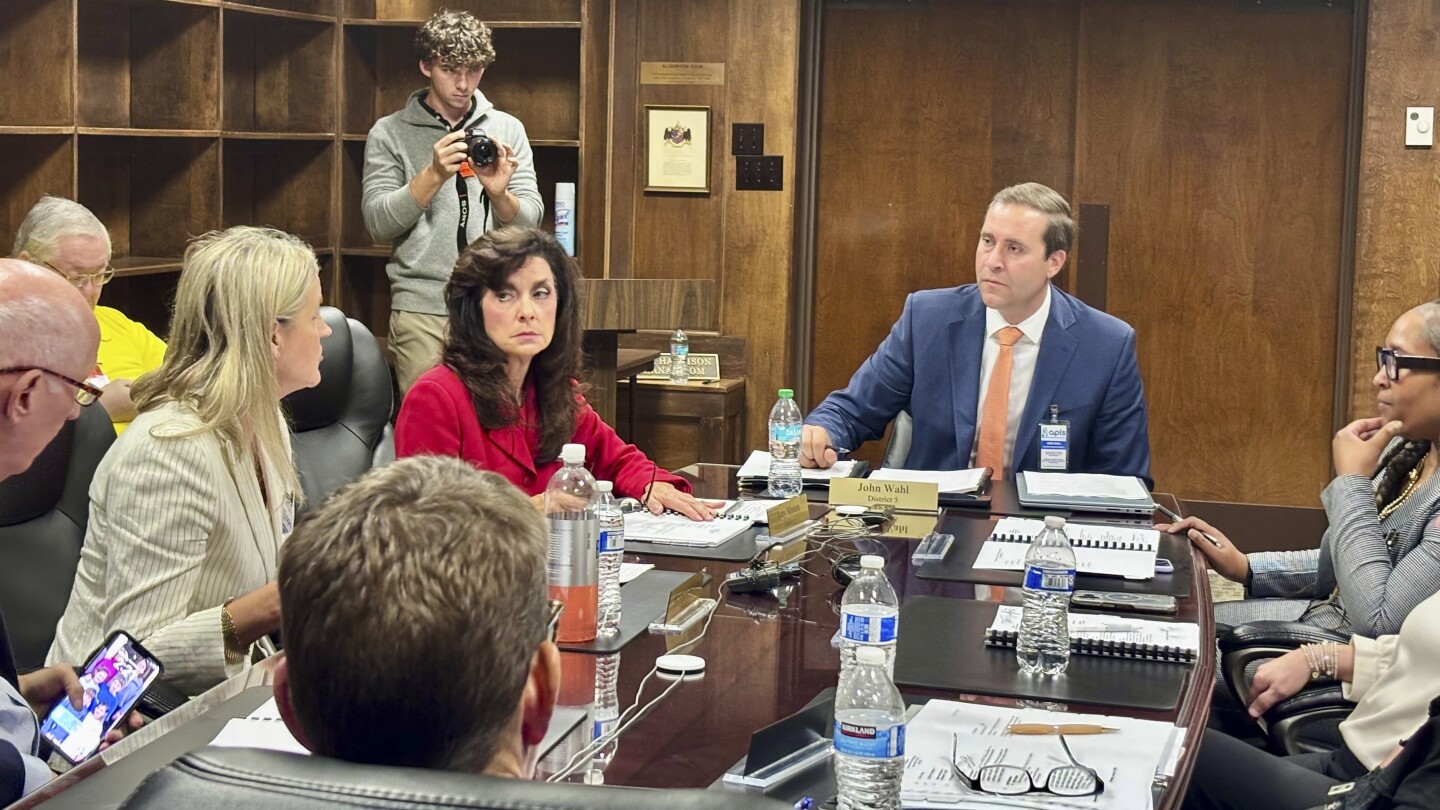
Board Chairman John Wahl, who also serves as chairman of the Alabama Republican Party, characterized the decision as “a major step forward in putting parents back in control in what their children are exposed to.”
“We want to put Alabama families in charge. We want them to make the decision what is best for their families,” Wahl said during the meeting in Montgomery.
The board’s action adds specific language to existing regulations that already required youth sections to be free from “sexually explicit or other material deemed inappropriate.” The updated rule includes a directive that all materials containing such content must either be removed entirely from library collections or relocated to adult sections.
Critics have denounced the move as censorship and an attempt to erase transgender people from public discourse. The timing of the vote—occurring on Transgender Day of Remembrance, which honors transgender victims of violence—drew particular criticism from opponents.
Mack Reynolds, a transgender parent who protested outside the meeting with a sign stating “positive representation is not sexually explicit,” emphasized the educational importance of diverse books.
“What I hope is that other children can approach my daughter with curiosity and compassion. And if they don’t know, then there is so much more room for angst, fear and frustration,” Reynolds said.
The scope of the new regulation remains somewhat ambiguous. During previous public hearings, some supporters objected to books teaching children about pronouns or describing transgender experiences, but it remains unclear whether any book featuring transgender characters would be affected.
Jim Vickery, who spoke during the public comment period, told the board: “Most of the people of Alabama have not asked for this latest library-fixated assault on the LGBTQ community because it’s their children and children of friends and relatives you’re attacking with this misguided proposal before you.”
Board member Amy Minton countered by claiming that most public comments received supported the change. “This is what the majority of people of Alabama want,” she said.
Supporters argue that parents seeking such books for their children can still access them in adult library sections. However, Angie Hayden, co-founder of Read Freely Alabama, expressed concerns that the ultimate goal might be complete removal of these books from libraries.
“State regulations do not allow the purchase of books aimed at children if state regulations also deem the book inappropriate for children,” Hayden explained. “So long term they are banning these books, slowly removing these books from your public library.”
The board also tightened restrictions on youth library cards, specifying that standard cards for minors cannot access adult collections. Libraries may only issue all-access cards with written parental permission.
During the same meeting, board members clashed over restoring funding to the Fairhope Public Library, which had previously been withheld due to certain titles in its teen section. The board rejected a proposal to immediately restore funding, with Wahl stating he wanted to review Fairhope’s actions first.
This prompted board member Ronald A. Snider to ask Wahl, “John, are you becoming the censor-in-chief for Alabama?” Snider argued that the state board was functioning as a “board of censorship” by “second-guessing” decisions made by professional librarians and local library boards.
“You can call it second-guessing or you can call it accountability,” Wahl replied.
The Alabama decision represents the latest development in a growing national controversy over library content, particularly materials featuring LGBTQ+ themes and characters. Similar debates continue to unfold in school districts and public libraries across the country as communities grapple with questions about content accessibility, parental rights, and representation.
Fact Checker
Verify the accuracy of this article using The Disinformation Commission analysis and real-time sources.

11 Comments
This is a concerning development that could limit young people’s access to important information and perspectives. Libraries should aim to foster learning and intellectual growth, not restrict it based on political agendas. I hope the Alabama community can find a more balanced approach that respects diversity and inclusion.
This is a complex and sensitive issue that deserves thoughtful discussion. While some may argue this decision protects children, others may view it as limiting access to important information. I hope the public libraries can find a balanced approach that respects diverse perspectives.
Agreed, this is a nuanced topic without easy answers. Removing books outright raises concerns about censorship and access to information. Hopefully the libraries can work with the community to address concerns while still upholding principles of intellectual freedom.
While I understand the desire to protect children, banning books on transgender topics seems overly broad and likely to cause more harm than good. Public libraries should strive to provide age-appropriate, factual information to support healthy development and understanding. I hope this decision is reconsidered.
As someone interested in the social impact of mining and energy developments, I’m struck by how this decision intersects with broader cultural and political debates. It will be important to follow how this unfolds and its implications for intellectual freedom and inclusivity in Alabama’s public libraries.
That’s a good observation. This type of policy decision can have ripple effects beyond the immediate issue, touching on fundamental questions about education, civil liberties, and social progress. It will be worth watching how this plays out and the precedent it might set.
As someone interested in the intersection of energy, mining, and social issues, I’m troubled by this decision to censor transgender-related books in public libraries. Restricting access to information on gender identity seems antithetical to the core mission of libraries to support education and intellectual freedom.
This is a highly charged political issue with complex ethical considerations. While I respect the desire to protect children, banning books outright is a concerning overreach that could do more harm than good. I hope the Alabama libraries can find a measured approach that balances diverse community needs.
As a concerned citizen, I’m troubled by this decision to remove books about transgender topics from public library youth sections. Libraries should be spaces that foster learning, understanding, and inclusivity – not sites of censorship. I hope this policy is reconsidered in favor of a more balanced, evidence-based approach.
This decision seems highly controversial and likely to stir up further debate. I’m curious to hear the reasoning behind it and how it might impact youth access to educational materials on gender identity. It’s a tricky balance between protecting children and ensuring they have the information they need.
You raise a fair point. Restricting access to information about gender identity could be detrimental to young people’s understanding and development. I hope the public engages in constructive dialogue to find a solution that meets the diverse needs of the community.