


Listen to the article
Former Treasury Secretary Banned from Economic Association over Epstein Connections
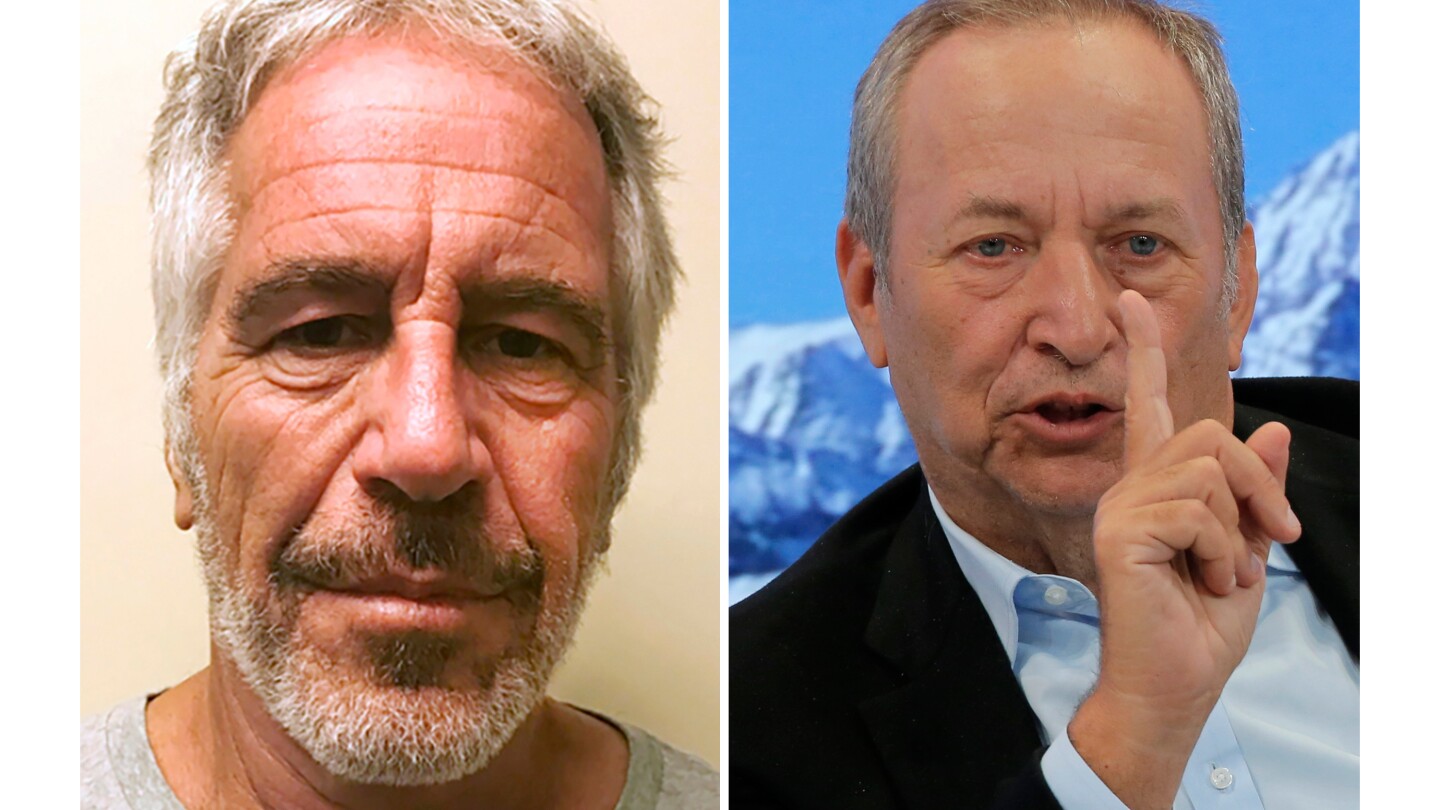
Former U.S. Treasury Secretary Larry Summers has been banned for life from the American Economic Association (AEA), a prestigious scholarly organization dedicated to economic research, following revelations about his continued relationship with convicted sex offender Jeffrey Epstein.
The AEA announced Tuesday it had accepted Summers’ resignation and permanently barred him from “attending, speaking at, or otherwise participating” in any of its events. In a strongly worded statement, the organization condemned Summers’ conduct, describing it as “fundamentally inconsistent with its standards of professional integrity and with the trust placed in mentors within the economics profession.”
This action follows the recent public release of emails showing Summers maintained a friendly relationship with Epstein years after the financier had pleaded guilty to soliciting prostitution from a minor in 2008. A spokesperson for Summers declined to comment on the AEA’s decision.
The correspondence, which has sent shockwaves through academic and policy circles, includes messages from 2018 in which Summers appeared to receive dating advice from Epstein. In one exchange, Epstein boasted about being “a pretty good wing man” while advising Summers on pursuing a romantic relationship with a woman who viewed the economist as a mentor.
“Am I thanking her or being sorry re my being married. I think the former,” Summers wrote to Epstein in one message. The emails also revealed that Summers’ wife, Elisa New, communicated with Epstein, including a 2015 message thanking him for arranging financial support for a poetry project she directs.
The fallout has been swift and widespread across multiple institutions. Harvard University, where Summers previously served as president from 2001 to 2006, placed him on leave from his teaching duties and from his position as director of the Mossavar-Rahmani Center for Business and Government at the Harvard Kennedy School.
Several other prominent organizations have also severed ties with Summers, including the Center for American Progress, a liberal think tank; the Center for Global Development, an international policy research organization; and the Budget Lab at Yale University, reflecting the depth of concern over his continued association with Epstein.
Summers, who served as Treasury Secretary under President Bill Clinton from 1999 to 2001, is one of America’s most influential economists, having held numerous high-level positions in government and academia. Following his time at Harvard, he served as Director of the National Economic Council under President Barack Obama from 2009 to 2010, playing a key role in the administration’s response to the financial crisis.
When questioned about the emails last week, Summers acknowledged his “great regrets” and described his association with Epstein as a “major error in judgment.” However, this statement has done little to quell criticism from academic and policy circles.
Epstein, who died in jail in 2019 in what authorities ruled a suicide, was awaiting trial on federal sex trafficking charges at the time. His connections to powerful figures in business, politics, and academia have continued to generate controversy and scrutiny even after his death.
The Summers-Epstein relationship highlights ongoing concerns about elite networking and accountability within prestigious institutions. For the economics profession specifically, the scandal touches on broader issues regarding mentorship, power dynamics, and professional ethics that have increasingly come under examination in recent years.
The AEA’s decisive action represents one of the strongest institutional responses to date regarding figures connected to Epstein, potentially signaling heightened sensitivity to ethical breaches within professional organizations. For Summers, the lifetime ban from a leading professional association marks a significant blow to his standing in the field where he has been a dominant voice for decades.
Fact Checker
Verify the accuracy of this article using The Disinformation Commission analysis and real-time sources.

14 Comments
This case highlights the delicate balance between upholding professional standards and ensuring fair treatment. While Summers’ actions are troubling, a lifetime ban may be an overreaction. Careful consideration of mitigating factors could lead to a more nuanced outcome.
Well said. Maintaining integrity in academia is crucial, but a lifetime ban should be reserved for the most egregious offenses. A more measured approach that allows for rehabilitation and reintegration may be more constructive in this case.
The Epstein scandal has already tarnished many reputations. While Summers’ ties to Epstein are concerning, a lifetime ban may set a dangerous precedent for academic freedom and due process.
You make a fair point. Upholding ethical standards is vital, but the punishment should fit the offense. A more nuanced approach that allows for rehabilitation could be more constructive.
This decision reflects the gravity of Summers’ actions, but it raises questions about the appropriate balance between punishment and redemption in academia. Thoughtful discussions on academic integrity are needed.
Agreed. Maintaining high ethical standards is crucial, but a lifetime ban may be an overreaction. A careful review of the evidence and consideration of mitigating factors could lead to a more balanced outcome.
The Epstein scandal has cast a long shadow over many prominent figures. While Summers’ connections are concerning, a lifetime ban from the AEA seems like a severe penalty. More transparency around the decision-making process would be helpful.
Absolutely. Ethical lapses should be taken seriously, but the punishment should fit the offense. A lifetime ban is a drastic measure that warrants close scrutiny of the evidence and decision-making rationale.
This case highlights the complex relationship between academia, power, and accountability. Banning Summers is a strong statement, but the details will be crucial in evaluating the fairness of the decision.
Absolutely. High-profile figures often operate in a gray area, and it’s important to balance principles with pragmatism. A measured, evidence-based approach is needed here.
Interesting development. While academic institutions should uphold high ethical standards, a lifetime ban seems overly harsh. I wonder if there are nuances to this case that warrant a more measured approach.
I agree. A lifetime ban is an extreme penalty, even for serious ethical lapses. Perhaps a suspension or probation period would be more appropriate, allowing for rehabilitation and reintegration.
The Epstein scandal has rocked many academic institutions. While Summers’ ties to Epstein are concerning, a lifetime ban from the AEA raises questions about due process and proportionality. Transparent deliberations and a focus on restorative justice could lead to a more balanced outcome.
Agreed. Ethical standards must be upheld, but a lifetime ban may be an overly harsh punishment. A more nuanced approach that considers mitigating factors and allows for redemption could be more appropriate in this case.