


Listen to the article
North Dakota’s Abortion Ban Reinstated as State Supreme Court Deadlocks on Ruling
Abortion rights in North Dakota suffered a significant blow Friday when the state’s Supreme Court failed to reach the required majority to uphold a lower court’s decision that had previously struck down the state’s abortion ban.
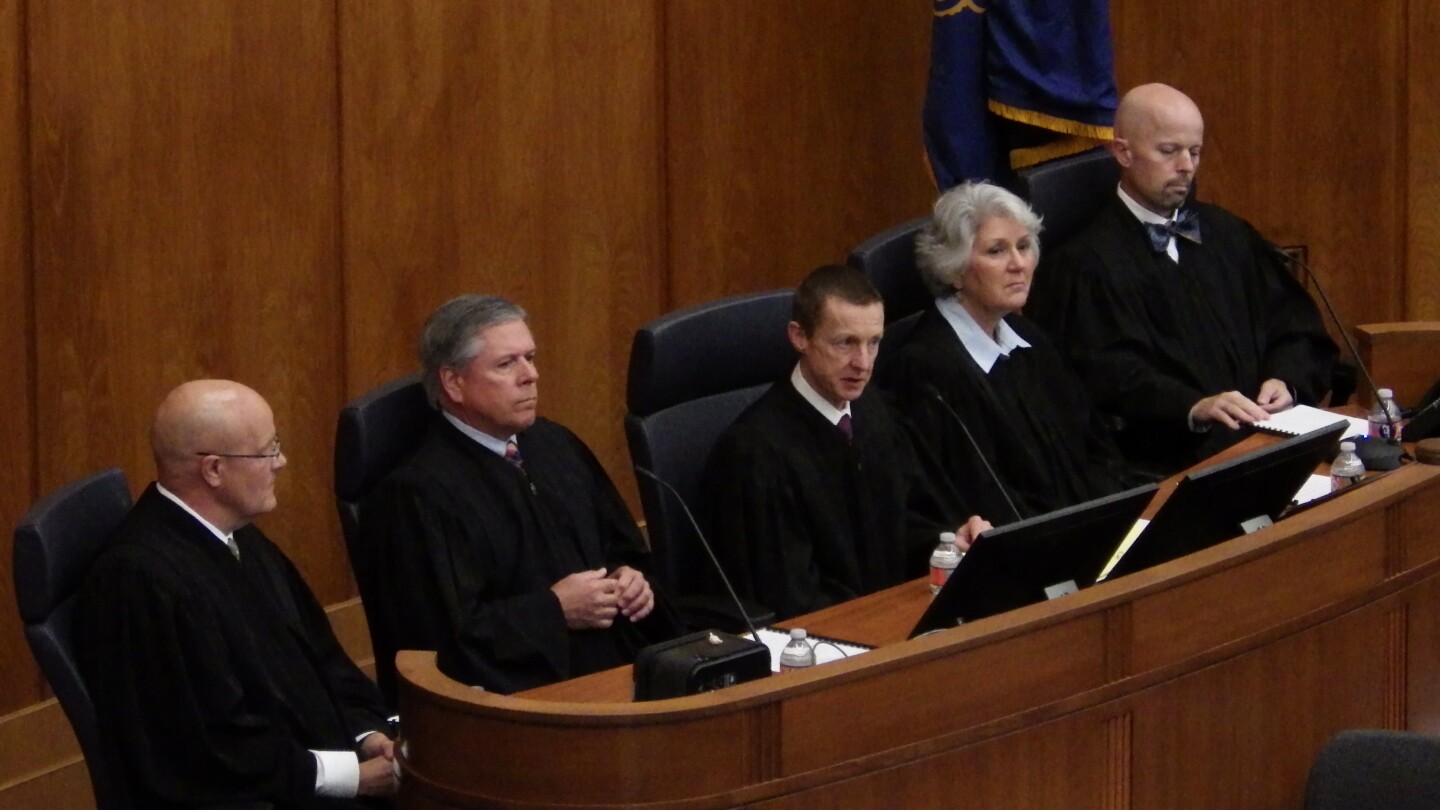
The high court’s split decision—with three justices finding the ban unconstitutionally vague and two supporting its constitutionality—effectively reinstates the prohibition on abortion throughout the state. North Dakota’s constitution requires at least four of the five justices to agree for a law to be declared unconstitutional, a threshold that wasn’t met in this case.
The law now makes performing an abortion a felony punishable by up to five years in prison and a $10,000 fine, though patients themselves cannot be prosecuted. The ban contains limited exceptions for rape or incest in the first six weeks of pregnancy—before many women know they are pregnant—and to prevent the mother’s death or “serious health risk.”
In his written opinion, Justice Jerod Tufte argued that the natural rights guaranteed by the state’s 1889 constitution do not extend to abortion rights. “The law provides adequate and fair warning to those attempting to comply,” Tufte wrote, rejecting arguments about the ban’s vagueness.
Republican Attorney General Drew Wrigley celebrated the court’s decision, stating, “The Supreme Court has upheld this important pro-life legislation, enacted by the people’s Legislature.” Similarly, Republican state Senator Janne Myrdal, who introduced the 2023 legislation, expressed being “thrilled and grateful” that two justices recognized the law as “fully constitutional for the mother and for the unborn child.”
However, Justice Daniel Crothers, among the three justices who voted against the ban, defended the lower court’s ruling. “The vagueness in the law relates to when an abortion can be performed to preserve the life and health of the mother,” Crothers wrote. “After striking this invalid provision, the remaining portions of the law would be inoperable.”
The Center for Reproductive Rights, which challenged the ban, described the decision as “a devastating loss for pregnant North Dakotans.” Meetra Mehdizadeh, a senior staff attorney with the organization, said, “This cruel and confusing ban is incomprehensible to physicians. The ban forces doctors to choose between providing care and going to prison.”
North Dakota now joins 12 other states enforcing total abortion bans at all stages of pregnancy, with an additional four states prohibiting the procedure at or around six weeks gestational age. The legal battle follows the U.S. Supreme Court’s 2022 decision to overturn Roe v. Wade, which eliminated federal abortion protections and shifted the issue to state courts and legislatures.
The impact on North Dakota residents seeking abortion care will be immediate and significant. Even before this ruling, abortion access in the state was severely limited. North Dakota’s only abortion provider relocated from Fargo to neighboring Moorhead, Minnesota, in 2022, anticipating potential restrictions.
The legal journey to this point has been complex. District Judge Bruce Romanick had struck down the ban earlier this year after it was challenged by the Red River Women’s Clinic—formerly the state’s sole abortion provider—and several physicians. The state appealed that ruling, with both the district judge and the state Supreme Court previously denying requests to keep the ban in effect during the appeals process.
Those temporary reprieves allowed patients with pregnancy complications to seek care without fear of delay, but Friday’s ruling brings that period to an end.
The North Dakota case illustrates the patchwork of abortion laws emerging across the United States in the post-Roe era, with access increasingly determined by state borders. It also highlights the critical role state constitutions and their specific legal thresholds play in determining reproductive rights, as courts continue to interpret decades-old constitutional language in light of contemporary medical and social realities.
Fact Checker
Verify the accuracy of this article using The Disinformation Commission analysis and real-time sources.

14 Comments
Abortion access is a fundamental right, but the state also has an interest in protecting life. I hope the courts can chart a path forward that respects the nuances and concerns of all parties involved.
Abortion access remains a hotly debated topic. I’m curious to see how this plays out in North Dakota and what implications it may have for the broader legal landscape around reproductive rights.
This is a complex and contentious issue. I hope the courts can find a balanced approach that respects both women’s rights and the state’s interest in protecting life. It’s crucial to consider the nuances and ensure all perspectives are heard.
This ruling is sure to stir strong emotions on both sides. I encourage everyone to engage in respectful, fact-based dialogue as the legal process plays out. Finding common ground and protecting fundamental rights will be critical.
The court’s inability to reach consensus highlights the difficulty of this issue. I hope leaders on all sides can engage in thoughtful, good-faith dialogue to find a balanced solution that respects rights and values.
It’s unfortunate to see such a divisive issue ping-pong through the courts. I hope lawmakers and the judiciary can find a solution that upholds the Constitution while also addressing the concerns of all stakeholders in a fair and constructive manner.
This is a highly contentious ruling that is sure to have significant ramifications. I’ll be following the developments closely to understand the legal reasoning and potential impacts.
The split decision underscores the deep divisions on this issue. I encourage everyone to approach this with empathy, nuance and a commitment to finding constructive solutions that uphold rights and values on all sides.
This is a complex, emotional issue without easy answers. I hope the courts and lawmakers can work to find an approach that balances the rights and concerns of all stakeholders in a fair and principled way.
This is a high-stakes ruling that will likely have ripple effects. I’ll be following the developments closely to understand the legal reasoning and potential implications for other states.
Abortion access remains a contentious and evolving issue. I’m interested to see how this unfolds in North Dakota and how it may impact the broader legal landscape around reproductive rights.
The court’s split decision highlights the complexity of this issue. I hope lawmakers and the public can have a nuanced, good-faith discussion to find an approach that balances competing interests and values.
Agreed, finding common ground is so important on this sensitive topic. There are valid concerns on all sides that deserve careful consideration.
Abortion access is a fundamental right, but the state also has an interest in protecting life. I hope the courts can chart a path forward that respects the nuances and concerns of all parties involved.