


Listen to the article
Federal Judge Orders Trump to End National Guard Deployment in Washington
A federal judge has ordered President Donald Trump to withdraw National Guard troops from Washington, D.C., marking a significant development in the ongoing legal battle over federal authority in the nation’s capital. U.S. District Judge Jia Cobb issued the ruling Thursday but stayed her order for 21 days, allowing the administration time to remove the troops or file an appeal.
The White House has already vowed to challenge the decision, maintaining that the deployment falls within presidential authority.
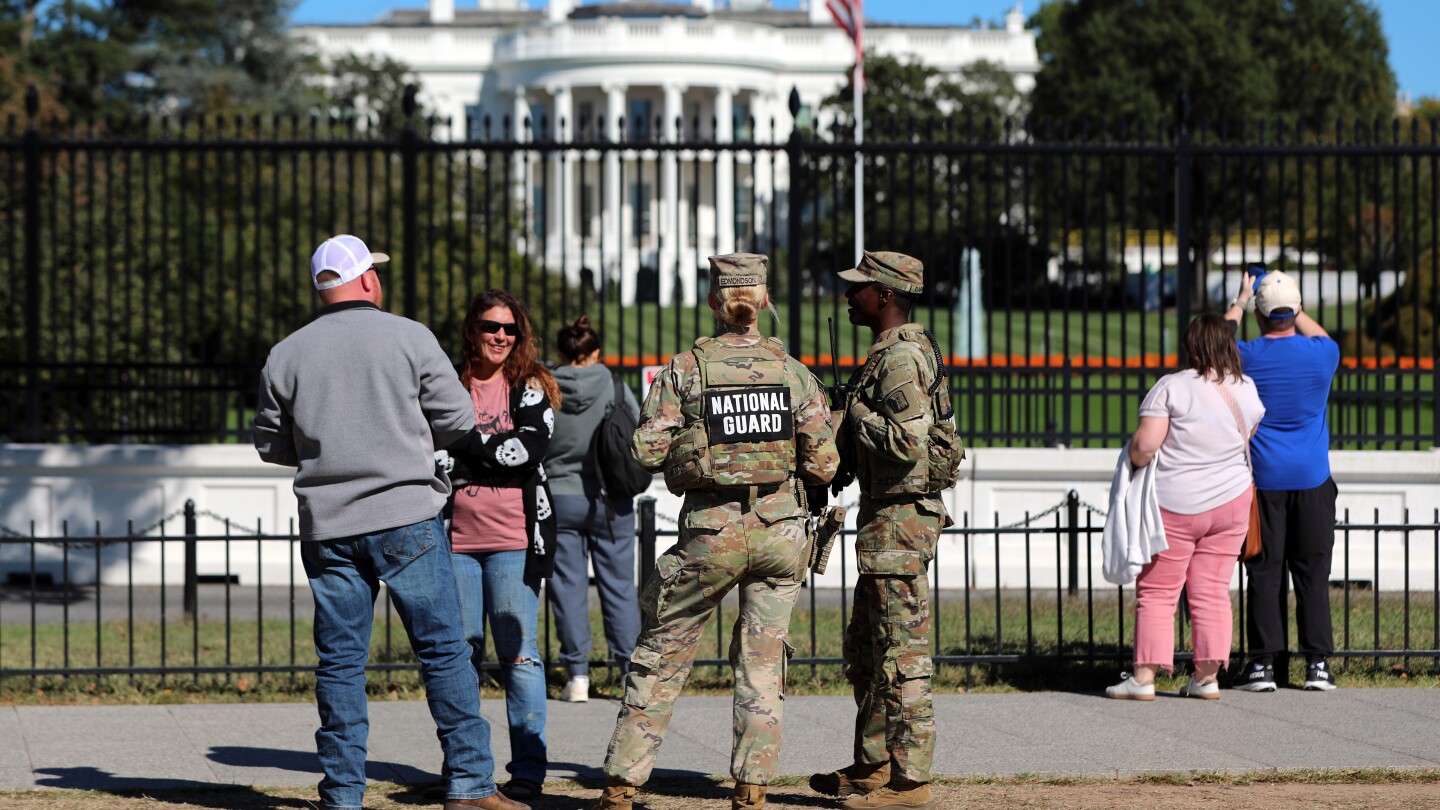
The dispute stems from Trump’s emergency order in August, which federalized the local police force and deployed National Guard units from eight states plus D.C. Although the original order expired after one month, the troops remained, establishing a military presence throughout the capital that has become increasingly controversial.
Since their arrival, Guard members have conducted neighborhood patrols, monitored monuments and transportation hubs, and established highway checkpoints. They’ve assisted federal agents in operations resulting in hundreds of arrests, particularly for immigration violations. Their duties have ranged from security operations to mundane tasks like trash collection and providing security at public events.
In her ruling, Judge Cobb determined the deployment violated Washington’s governance structure on multiple grounds. She cited presidential overreach into powers reserved for Congress, infringement on the District’s autonomy, and concerns about establishing a permanent military presence in the capital.
“At its core, Congress has given the District rights to govern itself. Those rights are infringed upon when defendants approve, in excess of their statutory authority, the deployment of National Guard troops to the District,” Cobb wrote in her opinion.
The judge emphasized that D.C. “suffers a distinct injury from the presence of out-of-state National Guard units” because “the Constitution placed the District exclusively under Congress’s authority to prevent individual states from exerting any influence over the nation’s capital.”
She expressed particular concern about the administration’s repeated extensions of the deployment, noting that orders now extend into February 2025, with some documents suggesting troops could remain until next summer. These extensions, Cobb wrote, “could be read to suggest that the use of the (D.C. National Guard) for crime deterrence and public safety missions in the District may become longstanding, if not permanent.”
Despite the ruling, Guard members remained stationed throughout Washington on Friday. Most state contingents were already scheduled to conclude their missions by late November, though the D.C. National Guard’s orders extend through February.
The White House defended the deployment as essential to its crime-fighting initiatives. “President Trump is well within his lawful authority to deploy the National Guard in Washington, D.C., to protect federal assets and assist law enforcement with specific tasks,” said White House spokeswoman Abigail Jackson. She dismissed the lawsuit as “another attempt — at the detriment of DC residents — to undermine the President’s highly successful operations to stop violent crime in DC.”
District of Columbia Attorney General Brian Schwalb, who filed the lawsuit, welcomed the decision. “From the beginning, we made clear that the U.S. military should not be policing American citizens on American soil,” Schwalb said. “Normalizing the use of military troops for domestic law enforcement sets a dangerous precedent, where the President can disregard states’ independence and deploy troops wherever and whenever he wants, with no check on his military power.”
D.C. Mayor Muriel Bowser, who has attempted to balance cooperation with federal authorities against constituent concerns, has not yet commented publicly on the ruling.
The case has broader implications for similar deployments nationwide. Trump has sent National Guard troops to Los Angeles, Chicago, Portland, and Charlotte, with additional cities potentially targeted. The legal questions raised in Washington—particularly regarding presidential authority to deploy troops for domestic law enforcement without local consent—could affect these operations.
The dispute has divided states along partisan lines. Democratic governors, including Illinois’ JB Pritzker, have warned against the “militarization of our American cities” and pursued legal challenges to the deployments. Some Republican governors have welcomed federal intervention, though others like Oklahoma Governor Kevin Stitt have expressed concerns that deploying National Guard troops without state consent “sets a very dangerous precedent.”
As the appeal process unfolds, the case highlights fundamental tensions between federal authority, state rights, and the unique status of the nation’s capital in America’s constitutional system.
Fact Checker
Verify the accuracy of this article using The Disinformation Commission analysis and real-time sources.

10 Comments
The judge’s decision to block the National Guard deployment is a significant check on executive authority. I’ll be watching closely to see if the administration is able to successfully challenge the ruling.
This is a nuanced situation with valid concerns on both sides. I hope the courts and policymakers can find a balanced solution that respects the rule of law and maintains public safety.
Well said. Achieving that balance will be critical as this issue unfolds further. There are no easy answers, but the process of judicial review is an important safeguard.
The deployment of National Guard troops in D.C. raises important questions about the limits of federal authority. I’m glad to see the judiciary stepping in to provide oversight and scrutiny.
This is a complex situation with valid concerns on both sides. The judge’s order appears to be a measured attempt to balance security needs with constitutional rights. I’ll be following this story closely.
I agree, it’s a delicate balance. Hopefully the administration and courts can find a resolution that upholds the rule of law while ensuring public safety.
This is an important issue that goes to the heart of federalism and the separation of powers. I’m curious to hear legal experts’ take on the judge’s ruling and its potential implications.
Agreed, this is a complex constitutional matter. It will be interesting to see how the administration’s appeal plays out and whether the judge’s order is ultimately upheld.
Interesting development in the ongoing legal battle over federal authority in D.C. Curious to see how the administration responds and whether the troops are ultimately withdrawn per the judge’s order.
The presence of National Guard troops has certainly been a controversial issue. I’m glad to see the courts stepping in to address concerns over overreach of federal power.