


Listen to the article
Two Conservative Political Operatives Sentenced to Probation for 2020 Voter Intimidation Scheme
A pair of conservative political operatives received probation sentences Monday for orchestrating a robocall campaign designed to discourage Black voters in Detroit from voting by mail during the 2020 presidential election.
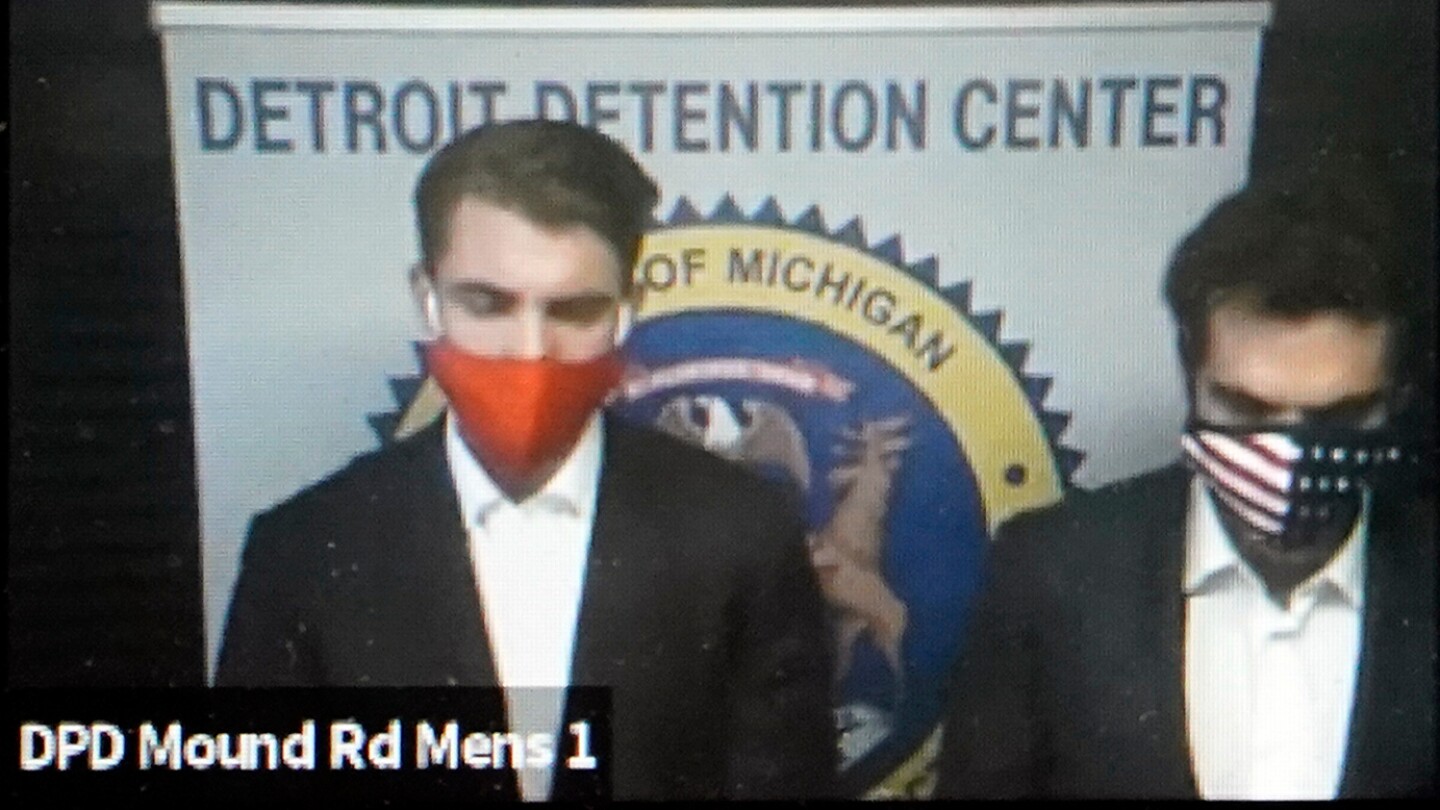
Jacob Wohl and Jack Burkman were sentenced to one year of probation after pleading no contest in August to charges of voter intimidation, conspiracy, and computer crimes. The case marks the conclusion of legal proceedings against them for a multi-state robocall operation that targeted predominantly Democratic urban areas.
The recorded messages falsely warned recipients they could face harassment from police, debt collectors, and “government vaccine bureaucrats” if they voted by mail. “Don’t be finessed into giving your private information to the man,” the recording cautioned listeners.
Michigan Attorney General Dana Nessel, a Democrat, condemned the operation, stating that Wohl and Burkman “used every racist dog whistle” to discourage mail-in voting among Black communities. The scheme came during the COVID-19 pandemic when mail-in voting saw unprecedented popularity across the country.
The Michigan case is just one component of a broader legal reckoning for the pair. Similar robocall operations in New York and Ohio resulted in additional penalties. In Ohio, a judge ordered them to perform 500 hours of community service specifically related to voter registration efforts in Washington, D.C.
The New York case ended with a substantial financial penalty. The two men settled a lawsuit by agreeing to pay up to $1.25 million, according to the New York attorney general’s office. The settlement highlighted the serious nature of their coordinated attempt to suppress votes in multiple states.
Defense attorneys in the Michigan case expressed relief at the conclusion of legal proceedings. Scott Grabel, Burkman’s lawyer, acknowledged the offensive nature of the robocalls while suggesting his client would avoid future legal troubles. “I don’t think he’s going to be back in any court in the future,” Grabel stated.
William Amadeo, Wohl’s attorney, similarly indicated satisfaction that his client could “put it behind him” following the sentencing.
The case underscores ongoing concerns about voter intimidation tactics and disinformation campaigns targeting minority communities. The 2020 election saw unprecedented challenges to voting access and election integrity, with numerous false claims about mail-in ballots circulating before and after Election Day.
Voting rights advocates have pointed to this case as an example of how sophisticated disinformation campaigns can target specific communities with tailored messages designed to discourage political participation. The robocall scheme was particularly notable for its strategic focus on Black voters in urban areas that historically lean Democratic.
The relatively light sentences—probation rather than jail time—have prompted discussion about appropriate penalties for election interference. However, the combined financial and community service obligations across multiple states represent significant consequences for the operatives.
Wohl and Burkman have a history of controversial political activities, including attempts to smear political opponents with false allegations. Their sentencing in Detroit brings closure to one chapter of their legal troubles while reinforcing the message that attempts to intimidate voters can result in criminal penalties.
As the 2024 presidential election approaches, election security experts are monitoring for similar voter suppression tactics while authorities remain vigilant against attempts to discourage participation among specific demographic groups.
Fact Checker
Verify the accuracy of this article using The Disinformation Commission analysis and real-time sources.

29 Comments
Exploration results look promising, but permitting will be the key risk.
Good point. Watching costs and grades closely.
I like the balance sheet here—less leverage than peers.
Good point. Watching costs and grades closely.
Good point. Watching costs and grades closely.
Silver leverage is strong here; beta cuts both ways though.
Uranium names keep pushing higher—supply still tight into 2026.
Good point. Watching costs and grades closely.
Interesting update on 2 conservative operatives get probation for robocalls to discourage Black Detroit voters in 2020. Curious how the grades will trend next quarter.
Good point. Watching costs and grades closely.
Good point. Watching costs and grades closely.
I like the balance sheet here—less leverage than peers.
Good point. Watching costs and grades closely.
Nice to see insider buying—usually a good signal in this space.
Good point. Watching costs and grades closely.
Exploration results look promising, but permitting will be the key risk.
Silver leverage is strong here; beta cuts both ways though.
If AISC keeps dropping, this becomes investable for me.
Good point. Watching costs and grades closely.
Good point. Watching costs and grades closely.
I like the balance sheet here—less leverage than peers.
Good point. Watching costs and grades closely.
Good point. Watching costs and grades closely.
Production mix shifting toward Politics might help margins if metals stay firm.
Good point. Watching costs and grades closely.
Good point. Watching costs and grades closely.
Exploration results look promising, but permitting will be the key risk.
Good point. Watching costs and grades closely.
I like the balance sheet here—less leverage than peers.