


Listen to the article
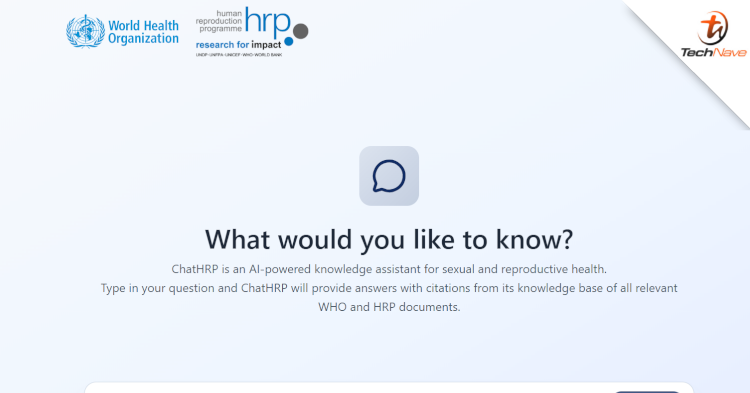
In an ambitious move to address the growing concern of health misinformation, the World Health Organization (WHO) has launched ChatHRP, an innovative artificial intelligence platform specifically designed to provide evidence-based information on sexual and reproductive health and rights (SRHR).
Developed in partnership with the Special Programme for Research, Development and Research Training in Human Reproduction (HRP)—a collaborative effort between UNDP, UNFPA, UNICEF, WHO, and the World Bank—ChatHRP aims to become a reliable source of medical information in an era where misinformation spreads rapidly across digital platforms.
The new AI tool functions similarly to popular chatbots like ChatGPT but with a crucial difference: it draws exclusively from WHO and HRP research, studies, and guidelines, ensuring users receive scientifically validated information. This specialized focus makes ChatHRP particularly valuable for healthcare professionals, policymakers, researchers, and civil society organizations seeking authoritative answers to complex health questions.
“Misinformation about sexual and reproductive health can have serious consequences for public health,” explained a WHO representative. “By creating a tool that provides immediate access to evidence-based information, we hope to counteract dangerous myths and empower people to make informed decisions about their health.”
One of ChatHRP’s most impressive features is its ability to function in regions with limited internet connectivity, addressing a critical gap in information access for underserved populations. The platform also supports multiple languages, making it accessible to diverse communities worldwide where language barriers often restrict access to quality health information.
Users can query the system on a wide range of topics, from clinical questions about contraceptive methods to policy inquiries about regional health statistics. Sample questions the system can address include management recommendations for diabetes during pregnancy, compatibility of PrEP (pre-exposure prophylaxis for HIV) with contraceptives, and the latest data on violence against women in specific regions.
For healthcare practitioners, the tool offers quick reference points for clinical protocols, such as preventing postpartum hemorrhage or advising patients on intrauterine device use during breastfeeding—information that can be critical in time-sensitive healthcare settings.
The development of ChatHRP comes at a crucial time when digital misinformation has been identified as a significant threat to public health worldwide. According to recent studies, false health information can spread six times faster than factual content across social media platforms, potentially influencing health behaviors and undermining public health initiatives.
Currently in its beta phase, ChatHRP is primarily targeting professional users in the healthcare and policy sectors. The developers acknowledge that the system is still evolving and encourage users to provide feedback when the AI cannot adequately address a query. This user feedback mechanism is designed to continuously improve the system’s effectiveness and expand its knowledge base.
The initiative received financial backing from Global Affairs Canada, highlighting the growing international recognition of digital health solutions as essential components of global health strategy.
Health technology experts note that ChatHRP represents a new generation of specialized AI tools designed to address specific challenges in professional fields rather than serving as general-purpose chatbots. This trend toward purpose-built AI systems is expected to grow across various sectors where accuracy and reliability are paramount.
As digital health technologies continue to evolve, initiatives like ChatHRP may help bridge the gap between rapidly advancing medical knowledge and its practical application in healthcare settings around the world, particularly in regions where access to up-to-date medical information remains limited.
The WHO plans to evaluate the impact of ChatHRP over the coming months, with potential expansions to cover additional health topics if the initial deployment proves successful.
Fact Checker
Verify the accuracy of this article using The Disinformation Commission analysis and real-time sources.

9 Comments
ChatHRP sounds like a valuable tool for healthcare professionals and policymakers to access authoritative guidance on complex SRHR issues. Mitigating the spread of misinformation in this space is so important.
Absolutely. AI-powered platforms like this can be powerful allies in the fight against online health misinformation.
It’s great to see the WHO taking proactive steps to leverage AI and technology to improve access to accurate SRHR information. Chatbots like this could be a game-changer.
Addressing health misinformation, especially around sexual and reproductive health, is critical. I’m hopeful ChatHRP can be an effective resource for both the public and medical professionals.
Interesting initiative by the WHO to combat health misinformation using an AI chatbot. Providing reliable, evidence-based information on sensitive topics like sexual and reproductive health is crucial.
While AI chatbots aren’t a silver bullet, tools like ChatHRP that leverage authoritative data sources could play a valuable role in combating the spread of misinformation online. Worth keeping an eye on.
Agreed. Pairing AI capabilities with high-quality, evidence-based information is a promising approach to tackle this challenge.
I’m curious to see how effective ChatHRP will be at reaching and educating the public. Addressing SRHR misinformation through an interactive AI interface could be an innovative approach.
Developing specialized, medically-validated chatbots is a smart strategy to provide trusted information on sensitive health topics. Kudos to the WHO and partners for this important initiative.