


Listen to the article
Bangladesh’s government has announced it will take firm action against media outlets spreading false information, following an incident involving misrepresentation of official statements about the country’s canal excavation projects.
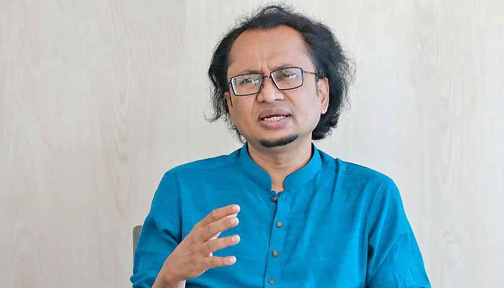
Dr. Zahed Ur Rahman, Prime Minister’s Adviser on Information and Broadcasting, delivered this message during a press conference at the Press Information Department (PID) on Tuesday. The announcement comes after what he described as deliberate misrepresentation of his statements by a prominent national newspaper.
The controversy centers around a photocard published by what Dr. Rahman described as “a well-known national daily” that allegedly quoted him as claiming half of all canals in Bangladesh had already been excavated. Dr. Rahman clarified that his original statement referred specifically to a government program targeting 1,260 kilometers of canals, of which 561 kilometers (44.55 percent) have been completed.
“This means nearly half of the canals under the programme,” Dr. Rahman explained, emphasizing the distinction between this specific initiative and the country’s entire canal system. Fact-checkers have since labeled the newspaper’s representation as disinformation.
The incident highlights growing concerns about media accountability in Bangladesh, where water management infrastructure plays a critical role in the country’s agricultural economy and flood prevention efforts. Canal excavation and maintenance are particularly important in this low-lying nation, where proper drainage systems help mitigate the impacts of monsoon flooding that affects millions of citizens annually.
Dr. Rahman stressed that the government would not tolerate misinformation from any source, drawing a clear distinction between individual social media users spreading false information and established news organizations doing the same. “There is a significant difference between an individual spreading such content and an institution doing so,” he noted.
While taking a firm stance against misinformation, Dr. Rahman also encouraged legitimate criticism of government actions. “There are many areas where the government can be criticised. Bangladesh is a large and complex country. Even with maximum effort, there will be shortcomings. Genuine criticism is welcome,” he said.
His comments reflect the delicate balance Bangladesh’s administration is attempting to strike between media freedom and accountability. The government has faced international criticism in recent years over press freedom concerns, making Dr. Rahman’s invitation for “more criticism of the government in the media” particularly noteworthy.
“I want to see more criticism of the government in the media—logical and constructive criticism that makes the environment vibrant. But please, no misinformation or disinformation,” he added, emphasizing the distinction between legitimate journalistic scrutiny and false reporting.
The adviser also pledged that the current administration intends to remain accountable to the media throughout its tenure, suggesting an openness to continued dialogue with journalists on matters of public interest.
This incident occurs amid broader regional concerns about misinformation and its impact on public discourse and policy implementation. As digital media continues to evolve in South Asia, governments and media organizations alike are grappling with questions of responsibility, accuracy, and the proper channels for addressing perceived inaccuracies.
The specific case highlighted by Dr. Rahman serves as a reminder of how misrepresented statistics and statements can distort public understanding of government programs, particularly in sectors like infrastructure development that require substantial investment and have direct impacts on citizens’ daily lives.
The government has not yet specified what actions it might take against media outlets found to be deliberately spreading misinformation, leaving open questions about how this new “strong stance” will be implemented in practice.
Fact Checker
Verify the accuracy of this article using The Disinformation Commission analysis and real-time sources.

31 Comments
I like the balance sheet here—less leverage than peers.
Good point. Watching costs and grades closely.
Good point. Watching costs and grades closely.
I like the balance sheet here—less leverage than peers.
Good point. Watching costs and grades closely.
Uranium names keep pushing higher—supply still tight into 2026.
Good point. Watching costs and grades closely.
Uranium names keep pushing higher—supply still tight into 2026.
Good point. Watching costs and grades closely.
Good point. Watching costs and grades closely.
Nice to see insider buying—usually a good signal in this space.
Good point. Watching costs and grades closely.
Production mix shifting toward News might help margins if metals stay firm.
Good point. Watching costs and grades closely.
If AISC keeps dropping, this becomes investable for me.
Good point. Watching costs and grades closely.
Nice to see insider buying—usually a good signal in this space.
Uranium names keep pushing higher—supply still tight into 2026.
Good point. Watching costs and grades closely.
Good point. Watching costs and grades closely.
Nice to see insider buying—usually a good signal in this space.
Good point. Watching costs and grades closely.
I like the balance sheet here—less leverage than peers.
Exploration results look promising, but permitting will be the key risk.
Uranium names keep pushing higher—supply still tight into 2026.
Production mix shifting toward News might help margins if metals stay firm.
Good point. Watching costs and grades closely.
Good point. Watching costs and grades closely.
I like the balance sheet here—less leverage than peers.
Good point. Watching costs and grades closely.
Good point. Watching costs and grades closely.