


Listen to the article
Election Misinformation and Viral Falsehoods: This Week’s Fact-Check Roundup
A surge of misinformation surrounding recent Assembly elections in Tamil Nadu and West Bengal has dominated social media platforms this week, according to fact-checking reports. The spread of false claims has targeted political parties, election processes, and even high-profile figures including Prime Minister Narendra Modi.
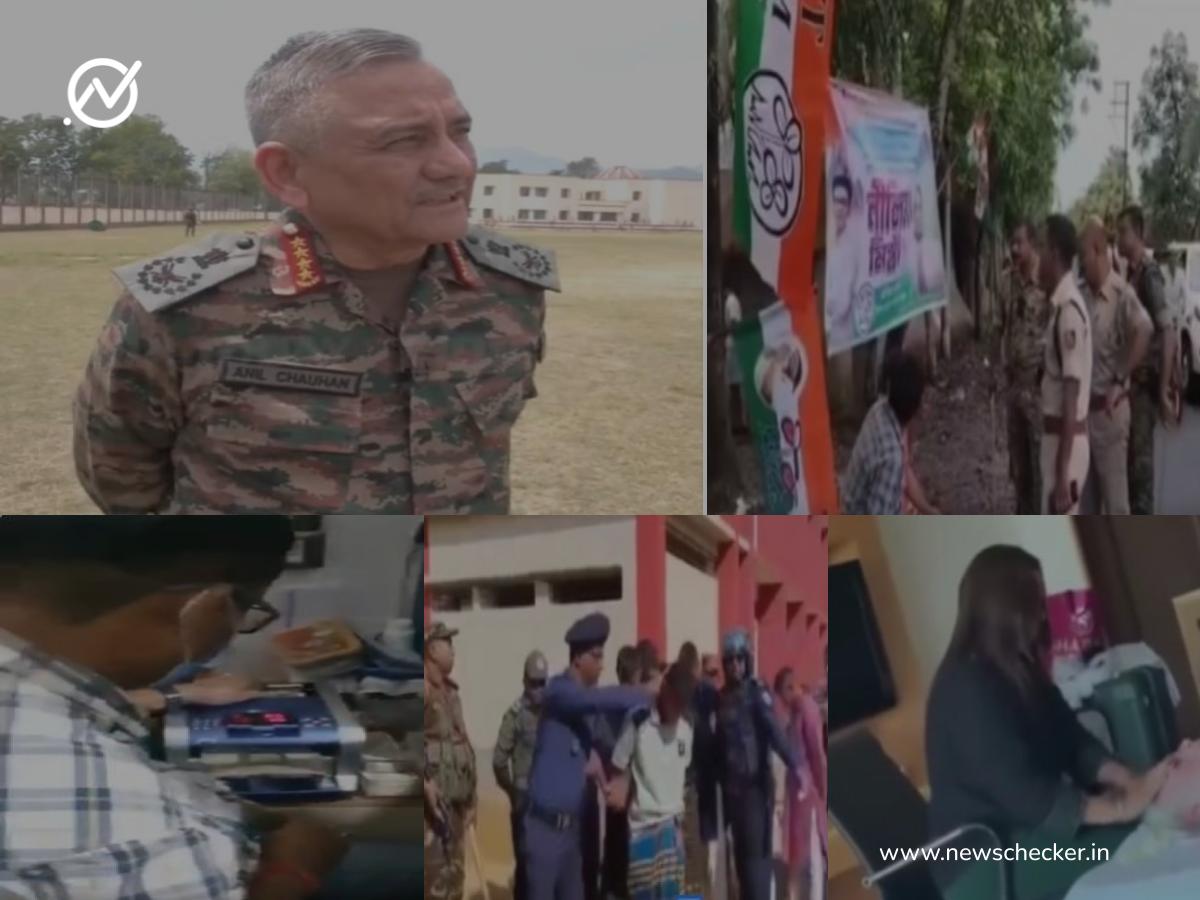
Among the most widely circulated false claims was a video purportedly showing Prime Minister Modi receiving a facial massage. The clip gained significant traction across multiple platforms before being debunked by fact-checkers at Newschecker, who determined the individual in the footage was not the Prime Minister. This incident highlights the ongoing challenge of visual misinformation that relies on facial similarity to generate misleading viral content.
The first phase of the West Bengal Assembly elections, held on April 23, 2026, triggered multiple waves of election-related misinformation. One viral video falsely claimed to show police personnel assaulting workers from the Trinamool Congress (TMC) for allegedly campaigning near polling stations during voting hours. Fact-checkers revealed the footage was being shared without proper context and did not represent the described events.
Similarly, another misleading video claimed to show Army personnel taking action against TMC supporters who were allegedly attempting to capture polling booths. This narrative played into existing political tensions in the state, where booth capturing allegations have been contentious in previous electoral cycles. Newschecker’s investigation determined this claim was also false, with the footage being repurposed from an unrelated incident.
The pattern of election misinformation extended to Tamil Nadu, where Assembly polls have also generated significant online falsehoods. A particularly viral video claimed to show massive stacks of cash seized from a warehouse supposedly linked to a close associate of DMK leader and Deputy Chief Minister Udhayanidhi Stalin. The timing of such claims appears designed to influence public perception ahead of voting, though fact-checkers found the video had no connection to Stalin or his associates.
Beyond domestic politics, international relations became a target for manipulated media. A doctored video circulating widely purported to show Chief of Defence Staff (CDS) General Anil Chauhan making controversial remarks about US-Israel relations. The manipulated clip featured Chauhan allegedly stating that US leaders are “toothless rulers” and that former US President Donald Trump “cannot disobey” Israeli Prime Minister Benjamin Netanyahu. Newschecker identified this as a manipulated video that had been edited to fabricate these statements.
Media analysts note that election periods typically see spikes in misinformation, but the sophistication of false content continues to evolve. “What we’re seeing is increasingly targeted misinformation designed to exploit existing tensions between political rivals,” explained Dr. Raman Krishnan, a digital media researcher at Delhi University. “The use of video manipulation has become particularly concerning as it provides visual ‘evidence’ that can be compelling even when entirely fabricated.”
The Electoral Commission has repeatedly warned against the spread of election-related misinformation, establishing dedicated teams to monitor social media platforms during polling periods. Despite these efforts, the rapid spread of false claims remains a significant challenge to electoral integrity.
Media literacy experts emphasize the importance of verification before sharing content, particularly during sensitive political periods. “The emotional nature of political content makes people more likely to share without verification,” noted Priya Sharma, director of the Digital Citizenship Initiative. “This creates fertile ground for misinformation campaigns that can potentially influence voter behavior.”
As the remaining phases of the Assembly elections approach, fact-checking organizations continue to monitor and debunk false claims circulating online, highlighting the ongoing battle against misinformation in India’s digital public sphere.
Fact Checker
Verify the accuracy of this article using The Disinformation Commission analysis and real-time sources.

13 Comments
This report underscores the challenges posed by the rapid dissemination of misinformation, especially around politically charged events like elections. Fact-checking remains crucial to upholding truth and transparency.
Agreed, the role of fact-checkers in verifying claims and countering the spread of false narratives is indispensable for maintaining the integrity of the democratic process.
This roundup highlights the ongoing battle against the spread of misinformation, especially around high-stakes political events. It’s a complex issue, but fact-checking efforts are crucial to upholding the integrity of the democratic process.
Agreed, the role of fact-checkers in debunking false claims and combating misinformation is absolutely vital, particularly in the context of elections.
This is a timely and important roundup highlighting the ongoing battle against election-related misinformation in India. Fact-checking efforts are essential to upholding the integrity of the democratic process.
Absolutely, the spread of false claims and visuals around elections is a serious concern that requires vigilant fact-checking and public education efforts.
Concerning to see the volume of election-related misinformation surfacing around the West Bengal polls. Reliable reporting and diligent verification will be key to ensuring voters have accurate information.
The prevalence of misinformation surrounding the recent Assembly elections in India is quite troubling. It underscores the need for robust media literacy initiatives to help the public critically evaluate online content.
Interesting to see how misinformation can spread so quickly, especially around high-profile political events like elections. It’s important to rely on trusted fact-checking sources to separate truth from fiction.
Absolutely, the proliferation of visual misinformation is a real challenge. Fact-checkers play a vital role in debunking these misleading claims.
The video of the alleged facial massage for PM Modi is a good example of how easy it is for similar-looking individuals to be mistaken for famous figures. Diligent fact-checking is crucial to prevent the spread of such false content.
You’re right, visual misinformation can be particularly tricky to spot. But it’s encouraging to see fact-checkers staying on top of these issues.
The proliferation of misinformation targeting high-profile figures like PM Modi is concerning. Fact-checkers play a critical role in swiftly debunking these misleading claims and curbing their spread.