


Listen to the article
Trust in the Face of Crisis: How Legacy Media Continues to Be a Beacon of Truth
In an era where information travels at lightning speed and misinformation spreads even faster, the recent geopolitical tensions have highlighted a surprising truth: legacy media is far from dead. As conflict erupted on February 28, millions of readers turned to trusted news sources for accurate information, demonstrating that credibility still holds immense value in today’s digital landscape.
The UAE’s oldest English-language news publisher has seen unprecedented traffic to its round-the-clock live blog coverage in the 48 days since hostilities began. This surge in readership tells a story that has been consistently repeated throughout the publication’s 48-year history – from the 2008 financial crisis to the COVID-19 pandemic in 2020, the devastating floods of 2024, and now the ongoing US-Israel-Iran conflict of 2026.
What distinguishes established media organizations in times of crisis is the foundation of trust built methodically over decades. When chaos and uncertainty reign, readers instinctively gravitate toward sources they can rely on for accurate reporting and thoughtful analysis.
The digital media landscape has undergone dramatic transformation with the rise of social media platforms and artificial intelligence. These technologies have democratized information sharing but simultaneously created a trust deficit that cannot be ignored. While information has become ubiquitous, accuracy remains elusive. The fierce competition for online engagement often compromises reporting integrity, with factual accuracy frequently sacrificed for clicks, likes, and shares.
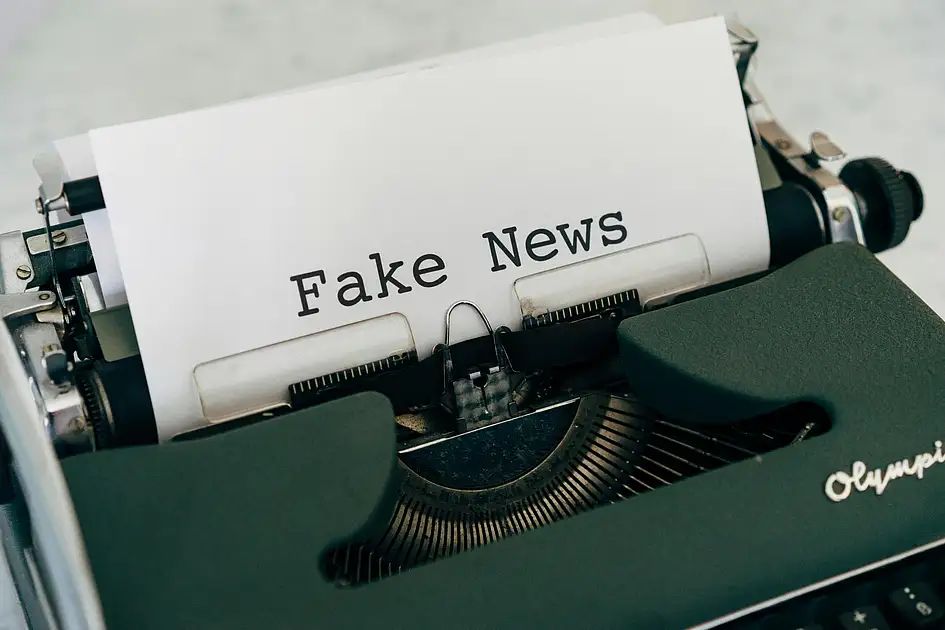
This phenomenon was particularly evident at the outset of the current conflict. International media outlets published sensationalist headlines that significantly distorted reality. Television networks repeatedly aired footage of emotional airport arrivals, featuring what some described as “Oscar-worthy” performances of people claiming to have “escaped the war in the Gulf.” The situation was further complicated by bad actors who exploited artificial intelligence to generate convincing but entirely fabricated videos depicting alarming scenarios – from the Burj Khalifa ablaze to military vessels under attack.
Media consumers now face an unprecedented verification challenge, where seeing can no longer be equated with believing. The proliferation of algorithm-driven content and AI-generated material has fundamentally altered information consumption patterns, creating an environment where distinguishing fact from fiction requires deliberate effort.
For news organizations committed to journalistic integrity, this landscape presents both challenges and opportunities. Breaking news teams find themselves balancing the pressure to deliver timely updates with the ethical imperative to verify information thoroughly. The race to be first cannot supersede the responsibility to be right.
The value of this approach was recently affirmed through an encounter with a Generation Z reader – a demographic often characterized by news avoidance due to perceived negativity and a preference for information consumption through short-form video platforms like TikTok, despite the elevated risk of misinformation. “I had to switch to the Khaleej Times live blog after the war started,” the young reader admitted, “because I know at least what I read there will be true.”
This testimony reflects a broader pattern that contradicts predictions about the demise of established media. During periods of uncertainty and heightened tension, readership data reveals that audiences extend well beyond local borders, with users from around the world seeking reliable information from trusted sources.
The digital transformation of the media landscape will continue to evolve, bringing both challenges and innovations. However, the fundamental need for accurate, contextual, and reliable reporting remains unchanged – particularly when stakes are high and misinformation can have serious consequences.
As legacy news organizations continue to adapt to technological changes and shifting consumption habits, their core value proposition – trustworthiness built through consistent, responsible journalism – becomes increasingly distinctive in an information ecosystem flooded with unverified content. The ongoing conflict has merely underscored what media professionals have long understood: in times of crisis, truth remains the most valuable commodity.
Fact Checker
Verify the accuracy of this article using The Disinformation Commission analysis and real-time sources.

21 Comments
Production mix shifting toward News might help margins if metals stay firm.
Good point. Watching costs and grades closely.
The cost guidance is better than expected. If they deliver, the stock could rerate.
Good point. Watching costs and grades closely.
Nice to see insider buying—usually a good signal in this space.
Good point. Watching costs and grades closely.
The cost guidance is better than expected. If they deliver, the stock could rerate.
Production mix shifting toward News might help margins if metals stay firm.
Good point. Watching costs and grades closely.
Exploration results look promising, but permitting will be the key risk.
Uranium names keep pushing higher—supply still tight into 2026.
Silver leverage is strong here; beta cuts both ways though.
Good point. Watching costs and grades closely.
Good point. Watching costs and grades closely.
The cost guidance is better than expected. If they deliver, the stock could rerate.
Good point. Watching costs and grades closely.
I like the balance sheet here—less leverage than peers.
Good point. Watching costs and grades closely.
Uranium names keep pushing higher—supply still tight into 2026.
Good point. Watching costs and grades closely.
Good point. Watching costs and grades closely.