


Listen to the article
Oklahoma State Researcher Tackles Misinformation Spread During Disasters
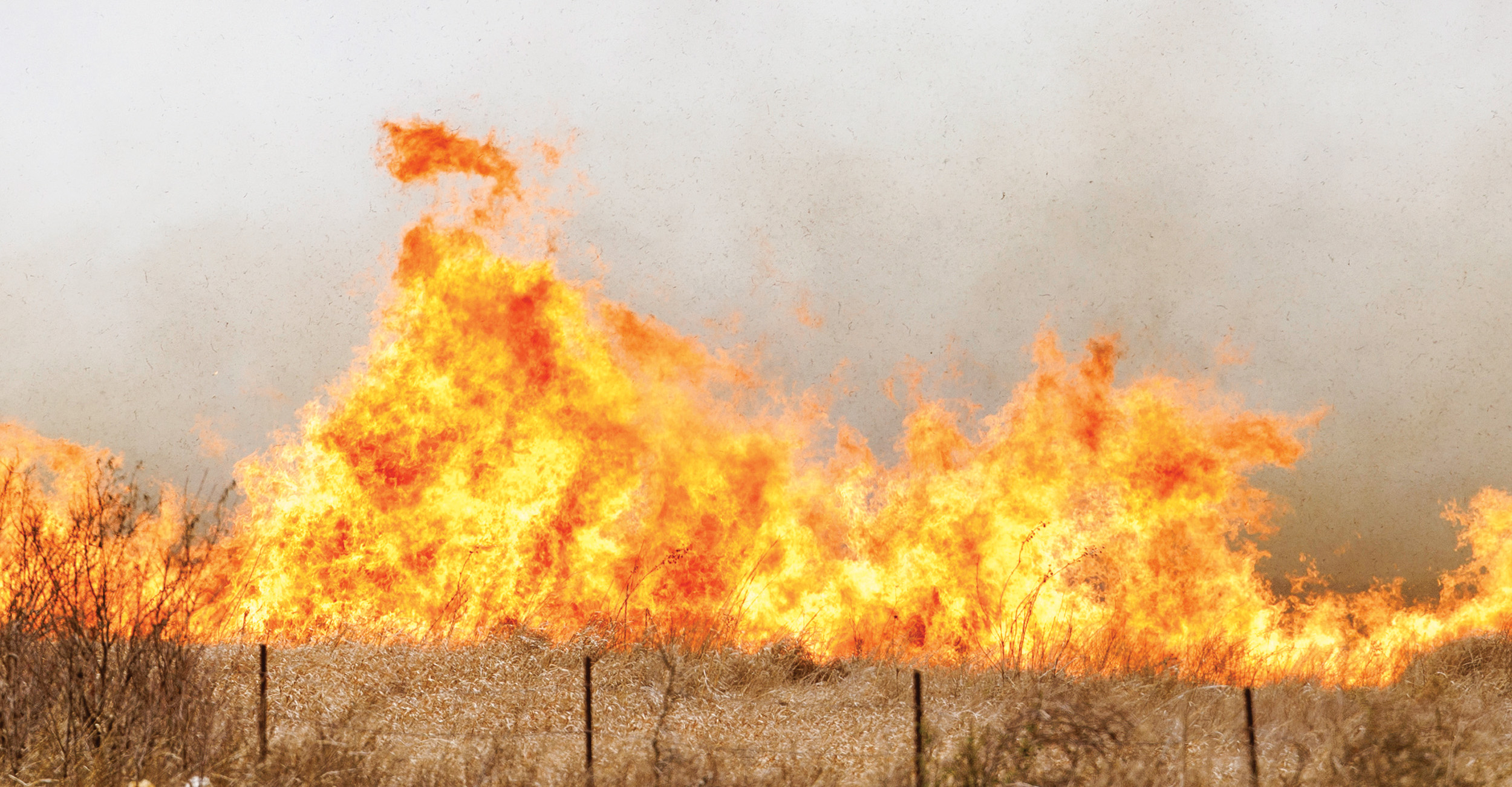
In the wake of a devastating wildfire that consumed over 26,000 acres and nearly 200 homes in Payne County, Oklahoma, earlier this year, a researcher at Oklahoma State University is leading efforts to combat the spread of misinformation during crisis situations.
On March 14, 2025, hurricane-force winds transformed a spark in a rural field into a raging inferno that quickly threatened Stillwater, home to Oklahoma State University’s nearly 50,000 residents. As the fire encroached on the west side of town, residents desperately sought information about evacuation routes and the fire’s path.
Many turned to social media, where they encountered outdated maps and evacuation plans being recirculated by well-meaning friends and family. This phenomenon highlights a critical issue: social media algorithms often prioritize engagement over timeliness, potentially putting lives at risk during emergencies.
Dr. Kayla Jiang, an assistant professor in the Spears School of Business Department of Management Science and Information Systems, studies exactly this problem. Using data analytics and artificial intelligence, her research examines how misinformation propagates during crises and develops strategies to contain it before it endangers public safety.
“Misinformation spreads really fast, even faster than the truth,” Jiang explains. “We want to kill the misinformation in its infancy before it spreads beyond control.”
Her research distinguishes between misinformation—false content shared without malicious intent, like outdated evacuation maps—and disinformation, which is deliberately created to deceive. Both forms have grown increasingly sophisticated and pervasive in recent years.
While most people recognize misinformation in high-profile contexts like political campaigns or conspiracy theories, Jiang’s work reveals its presence in seemingly mundane spaces. Fake product reviews, fabricated restaurant ratings, and misleading health claims circulating in community groups all represent manifestations of the same problem.
The consequences extend beyond immediate safety concerns. When people struggle to identify reliable information, their ability to make informed decisions deteriorates, ultimately eroding public trust in institutions and information sources.
Interestingly, Jiang’s research identifies significant differences in how misinformation spreads across communities. In rural areas with limited internet access, false information often circulates through traditional media and close-knit social networks like church groups. The strong social cohesion characteristic of these communities can paradoxically make misinformation more difficult to counter, as it often comes from trusted sources.
“Community really matters when it comes to battling misinformation,” Jiang notes. “In rural areas, we should rely on community-based approaches to help people identify and correct false information. This involves engaging with the trusted local voices like journalists, pastors and other community leaders.”
Media literacy programs in communities and schools represent a crucial component of Jiang’s proposed solution. Her research indicates that misinformation often succeeds by triggering strong emotional responses like anger or fear, which prompt sharing before verification. Teaching people to recognize these emotional triggers and implement simple verification steps—such as checking author credentials and cross-referencing information across multiple sources—can significantly mitigate the problem.
Jiang advocates a hybrid approach that leverages AI to flag suspicious content while relying on trained humans to provide context and verify accuracy. Some platforms have begun implementing similar strategies: Facebook now prompts users to read articles before sharing them, while X (formerly Twitter) employs Community Notes allowing users to flag and fact-check questionable content.
However, Jiang believes these efforts must become more systematic and community-focused, particularly in states like Oklahoma where rural and urban populations receive information through different channels.
Perhaps most critically, Jiang emphasizes that preparation far outperforms crisis response. Communities need established verification networks and trusted information sources in place long before emergencies strike. Residents should know where to find reliable updates and be trained to recognize unreliable sources before facing life-threatening situations when emotions run high.
In an information landscape where false claims can spread faster than wildfire, preparation remains the most effective defense strategy for communities across America.
Fact Checker
Verify the accuracy of this article using The Disinformation Commission analysis and real-time sources.

6 Comments
While social media has become an invaluable tool for sharing real-time updates, the spread of misinformation remains a serious concern, especially in emergency situations. This research is an important step toward more responsible information-sharing platforms.
Using data analytics and AI to combat misinformation during crises is a vital effort. Timely and accurate information can make a real difference in emergency situations. I’m curious to learn more about Dr. Jiang’s research approach and findings.
This is an important issue that has only become more challenging as social media has become a primary source of news and information. I appreciate the efforts to develop more robust systems to verify and distribute reliable crisis updates.
Agreed. Proactively addressing the spread of misinformation on social media during emergencies could save lives. I’m hopeful this research can lead to practical solutions.
Fascinating work. Developing systems to rapidly validate and distribute trusted information during disasters could make a real difference. I’m curious to see how this research evolves and what practical applications emerge.
Leveraging data analytics and AI to combat misinformation is a smart approach. Social media algorithms that prioritize engagement over accuracy can have devastating consequences during crises. This research seems critical for improving public safety.