


Listen to the article
South African Government Rebukes Musk Over “Disinformation” Claims
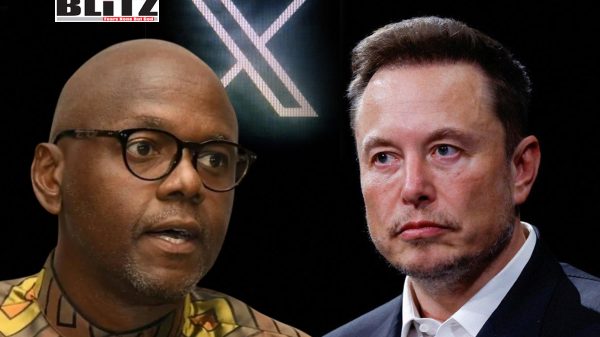
The South African government has issued a firm rebuke against billionaire Elon Musk, accusing the tech entrepreneur of spreading “lies and disinformation” about the country while disregarding its laws and policies. The clash erupted after Musk amplified controversial claims on social media suggesting white farmers in South Africa are being systematically targeted and killed.
The dispute intensified when Musk reposted a video on April 12 showing a row of crosses allegedly marking graves of murdered white farmers. The post quickly gained traction, reigniting a contentious narrative about violence against white South African farmers that has persisted for years.
Vincent Magwenya, spokesperson for President Cyril Ramaphosa, swiftly dismissed the claims as misleading and inflammatory. “The relationship he is forcefully seeking will not materialize under these circumstances,” Magwenya stated, urging Musk to “move on” and suggesting that his rhetoric undermines any constructive engagement with the country.
At the center of this conflict is South Africa’s Black Economic Empowerment (BEE) policy, a cornerstone of post-apartheid transformation designed to increase economic participation among Black South Africans who were systematically marginalized during apartheid. Musk has repeatedly criticized these laws, claiming they discriminate against him and have prevented his satellite internet venture, Starlink, from obtaining an operating license in the country.
Earlier on April 12, Musk claimed South Africa was blocking Starlink “simply because I am not Black,” prompting immediate pushback from government officials. Magwenya pointed out that South Africa is just one of 193 UN member states, implying that Musk has plenty of other markets to pursue without demanding concessions from Pretoria.
The controversy intersects with broader geopolitical tensions between South Africa and the United States. Relations have grown increasingly strained, particularly following South Africa’s decision to bring a case against Israel at the International Court of Justice regarding military operations in Gaza.
Former U.S. President Donald Trump has further inflamed tensions by accusing South Africa of allowing what he described as a “genocide” against Afrikaners, descendants of predominantly Dutch settlers who constitute approximately 7% of the population. South African authorities have consistently rejected these claims, maintaining that while crime remains a serious national issue, it affects all communities and is not racially targeted.
The South African government insists that narratives of “white genocide” distort reality and lack statistical backing. Officials acknowledge that farm attacks occur but emphasize they are part of broader criminal patterns rather than evidence of a coordinated campaign against a specific racial group.
Musk’s intervention touches on sensitive issues within South Africa, particularly land reform, which remains politically charged decades after apartheid’s end. The government defends its redistribution efforts as necessary to address historical injustices, given that much agricultural land remains disproportionately owned by a white minority.
Critics, including Musk, argue these policies potentially undermine property rights and economic stability. However, South African officials counter that reforms are being implemented legally and are essential for long-term social cohesion.
The clash also highlights the growing influence of global tech figures whose social media activity can have significant political implications. With millions of followers, Musk’s statements shape public discourse across borders. South African officials argue that such influence carries responsibility to ensure accuracy and avoid exacerbating tensions.
Neither side appears ready to de-escalate. Musk has not retracted his statements, while South African authorities remain firm that his assertions are unfounded. This standoff underscores the complex interplay between business interests, national policies, and international narratives in today’s interconnected world.
For South Africa, the priority remains defending its policies and international reputation against what it considers mischaracterizations. For Musk, the episode reflects ongoing frustrations with regulatory barriers and broader ideological disagreements over governance.
As tensions persist, implications for U.S.-South Africa relations and foreign investment remain uncertain. What is clear, however, is that the intersection of technology, politics, and social media continues to create new arenas for conflict with consequences extending far beyond individual statements.
Fact Checker
Verify the accuracy of this article using The Disinformation Commission analysis and real-time sources.

20 Comments
Musk’s comments seem ill-advised and could further inflame a complex social and political situation in South Africa. Both sides should focus on factual dialogue to find common ground.
South Africa’s BEE policies are certainly controversial, but that doesn’t justify spreading unsubstantiated claims. Responsible discourse is needed to address legitimate concerns.
This is a sensitive issue that requires nuance and facts, not inflammatory rhetoric. I hope both sides can engage constructively to address real concerns without resorting to misinformation or hyperbole.
Agreed, the claims about white farmer killings have been widely disputed. It’s important to rely on credible data and avoid stoking racial tensions, which helps no one.
While I understand Musk’s desire to address perceived injustices, his approach here seems counterproductive. South Africa should respond with factual rebuttals and a genuine invitation for constructive dialogue.
Absolutely, this dispute risks becoming a distraction from the real work of addressing South Africa’s complex social and economic issues. Both sides should seek to find common ground and practical solutions.
This dispute seems to be more about optics than substance. I hope both Musk and South Africa can move beyond the rhetoric and find a way to engage constructively on the real issues facing the country.
Agreed, this conflict is unlikely to be resolved through public posturing. The focus should be on data-driven discussions that address the root causes of South Africa’s challenges, not inflammatory claims.
Musk’s comments appear to be fueling divisiveness rather than finding common ground. South Africa should respond with restraint and clarity, challenging misinformation with facts.
Agreed, both parties would benefit from taking a step back and engaging in constructive, evidence-based discussions to address the real challenges facing South African society.
Musk’s comments seem to reflect an oversimplified view of a very complex situation. Both sides should seek to understand each other’s perspectives and find common ground, rather than resorting to rhetoric.
Agreed, this dispute risks becoming a distraction from the real work of addressing South Africa’s economic and social challenges. Constructive engagement, not public confrontation, is what’s needed.
While I respect Musk’s entrepreneurial spirit, his approach here appears counterproductive. South Africa should welcome constructive criticism, but not unfounded accusations that risk escalating tensions.
Agreed, this dispute is unlikely to be resolved through social media grandstanding. Both parties should seek to understand each other’s perspectives and find a path forward that benefits all South Africans.
This is a complex issue with no easy answers. I hope Musk and South Africa can find a way to have a thoughtful, nuanced dialogue that moves the country in a positive direction.
Absolutely, stoking racial tensions is counterproductive. The focus should be on pragmatic solutions that create economic opportunities and social cohesion for all South Africans.
This seems like a complex issue with valid concerns on both sides. I hope cooler heads can prevail and the parties can engage in good-faith dialogue to address the underlying problems.
Musk’s actions here seem more motivated by publicity than problem-solving. South Africa would be wise to stay focused on pragmatic solutions rather than getting drawn into a public spat.
While I respect Musk’s entrepreneurial success, his approach here seems misguided. South Africa should respond with measured, factual rebuttals rather than escalating the conflict.
Absolutely, this is a complex issue that requires nuanced, evidence-based dialogue, not social media grandstanding. Both parties should focus on finding practical solutions that benefit all South Africans.