


Listen to the article
Misinformation in India Becomes Mainstream Political Tool, Study Reveals
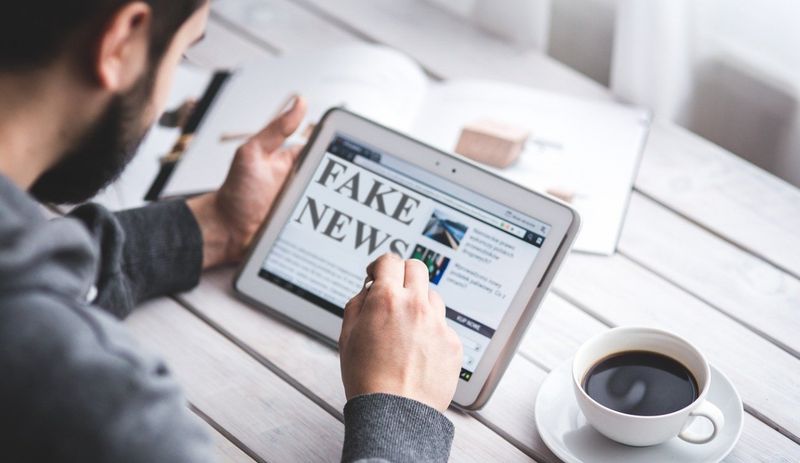
Systematic spread of false information is no longer confined to fringe elements in India but has become a core political strategy employed by mainstream parties, officials, and even state agencies, according to a comprehensive analysis by fact-checking organization Alt News.
The study, which examined 590 articles published by Alt News throughout 2025, found that political misinformation accounted for one-third of all fact-checks conducted during the year. Among these political fact-checks, a striking 61% of false claims favored the ruling Bharatiya Janata Party (BJP) or its leaders.
“An informed citizenry is the bedrock of a strong democracy,” notes the report, which draws on political science research emphasizing that citizens misinformed by propaganda are prone to making choices detrimental to democratic health.
The year 2025 was marked by several major events that triggered waves of misinformation, including India’s military Operation Sindoor against Pakistan in May and elections in multiple states. These high-impact events created fertile ground for the spread of false narratives.
The analysis reveals that BJP IT cell head Amit Malviya topped the list of political figures spreading misinformation, appearing in 12 fact-check reports. He was followed by BJP leader and West Bengal Opposition leader Suvendu Adhikari and BJP spokesperson Shehzad Poonawalla, who each appeared in three fact-checks. Other prominent BJP figures including Union Home Minister Amit Shah and Uttar Pradesh Chief Minister Yogi Adityanath were also found sharing false information.
In one notable instance, Malviya shared a deliberately misleading clip from an interview with political activist Yogendra Yadav, falsely claiming that Yadav had suggested Rahul Gandhi’s allegations of “vote theft” lacked evidence.
The report identified Congress leader Rahul Gandhi as the most frequent target of political misinformation, appearing as the subject in 17 fact-checks. Ladakhi activist Sonam Wangchuk ranked second with six instances, followed by Prime Minister Narendra Modi, who was targeted five times.
Particularly concerning was the finding that government agencies themselves were sources of misinformation. The Press Information Bureau (PIB), Prime Minister’s Office (PMO), NITI Aayog CEO BVR Subrahmanyam, and National Security Advisor Ajit Doval were all documented spreading false information.
In one case, during a briefing on Operation Sindoor in May 2025, the PIB displayed footage claiming it showed the 2019 Pulwana attack, when it actually depicted a 2007 blast in Iraq. In another instance, NSA Ajit Doval falsely claimed that a video of him stating the ISI had recruited more Hindus than Muslims in India was “deepfake,” when Alt News verified it was authentic footage from a 2014 lecture.
Social media users, particularly those with BJP affiliations, emerged as significant spreaders of misinformation. Several prominent pro-BJP social media accounts followed by Prime Minister Modi, including Jitendra Pratap Singh, Raushan Sinha, and Rishi Bagree, were repeatedly found sharing false information. Notably, some of these individuals had been invited to the Prime Minister’s oath-taking ceremony in 2024.
“These users constitute BJP’s unofficial IT cell and work relentlessly to promote pro-BJP propaganda,” the report states, noting that this pattern continued from 2024 when pro-right social media users and propaganda outlets were the biggest amplifiers of misinformation.
Even mainstream journalists contributed to the problem, with Alt News documenting seven cases of prominent media figures spreading false information. In one instance, journalists including CNN News18’s Rahul Shivshankar shared a deepfake video of Ukrainian President Volodymyr Zelenskyy.
The report concludes that 2025 saw the information ecosystem further destabilized by AI-generated content and deepfakes, while events like Operation Sindoor triggered surges in misinformation. Most concerning was what the analysis described as a “systemic collapse and failure of journalistic integrity,” with newsrooms becoming enablers of unverified claims.
This comprehensive analysis underscores the evolution of misinformation from a fringe phenomenon to a mainstream political tool in India, with significant implications for democratic discourse and electoral outcomes.
Fact Checker
Verify the accuracy of this article using The Disinformation Commission analysis and real-time sources.

11 Comments
This report highlights the urgent need to address the growing problem of political misinformation in India. When false claims become mainstream, it can have serious consequences for the health of the country’s democracy. Robust fact-checking and public education efforts are essential to combat this threat to informed decision-making.
It’s troubling to see misinformation being weaponized for political gain, especially around major events like elections and military operations. This erodes public trust and makes it difficult for citizens to make informed choices. Robust media literacy efforts are needed to combat this issue.
I agree, the spread of misinformation by mainstream political actors is a worrying development. Fact-checking organizations provide an essential service in exposing these falsehoods and holding leaders to account.
This study highlights the alarming prevalence of political misinformation in India. When false narratives become normalized, it can have serious consequences for the health of the country’s democracy. Fact-checking and media literacy are crucial to empowering citizens to be discerning consumers of information.
This is a concerning trend that undermines the integrity of India’s democracy. Widespread political misinformation can lead voters to make uninformed decisions with serious consequences. Fact-checking organizations play a vital role in exposing these false narratives and holding leaders accountable.
This report paints a troubling picture of the weaponization of misinformation in Indian politics. The fact that a majority of false claims favor the ruling party is particularly concerning. Maintaining the integrity of the democratic process requires an informed electorate, which is undermined by the spread of disinformation.
The findings of this study are deeply concerning. The normalization of political misinformation erodes public trust and makes it challenging for citizens to make informed choices. Fact-checking organizations and media literacy initiatives are crucial in combating this issue and upholding the integrity of India’s democratic processes.
The systematic dissemination of misinformation by political parties and state agencies is a disturbing trend. An informed citizenry is the bedrock of a functioning democracy, so this erosion of truth poses a real threat. Rigorous fact-checking and public education initiatives are needed to address this issue.
It’s disheartening to see political misinformation becoming so entrenched in India’s public discourse. Fact-checking organizations play a vital role in exposing these false narratives, but more needs to be done to strengthen media literacy and accountability for political leaders who engage in the systematic spread of disinformation.
It’s alarming to see the extent to which political misinformation has become entrenched in India’s public discourse. This is a serious threat to the health of the country’s democracy, as citizens misinformed by propaganda may make choices that are detrimental to the common good. Rigorous fact-checking and public education efforts are urgently needed.
This report highlights the worrying trend of political misinformation becoming a mainstream tool in India. An informed citizenry is essential for a strong democracy, and the systematic spread of false narratives undermines this. Fact-checking organizations play a vital role in exposing these falsehoods, but more must be done to address this issue at a systemic level.