


Listen to the article
Former DC Officer Michael Fanone Shares Capitol Riot Experience, Warns of Threats to Democracy
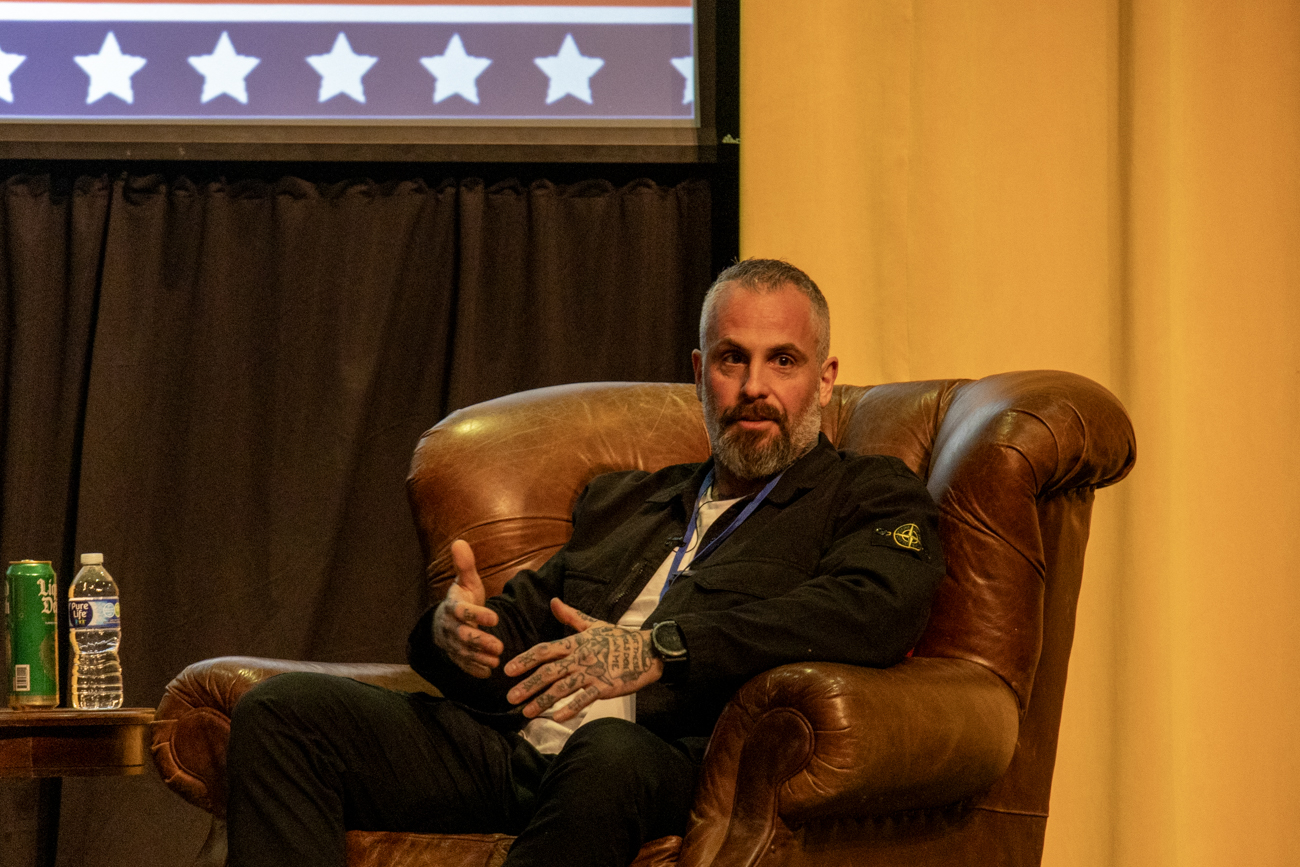
Hundreds gathered at Wichita State University’s Eugene M. Hughes Metropolitan Complex to hear former Washington, D.C. police officer Michael Fanone recount his harrowing experience during the January 6, 2021 Capitol riot and discuss what he views as ongoing threats to American democracy.
“Humans have the ability to become incredibly violent, that’s what happened on Jan. 6,” Fanone told the audience at the February 28 event hosted by Leading Kansas, a nonpartisan organization dedicated to holding elected officials accountable.
Fanone, who suffered both physical and mental injuries during the attack, began speaking publicly about the insurrection after noticing political leaders pushing false narratives about what occurred. His first public comments came just days after the riot in a Washington Post interview, beginning a mission to set the record straight that continues with appearances like this one.
The former officer, who was motivated to join law enforcement after the September 11 attacks, described January 6 as a wake-up call. CNN later aired his body camera footage, providing a disturbing firsthand account of the mob assault. During the attack, Fanone recalled pleading with rioters, telling them he had children in an attempt to appeal to their humanity.
“For the first time in history, the metropolitan police retreated… this wasn’t organized, this was chaos,” Fanone said, explaining how the events of that day demonstrated the real-world consequences of inflammatory political rhetoric.
The aftermath proved equally difficult for Fanone and his family. His mother was forced to relocate due to constant threats and uninvited visitors to her home. His oldest daughter, now 23, learned what happened to her father by watching the events unfold live on television.
Fanone expressed particular frustration with political figures who have attempted to redefine what occurred on January 6. He specifically referenced U.S. Rep. Andrew Clyde (R-Ga.), who claimed videos of the riot showed “another average tourism day” at the Capitol, despite photos showing Clyde himself barricading House chamber doors to keep rioters out. In response to such mischaracterizations, Fanone released his own body camera footage.
“When political leaders use their platforms to spread misinformation about clearly documented events, change must come from the ground up,” Fanone emphasized throughout his talk.
Despite the trauma he experienced, Fanone remains hopeful about America’s future, comparing the process of rebuilding democracy to forest regeneration. “You burn down a forest, there is opportunity to build something bigger and more beautiful than what you lost,” he said.
The central themes of Fanone’s presentation focused on the importance of service, community coalition-building, and opposing the glorification of violence. He stressed that everyday citizens can make a significant impact by engaging with their communities and participating in the political process.
“I’m not anyone special,” Fanone told the audience. “I’m just someone who was placed in a particular moment at a particular time.”
Rebecca Armstrong, a member of Leading Kansas, emphasized that events like this one are crucial first steps in addressing political division. “It helps start a dialogue,” she said.
Fanone also addressed other pressing issues, including recent controversial actions by U.S. Immigration and Customs Enforcement (ICE). “We should all be outraged, especially for the immigrant community,” he said. “Immigration enforcement is one thing, targeting these communities echoes a Jim Crow past.” He expressed concern about ICE overstepping its intended role, noting that “local police do the police work, federal agencies provide resources.”
The former officer also touched on military conflicts, sharing his personal connection to veterans who struggled to receive adequate care after serving. Having been inspired to serve as a police officer by his love for country, Fanone worries that similar patterns of manipulation based on patriotism continue today.
Throughout the event, Fanone emphasized the importance of accurate information and civic engagement, particularly among young people. Armstrong reinforced this message, noting that “information is essential” to a functioning democracy, strong economy, and effective healthcare and education systems.
Without greater community involvement and higher voter turnout, Armstrong warned, the status quo would persist. “When our legislators come together, they’ve been paid by very wealthy people to be in that position,” she said. “When you have 10% or even 25% of your electorate voting, those people aren’t being elected in.”
Fact Checker
Verify the accuracy of this article using The Disinformation Commission analysis and real-time sources.

7 Comments
The officer’s description of the violence and his call to action against misinformation are sobering reminders of the fragility of our democratic institutions. We must heed these warnings and remain vigilant in defending the truth, no matter how uncomfortable it may be.
Disturbing to hear this officer’s firsthand account of the violence and misinformation surrounding the January 6th events. It’s critical that we listen to those who experienced it directly and ensure the truth is told, no matter how uncomfortable it may be.
I’m glad this officer is speaking out to counter the false narratives. Upholding democratic values and the rule of law requires vigilance against those who would undermine the truth for political gain. His perspective is an important reminder of the real human toll of such events.
Agreed. Hearing directly from those who were there offers a sobering counterpoint to the misinformation. Fact-based accounts like this are vital for maintaining public trust and preserving the integrity of our institutions.
This is a powerful and important firsthand account. While the details are disturbing, it’s critical that we hear from those who experienced the events of January 6th directly, rather than relying on partisan spin or misinformation. Upholding the truth is essential for a healthy democracy.
Agreed. Hearing directly from this officer provides valuable insight into the realities of that day, which have been obscured by political rhetoric. His willingness to share his experience is commendable and should be heeded as a warning against the dangers of misinformation.
The officer’s comments highlight the dangers of misinformation and how it can fuel real-world violence. It’s a troubling situation, but I’m encouraged that he is using his platform to speak the truth and caution against the erosion of democratic norms.