


Listen to the article
Pakistan-linked Social Media Accounts Uncovered in Noida Violence Investigation
Authorities investigating recent violence in Gautam Buddh Nagar, Uttar Pradesh have uncovered a disturbing connection to social media accounts operated from Pakistan, according to sources close to the investigation. Security officials revealed that misinformation campaigns orchestrated through specific X (formerly Twitter) handles played a significant role in triggering the unrest that led to property damage and public disturbances.
The investigation has identified two primary accounts, @Proudindiannavi and @Mir_llyas_INC, which posted inflammatory content on April 13, 2026. These accounts systematically shared misleading information designed to provoke tensions in the region, according to sources who spoke to India Today on condition of anonymity.
“The digital forensics team has established that these accounts were operated from across the border,” said an official familiar with the investigation. “They used sophisticated VPN services to mask their actual location, but technical analysis revealed their Pakistani origins.”
The disinformation strategy appears to have been carefully planned, with investigators noting that similar attempts to instigate unrest had been made through these accounts prior to the successful incitement on April 13. The provocative posts quickly circulated through various communities in Gautam Buddh Nagar, creating an atmosphere of fear and suspicion that ultimately erupted into violence.
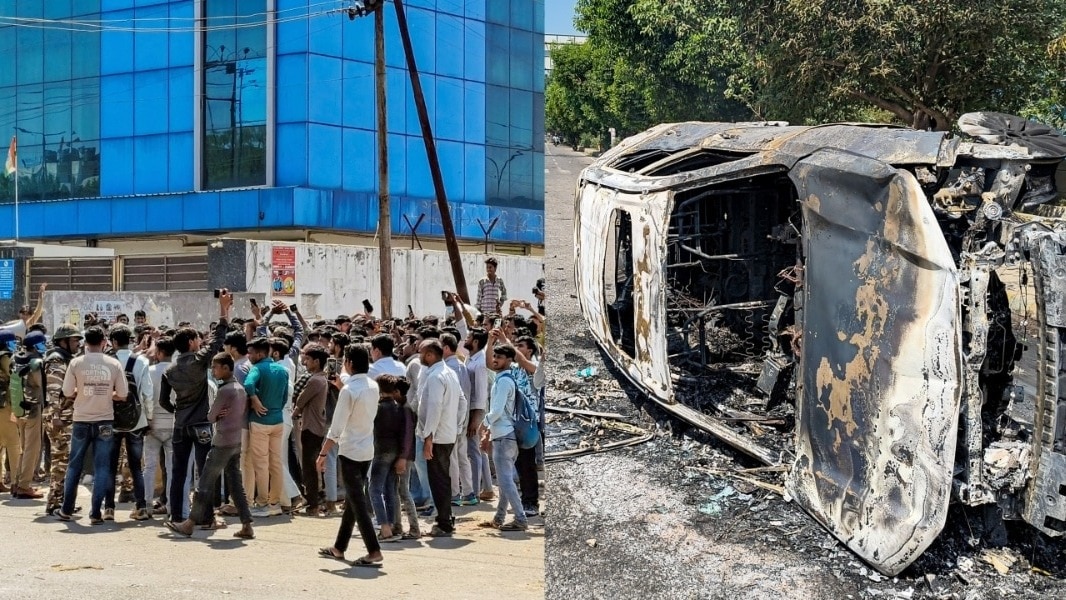
Local residents reported that tensions escalated rapidly once the misinformation began spreading through community networks. What began as online rumors soon materialized into physical confrontations, with aggressive crowds engaging in stone-pelting at several locations across the district.
Eyewitnesses described scenes of chaos as the violence intensified. “People were attacking anyone they could find,” said Rajesh Kumar, a shop owner in Sector 18 who witnessed the disturbance. “Several vehicles were damaged, and some were even set on fire. Many businesses had to shut down immediately.”
Police reports indicate significant damage to both private and public property. Multiple vehicles were vandalized, windows of commercial establishments were shattered, and some structures were set ablaze during the peak of the violence. Local authorities deployed additional forces to contain the situation, but several areas had already suffered substantial damage by then.
The Gautam Buddh Nagar Police have registered a formal case at the Sector-20 police station under case number 121/26. The charges invoke multiple sections of the Bharatiya Nyaya Sanhita, the recently implemented criminal code, as well as Section 66 of the Information Technology Act, which addresses computer-related offenses.
“We’re taking this case very seriously,” said a senior police official from Gautam Buddh Nagar. “When foreign elements attempt to disrupt our social fabric through digital means, it represents a new kind of security challenge that requires both technological expertise and traditional policing methods.”
This incident highlights growing concerns about cross-border digital influence operations targeting India’s social harmony. Security analysts point to an increasing trend of foreign-based actors exploiting domestic tensions through targeted misinformation campaigns on social media platforms.
Cyber security expert Anand Prakash noted that such operations have become more sophisticated in recent years. “The perpetrators study local issues carefully and craft messages that can inflame existing tensions. They often use authentic-looking accounts that build credibility over time before deploying their actual misinformation campaigns.”
Authorities have requested assistance from the social media platform to obtain additional details about the accounts in question, including IP logs, device information, and other digital evidence that could further strengthen the case.
The investigation continues as officials work to identify additional accounts that may have amplified the initial misinformation and to determine if there are broader networks involved in coordinated influence operations targeting sensitive regions in India.
Fact Checker
Verify the accuracy of this article using The Disinformation Commission analysis and real-time sources.

13 Comments
The revelation of Pakistan-linked social media accounts behind the Noida unrest is deeply concerning. Authorities must remain vigilant and continue their efforts to uncover the full scope of this disinformation campaign and its potential links to other incidents.
The use of VPNs to mask the actual location of these malicious accounts is a common tactic employed by bad actors seeking to sow discord. I’m glad the investigators were able to trace the origin to Pakistan.
Sophisticated digital forensics are crucial in these cases to identify the source and hold the perpetrators accountable. Transparency and public awareness are key to combating cross-border misinformation.
This incident highlights the need for greater investment in digital forensics and intelligence-gathering capabilities to identify and counter cross-border information warfare tactics. Collaboration between law enforcement, platforms, and international partners will be crucial.
Absolutely. Addressing the threat of transnational disinformation requires a coordinated, multilateral approach to identify the sources, disrupt the networks, and build resilience within our societies.
This case serves as a stark reminder that the digital domain is a new frontier for geopolitical conflict. Nations must enhance their capabilities to detect, analyze, and respond to cross-border information operations that seek to destabilize society.
Agreed. Strengthening digital defense mechanisms and international cooperation will be crucial to safeguarding national security and public order in the face of evolving transnational threats.
This incident underscores the importance of media literacy and critical thinking when consuming online content. Users must be vigilant in verifying information sources and fact-checking claims, especially those with potential geopolitical motivations.
Absolutely. Cultivating a more discerning and skeptical online population is crucial to building resilience against malicious misinformation campaigns.
While it’s disturbing to see foreign interference in domestic issues, I’m encouraged that the authorities were able to uncover the origins of this disinformation network. Continued diligence and coordination across borders will be key to combating these threats.
This is a concerning incident of cross-border misinformation causing real-world violence. It’s critical that authorities investigate the sources and motives behind these social media accounts to prevent such incidents in the future.
Agreed. Rigorous analysis of digital forensics is essential to uncover the true origins and intentions behind these coordinated disinformation campaigns.
It’s deeply concerning to see how social media can be weaponized to incite real-world violence and unrest. This case highlights the urgent need for improved platform moderation and international cooperation to address transnational disinformation threats.