


Listen to the article
Industrial Unrest in Noida Shows Signs of Stabilizing Amid Fragile Peace
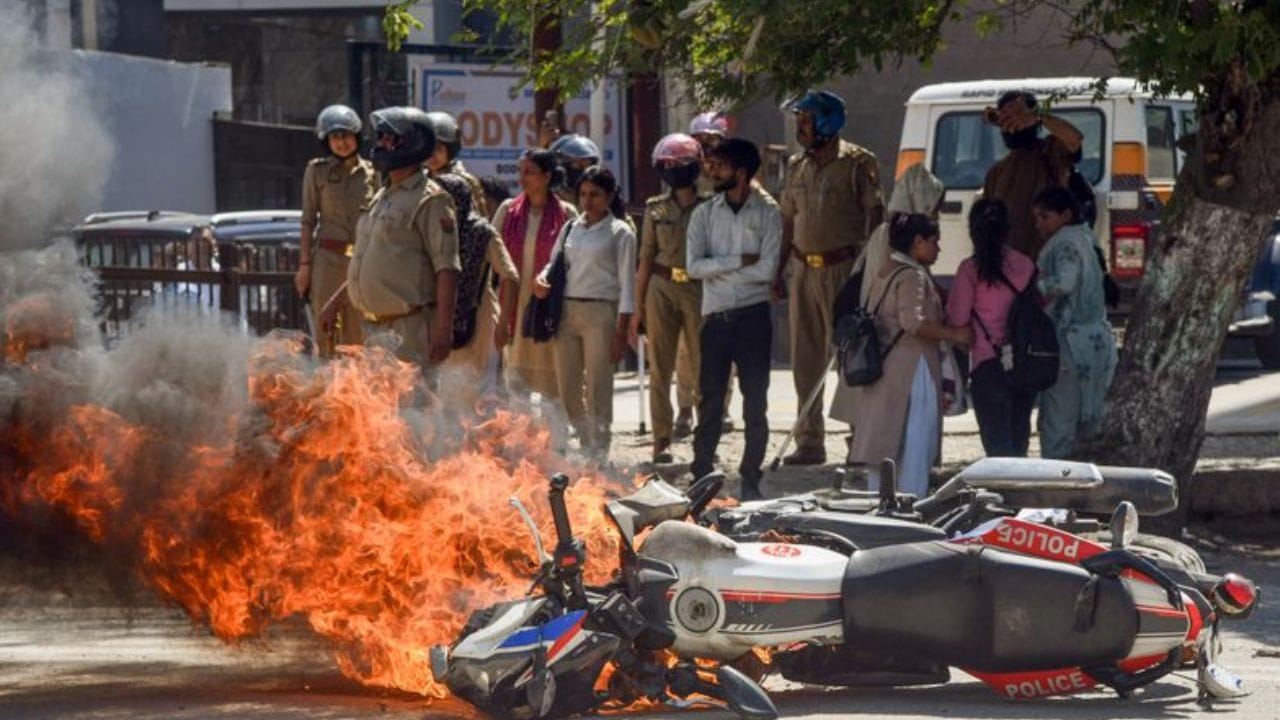
The industrial labor dispute that gripped Noida over the past two days has entered a tentative phase of calm as of Sunday afternoon. Government officials report the situation remains “controlled but fragile” following a wave of worker protests that threatened to destabilize one of North India’s most significant manufacturing hubs.
Authorities have implemented a two-pronged strategy—combining wage revision promises with targeted enforcement actions—which has temporarily succeeded in preventing further large-scale escalations. However, scattered demonstrations continue across several industrial sectors, suggesting that worker dissatisfaction runs deeper than initially assessed.
Labor representatives indicate that expectations among the workforce have evolved substantially, moving “beyond incremental increases” that have typically satisfied demands in previous years. Many workers are now comparing their compensation packages with those offered in neighboring states, creating pressure for more substantial structural changes to wage policies.
“The comparison with nearby industrial zones has created a new benchmark that workers are using to evaluate offers,” said an industry analyst who requested anonymity. “This represents a significant shift in negotiation dynamics that employers weren’t prepared for.”
Government officials and industry representatives have identified three critical factors that will determine whether the current fragile stability will hold or deteriorate in the coming days.
First, the “effectiveness of negotiations” between workers, industry associations, and government mediators will be crucial. Several rounds of talks are scheduled for early this week, with labor ministry officials facilitating discussions aimed at establishing a framework for sustainable wage structures.
Second, authorities are continuing their “enforcement against misinformation networks” that they claim have amplified tensions. Police have identified several social media accounts allegedly responsible for spreading false information about negotiations and organizing coordinated protests. Multiple arrests have already been made under cybersecurity provisions.
Third, and perhaps most critically, the successful “implementation of revised wage structures” will determine long-term stability. The current proposal includes a 12-15% increase in base compensation, but worker representatives argue this still leaves a substantial gap compared to manufacturing jobs in adjacent industrial regions.
The Noida industrial corridor, home to hundreds of manufacturing facilities producing everything from electronics to automotive components, employs over 300,000 workers and contributes significantly to Uttar Pradesh’s export economy. Any prolonged disruption threatens both regional economic stability and national supply chains.
Economic experts note that these events reflect a broader transformation in India’s industrial relations landscape. Labor disputes are increasingly characterized by “regional comparisons, digital mobilization, and rapid information flows” rather than traditional factory-specific grievances. Workers now leverage social media platforms to share compensation information across regions and coordinate actions, creating new challenges for both employers and regulators.
“What we’re seeing is the digitalization of labor activism,” explained Dr. Rajesh Kumar, labor economist at Delhi School of Economics. “Information asymmetry between employers and employees has diminished dramatically, empowering workers to make more informed demands based on broader market conditions.”
For Noida’s industrial ecosystem, restoring lasting stability will require more than temporary concessions or security measures. Industry observers suggest that developing “credible, transparent and region-sensitive labour policy responses” will be essential for preventing similar disruptions in the future.
Several major manufacturers have already announced reviews of their compensation structures, recognizing the need for more competitive packages to retain skilled workers. However, smaller suppliers with tighter margins may struggle to match these adjustments without passing costs to consumers or reducing workforces.
As negotiations continue, both government officials and industry representatives acknowledge that addressing these structural challenges will require sustained dialogue rather than quick fixes. The coming week may prove decisive in determining whether Noida’s industrial peace becomes sustainable or merely a temporary pause in a larger labor movement.
Fact Checker
Verify the accuracy of this article using The Disinformation Commission analysis and real-time sources.
