


Listen to the article
Nigeria Launches First UNESCO Media Literacy Institute to Combat Misinformation
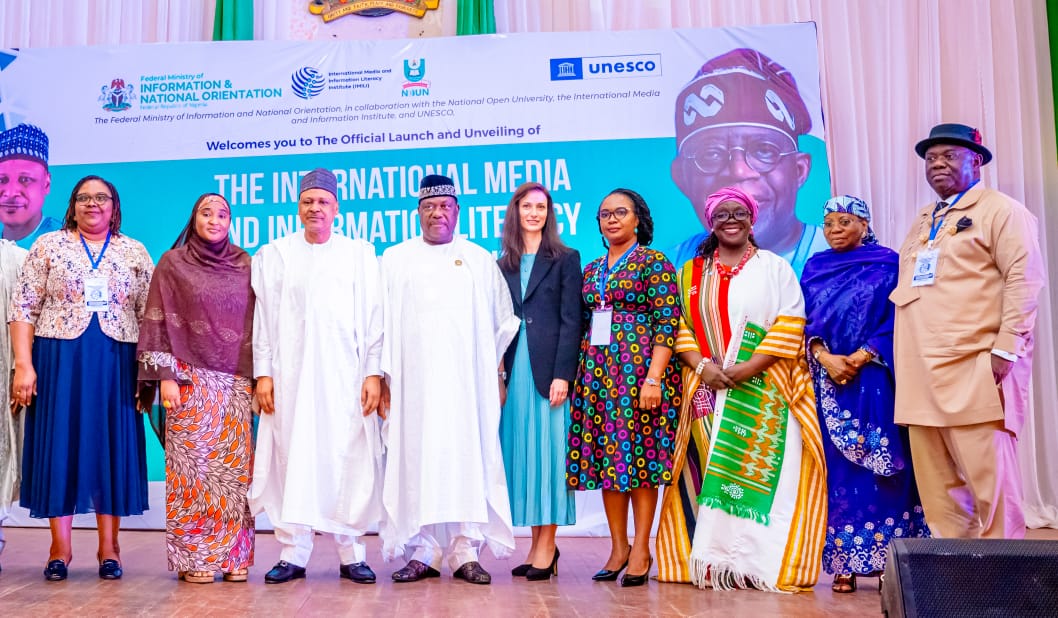
Nigeria has established the world’s first UNESCO Category 2 Institute dedicated to Media and Information Literacy, marking a significant milestone in global efforts to combat misinformation and disinformation. The International Media and Information Literacy Institute (IMILI) was officially launched Wednesday in Abuja, positioning Nigeria as a leader in promoting information integrity.
Minister of Information and National Orientation, Alhaji Mohammed Idris, called the launch “a moment of pride not just for Nigeria, but for Africa and the global community.” He emphasized that securing this prestigious institution required sustained effort and competition, demonstrating Nigeria’s readiness to lead in addressing one of today’s most critical challenges.
“By hosting the world’s first UNESCO Category 2 Institute dedicated to Media and Information Literacy, we are affirming our leadership in promoting informed citizenship, strengthening democratic discourse, and advancing global efforts to safeguard information integrity,” Idris stated during the launch ceremony.
The establishment of IMILI comes at a crucial time when digital misinformation threatens democratic institutions worldwide. As social media platforms and artificial intelligence technologies continue to transform information consumption, the ability to distinguish reliable information from falsehoods has become essential for civic participation.
IMILI represents the first UNESCO Category 2 Institute in Nigeria’s information and communication sector. These institutes operate under UNESCO’s auspices while being legally independent, serving as centers of excellence in specialized fields. The institute will function as a hub for research, policy dialogue, capacity building, and international collaboration across sectors.
According to Idris, President Bola Tinubu’s administration has provided robust foundational support for IMILI’s launch while establishing a sustainable governance framework that meets UNESCO standards. “IMILI will operate independently, professionally, and transparently, guided by international best practices and accountable to its mission to advance freedom of expression, access to information, and media integrity,” he assured.
UNESCO Assistant Director-General for Communication and Information, Mariya Gabriel, expressed satisfaction with the facilities housed at the National Open University of Nigeria in Abuja. After touring the institute, Gabriel noted, “What I have already seen is that collaborative research, a multi-stakeholder approach, and working with the entire ecosystem of information integrity has a very solid foundation here.”
She emphasized the need for pragmatic implementation, including offering training to educators, civil servants, teachers, and media professionals to address concrete challenges in information literacy.
Nigeria’s Permanent Representative to UNESCO, Dr. Hajo Sani, reflected on the journey that began in 2022 when Nigeria first proposed the concept. “We are very happy that we are showing the world that Nigeria has the ability and capability to push forward media and information literacy at an international level,” Sani said, highlighting the significance of Nigeria hosting this first global institute of its kind.
Dr. Sharon Omotosho, Director of IMILI, outlined the institute’s mission to address the growing challenges posed by digital platforms. “We are grateful that Nigeria has taken the first step of lighting a candle in the midst of darkness,” she said, adding that the institute is prepared to provide services including training, advocacy support, research, and policy guidance across sectors.
The establishment of IMILI reflects growing recognition that media literacy is fundamental to maintaining healthy democracies in the digital age. As misinformation continues to pose challenges to social cohesion and democratic processes worldwide, Nigeria’s leadership in establishing this institute positions the country as a significant contributor to global information integrity efforts.
The institute is expected to develop programs that will help citizens critically evaluate media content, understand digital rights and responsibilities, and participate effectively in digital spaces while safeguarding against manipulation and falsehoods.
Fact Checker
Verify the accuracy of this article using The Disinformation Commission analysis and real-time sources.

14 Comments
Nigeria’s leadership in securing the prestigious UNESCO media institute is a testament to the country’s commitment to promoting media literacy and safeguarding democratic discourse. This is a significant achievement that will have far-reaching impacts.
Absolutely, this institute will play a crucial role in empowering citizens to critically evaluate media content and make informed decisions.
Securing this prestigious UNESCO institute was no easy feat. Nigeria’s readiness to lead in addressing the critical challenge of misinformation is commendable. This demonstrates the country’s commitment to promoting media literacy.
Indeed, Nigeria’s leadership in this area sets a positive example for other nations to follow.
The establishment of the International Media and Information Literacy Institute in Nigeria is a commendable effort to promote information integrity and strengthen democratic discourse. This institute will play a vital role in empowering citizens to critically evaluate media content.
Nigeria’s hosting of the world’s first UNESCO Category 2 Institute dedicated to Media and Information Literacy is a remarkable achievement. This initiative will undoubtedly have a significant impact on combating misinformation and disinformation worldwide.
This is a significant milestone that demonstrates Nigeria’s commitment to addressing one of the most pressing challenges of our time.
The launch of the International Media and Information Literacy Institute in Nigeria is a positive step in the global fight against the spread of false information. This institute will undoubtedly contribute to strengthening democratic processes and promoting informed citizenship.
Securing the world’s first UNESCO Category 2 Institute dedicated to Media and Information Literacy is a remarkable achievement for Nigeria. This positions the country as a leader in promoting informed citizenship and strengthening democratic discourse.
This is an important step in addressing one of the most critical challenges facing the global community today.
The establishment of the International Media and Information Literacy Institute in Nigeria is a commendable move towards combating the spread of misinformation and disinformation. This initiative will contribute to the advancement of information integrity worldwide.
The launch of the International Media and Information Literacy Institute in Nigeria is a significant milestone in the global effort to combat the spread of false information. This institute will play a vital role in empowering citizens to critically evaluate media content.
This is a great initiative by Nigeria to combat misinformation and disinformation. Establishing a UNESCO media institute dedicated to media literacy is a significant step in promoting informed citizenship and strengthening democratic discourse.
I agree, this institute will play a crucial role in safeguarding information integrity globally.