


Listen to the article
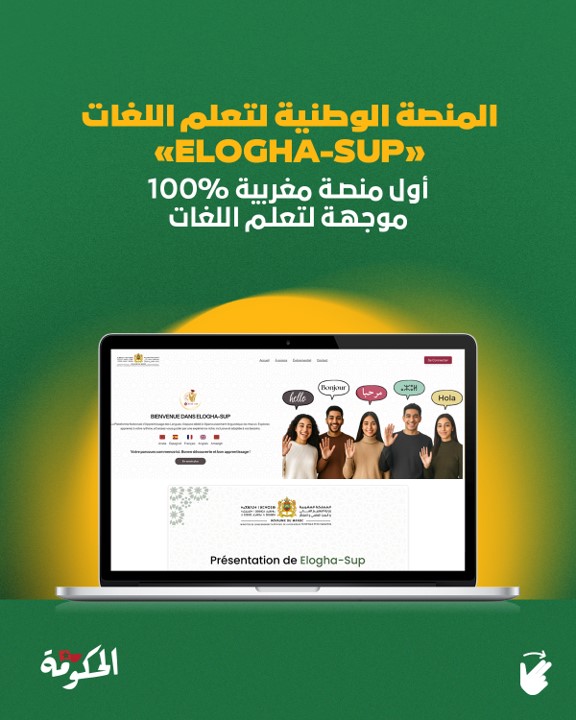
Morocco Launches Platform to Boost Multilingual Education
The Moroccan Ministry of Higher Education has unveiled ELOGHA-SUP, a national digital platform designed to enhance university education and improve students’ employment prospects in an increasingly competitive job market. According to an official government statement, the platform offers learning resources in five languages that meet international standards.
Developed by Moroccan experts, ELOGHA-SUP leverages artificial intelligence technology and houses more than 2,000 language resources covering various academic disciplines. The initiative represents a significant step in Morocco’s ongoing efforts to modernize its higher education system and prepare students for the global workforce.
The platform’s multilingual approach reflects Morocco’s strategic focus on equipping graduates with language skills increasingly demanded by employers across industries. By providing comprehensive resources across multiple languages, the government aims to boost graduates’ competitiveness both domestically and internationally.
UAE-US Partnership Creates Dual Master’s Program in Healthcare
Khalifa University of Science and Technology in the United Arab Emirates and Johns Hopkins University Carey Business School in Baltimore have announced a groundbreaking educational partnership. Starting in fall 2026, the institutions will offer a dual Master’s degree program allowing students to earn two globally recognized credentials in healthcare management.
The Emirates News Agency (WAM) reports that qualified students will be able to pursue both a Master of Science in Healthcare Management from Johns Hopkins and a Master of Science in Health Systems Management from Khalifa University’s Department of Management Science & Engineering.
This collaboration represents a significant development in international higher education partnerships within the healthcare sector, an industry of strategic importance to the UAE’s economic diversification efforts. The program aims to develop highly qualified healthcare administrators with both global perspective and regional expertise.
The partnership builds on the UAE’s growing reputation as an emerging hub for medical education and healthcare innovation in the Middle East. It also aligns with Johns Hopkins’ strategy to expand its global footprint in regions with rapidly developing healthcare systems.
Saudi University Develops Comprehensive AI Resource
Princess Nourah bint Abdulrahman University in Saudi Arabia has produced an extensive informational media file exploring artificial intelligence concepts, applications, and emerging technologies. According to the Saudi Press Agency, the resource includes digital materials prepared by the university’s Media and Knowledge Impact Department.
The comprehensive guide examines AI developments, educational impacts, economic implications, and future trajectories of the technology. It also explores AI’s contributions to Arabic language applications, its role in modern media, and its influence on global productivity.
This initiative comes as Saudi Arabia accelerates investments in emerging technologies under its Vision 2030 framework, which identifies AI as a key economic driver. The university’s resource aims to raise public awareness about artificial intelligence and provide practical guidance on leveraging AI technologies in various sectors.
University of Bahrain Addresses Education Quality During Crises
The University of Bahrain has published a guide focused on maintaining teaching quality, learning effectiveness, and assessment integrity during exceptional circumstances. The guide offers strategies for organizing educational activities, quality assurance processes, and academic accreditation during challenging periods.
According to a university statement, the document provides a flexible yet structured framework to ensure educational continuity without compromising learning outcomes or academic fairness. This initiative responds to growing concerns about maintaining educational standards during disruptions such as pandemics, political unrest, or environmental crises.
The guide arrives at a time when higher education institutions worldwide continue adapting their approaches following lessons learned during the COVID-19 pandemic, which forced unprecedented shifts in educational delivery models.
Research Highlights Benefits of Familiar Nature Sounds
A recent study has found that exposure to forest sounds significantly improves mental well-being, with familiar natural environments producing the strongest positive effects. The research, led by the German Centre for Integrative Biodiversity Research in collaboration with multiple German universities, revealed that participants responded more positively to sounds from local forests than those from unfamiliar tropical environments.
The Saudi Press Agency reports that the study, which involved 195 participants listening to one-minute recordings of forest birdsong with background sounds, also found that perceived biodiversity played a key role. Participants reported greater relaxation and improved mood when they believed they were hearing a wider diversity of animal species.
Published in the peer-reviewed Journal of Environmental Psychology by Elsevier, the research contributes to growing evidence supporting nature-based interventions for mental health and suggests that cultural familiarity may enhance the therapeutic benefits of natural soundscapes.
UNESCO to Host Webinar on Combating Misinformation During Crises
The UNESCO Regional Office for the Gulf States and Yemen has announced an upcoming webinar titled “Media and Information Literacy (MIL): Countering Misinformation, Disinformation, and Hate Speech Online in Times of Crisis.” Scheduled for April 15, 2026, the online event will bring together regional and international experts to address the challenges posed by misleading and harmful online content during crisis periods.
The 90-minute session will explore practical approaches to strengthening media literacy across the region, with a particular focus on building resilience against disinformation during emergencies when reliable information becomes especially crucial. Interested participants must register in advance to receive access details.
Fact Checker
Verify the accuracy of this article using The Disinformation Commission analysis and real-time sources.

6 Comments
Interesting initiative by Morocco to enhance multilingual education at the university level. Providing learning resources in multiple languages aligns with the global demand for language skills in the workforce.
The ELOGHA-SUP platform leveraging AI technology to deliver over 2,000 language learning resources is an impressive effort to modernize Morocco’s higher ed system. Equipping graduates with diverse language capabilities will certainly boost their job prospects.
Absolutely, multilingual proficiency is increasingly valued by employers across industries worldwide. This platform seems well-positioned to give Moroccan students a competitive edge in the global job market.
Morocco’s focus on preparing students for the global workforce through this multilingual education platform is a smart move. Developing language skills alongside academic knowledge will undoubtedly benefit graduates in their future careers.
Curious to see how effective the ELOGHA-SUP platform will be in equipping Moroccan university students with the language skills needed in today’s competitive job market. Providing resources in multiple languages is a promising approach.
The partnership between Khalifa University in the UAE and a US institution to create a dual master’s program in healthcare is an interesting development. Collaboration across borders can foster valuable knowledge sharing and innovation in key sectors.