


Listen to the article
Fire at COP30 Sparks Wave of Misinformation About Chinese Artwork
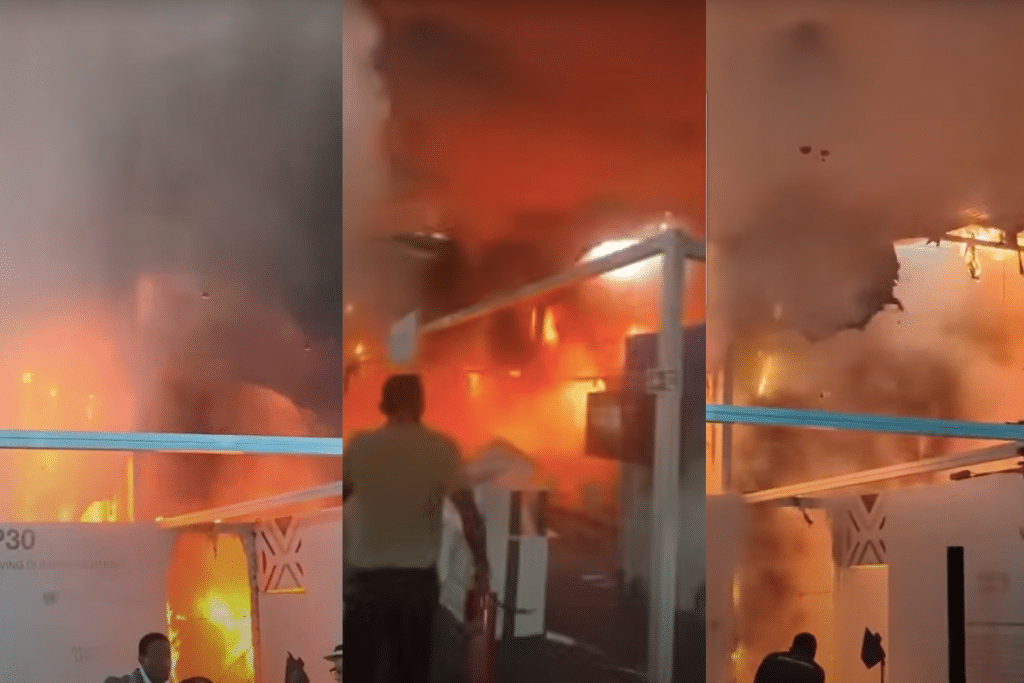
A fire that broke out Thursday afternoon at Brazil’s COP30 climate conference in Belém has become the latest flashpoint in an ongoing wave of misinformation regarding a Chinese-gifted artwork that had already sparked controversy among religious groups.
The fire, which started around 2:15 pm at the East African Community stand in the Africa Pavilion area, was quickly contained with no serious injuries reported. However, within hours, social media accounts began spreading false claims connecting the incident to China.
“Fire in one of the pavilions at COP30 in Belém-PA. Could this be the ‘response’ to the demonic statue gifted by China for COP30?” read one post on X (formerly Twitter), exemplifying the rapid spread of unverified claims.
According to eyewitnesses, the emergency response at the conference site appeared disorganized. Marcelo Rocha, Executive Director of the Ayika Institute, who was scheduled to present in an adjacent pavilion, described a chaotic scene: “There was no evacuation warning; we were the ones who started to organize ourselves. It was civilians who grabbed the fire extinguishers and tried to put out the fire.”
Some social media users falsely claimed the fire occurred in the Chinese pavilion, while the Gazeta do Povo website reported that it happened “near a Chinese exhibition stand,” further fueling speculation about connections between the fire and China’s presence at the conference.
The misinformation builds upon an existing controversy surrounding China’s gift to Brazil – an artwork called “Guardian Spirit Dragon-Jaguar” that combines elements of Chinese and Brazilian cultural symbols. Religious leaders, particularly from evangelical communities, had already criticized the statue before the fire occurred.
Apostle Estevam Hernandes of the Renascer church had previously stated that “the horned dragon is the biblical symbol of deception and power contrary to God” and claimed the work suggests “a fusion of national identity with values that do not reflect our Christian tradition.”
In response to the fire, COP30 organizers initially evacuated the Blue Zone at 2:58 pm, transferring authority to the host country’s emergency services. “The host country’s fire chief ordered the evacuation of the entire site. The Fire Department will conduct full safety checks and should provide an update at 4 pm,” read an official statement.
Brazil’s Tourism Minister Celso Sabino addressed the situation between 3 and 4 pm, confirming the fire had been controlled without injuries. Later in the afternoon, the COP presidency issued a more detailed statement indicating the fire was “brought under control in approximately six minutes” and that “13 individuals were treated on site for smoke inhalation.”
After a temporary closure and safety assessment, the Blue Zone resumed operations at 8:40 pm the same evening, though plenary activities were postponed until the following day.
The incident highlights the increasing challenge of combating misinformation at high-profile international events like the COP climate conferences. The rapid spread of false narratives connecting the fire to the Chinese artwork demonstrates how easily unrelated incidents can be woven into existing controversial narratives.
This year’s COP30 in Belém, Brazil, brings together delegates from around the world to address climate change issues and negotiate international agreements on reducing carbon emissions. Brazil’s hosting of the conference comes at a critical time for global climate policy and for the Amazon region in particular, which has faced significant environmental challenges in recent years.
As the conference continues, organizers now face the dual challenge of maintaining physical safety at the venue while also combating the spread of misinformation that threatens to undermine the diplomatic and environmental goals of the summit.
Fact Checker
Verify the accuracy of this article using The Disinformation Commission analysis and real-time sources.

13 Comments
Very concerning to see misinformation spreading so quickly around the fire incident at COP30. It’s important we rely on verified facts and avoid jumping to conclusions without all the details.
Agreed, the lack of clear communication and disorganized emergency response is troubling. Responsible reporting and transparency from officials are crucial to prevent further spread of false narratives.
The fire at COP30 is certainly a concerning incident, but the rapid spread of misinformation is equally troubling. Responsible reporting and transparency from officials are essential to prevent the escalation of tensions and ensure constructive dialogue on important issues.
Agreed. Maintaining objectivity and focusing on verified facts is the best way to address this situation and ensure that the important work of the COP30 conference can continue without unnecessary distractions.
The fire incident at COP30 is certainly concerning, but we should avoid rushing to conclusions without a thorough investigation. Responsible reporting and fact-checking are crucial to prevent the spread of misinformation.
Well said. Maintaining objectivity and focusing on verified details is the best way to address this situation and ensure constructive dialogue around the important issues at hand.
While the fire at COP30 is worrying, the rapid spread of unsubstantiated claims is equally troubling. We must remain vigilant against the misuse of information as a political tool, especially on sensitive topics like climate change.
It’s disturbing to see how quickly false narratives can gain traction, especially around sensitive topics like the COP30 conference. We must be vigilant in distinguishing credible information from unsubstantiated rumors.
While the fire incident is worrying, we should wait for a full investigation before speculating about the cause. Spreading unverified claims, especially those targeting specific groups, is irresponsible and only serves to inflame tensions.
Absolutely. Misinformation can have real-world consequences, undermining efforts to address important issues like climate change. Fact-based, impartial reporting is essential in these situations.
The lack of clear communication and disorganized emergency response at COP30 is deeply concerning. Transparent and fact-based reporting is essential to prevent the further spread of misinformation and maintain public trust.
I agree. Responsible journalism that prioritizes accuracy over sensationalism is crucial in these situations. Jumping to conclusions without evidence only serves to inflame tensions and undermine constructive dialogue.
It’s disappointing to see how quickly unverified claims can spread in the wake of an incident like the fire at COP30. We must be vigilant in seeking out reliable information and fact-checking before sharing or commenting on such events.