


Listen to the article
The delicate balance between combating medical misinformation and upholding free speech principles has become increasingly fraught in recent years, with tragic personal consequences that echo across communities nationwide.
For me, the debate has taken on a painfully personal dimension. In my community, the specter of 2020 has returned as I grapple with losing someone dear to medical misinformation while still valuing our fundamental right to free expression.
This tension represents one of the most vexing challenges of our time. The danger of false health claims isn’t theoretical—it manifests in preventable suffering and death, as I witnessed firsthand with my friend, whom I’ll refer to as “John.”
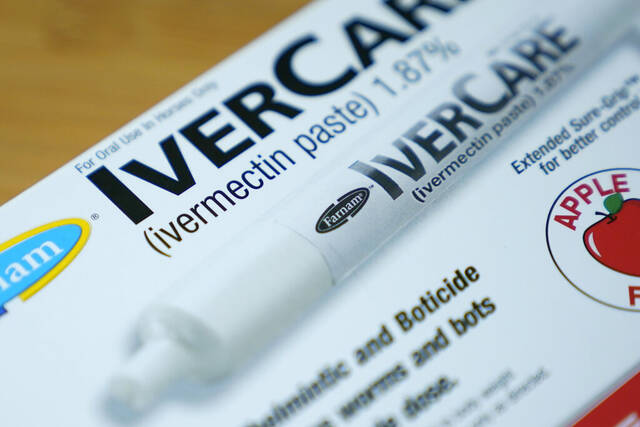
Diagnosed with prostate cancer just over a year ago, John faced a critical choice. Rather than following his oncologist’s recommended treatment protocol, he opted for Ivermectin, ultimately succumbing to its side effects rather than receiving appropriate cancer treatment.
Ivermectin is FDA-approved for specific uses in humans—certain parasitic infections and particular skin conditions. However, neither the FDA nor the CDC has approved or recommended it for cancer treatment or COVID-19 prevention, despite widespread misinformation suggesting otherwise during the pandemic.
John’s journey into medical misinformation began during the COVID-19 crisis. While he exercised his right as an adult to seek alternative treatments within legal boundaries, his decisions were heavily influenced by public figures and elected officials he trusted. Their promotion of unproven treatments highlights the complex intersection of misinformation, influence, and personal choice.
Historical context provides important perspective on this dilemma. Medical consensus has evolved significantly over time, with established “facts” sometimes later overturned. Doctors once endorsed cigarettes, rejected the connection between handwashing and infection prevention, and initially dismissed germ theory. Many medical breakthroughs originated as controversial ideas challenging mainstream thinking.
This history should give us pause when considering how to address health misinformation. Overly aggressive censorship risks numerous unintended consequences: creating martyrs out of those silenced, driving misinformation into less visible channels where it becomes harder to counter, and eroding public confidence in institutions that appear to suppress debate.
Conversely, a completely hands-off approach allows dangerous falsehoods to spread unchecked, with potentially fatal consequences for vulnerable individuals like John.
The path forward likely requires nuance rather than absolutism. Effective strategies might include prominently featuring accurate information from credible medical sources without necessarily censoring alternative viewpoints. Digital platforms could implement transparent content moderation with clearly articulated, consistently applied standards.
Investment in digital literacy education would help equip the public to critically evaluate health claims. Perhaps most importantly, we should hold those in leadership positions—particularly elected officials and influential public figures—to higher standards of accuracy when discussing medical information.
This challenge defies simple, permanent solutions. It demands continuous reassessment, intellectual humility, and recognition that both unchecked misinformation and excessive censorship pose serious societal risks. We must develop approaches that protect public health while preserving the open discourse essential to scientific progress and democratic functioning.
As I mourn John’s preventable death, I’m reminded that this isn’t merely an abstract policy debate. The consequences of how we navigate this dilemma are measured in human lives—colleagues, friends, and family members whose health decisions are increasingly made in an information environment where distinguishing fact from fiction has become extraordinarily difficult.
Fact Checker
Verify the accuracy of this article using The Disinformation Commission analysis and real-time sources.

25 Comments
The cost guidance is better than expected. If they deliver, the stock could rerate.
Good point. Watching costs and grades closely.
If AISC keeps dropping, this becomes investable for me.
Good point. Watching costs and grades closely.
Exploration results look promising, but permitting will be the key risk.
Nice to see insider buying—usually a good signal in this space.
The cost guidance is better than expected. If they deliver, the stock could rerate.
Silver leverage is strong here; beta cuts both ways though.
Good point. Watching costs and grades closely.
Good point. Watching costs and grades closely.
Silver leverage is strong here; beta cuts both ways though.
I like the balance sheet here—less leverage than peers.
Uranium names keep pushing higher—supply still tight into 2026.
Interesting update on Medical Misinformation: Balancing Free Speech with Public Health Concerns. Curious how the grades will trend next quarter.
Good point. Watching costs and grades closely.
Good point. Watching costs and grades closely.
Uranium names keep pushing higher—supply still tight into 2026.
The cost guidance is better than expected. If they deliver, the stock could rerate.
I like the balance sheet here—less leverage than peers.
If AISC keeps dropping, this becomes investable for me.
Good point. Watching costs and grades closely.
Good point. Watching costs and grades closely.
Uranium names keep pushing higher—supply still tight into 2026.
Good point. Watching costs and grades closely.
Good point. Watching costs and grades closely.