


Listen to the article
Measles Outbreaks Surge as Vaccination Misinformation Spreads
More than 4,000 Americans have contracted measles since January 2025, marking the nation’s worst outbreak in over three decades. The crisis has already claimed three lives—two children and one adult—while sixteen states have fallen below the crucial vaccination threshold needed to prevent sustained transmission. This alarming development puts the United States at risk of losing its measles elimination status, achieved in 2000 after decades of public health efforts.
Against this backdrop, Secretary of Health and Human Services Robert F. Kennedy Jr. has made controversial statements to communities at the center of these outbreaks. In public remarks directed at Mennonite, Orthodox Jewish, and conservative Catholic communities—where vaccination rates are lowest and current cases are concentrated—Kennedy claimed the measles, mumps, and rubella (MMR) vaccine contains “millions of particles that were created from aborted fetal tissue, millions of DNA fragments.”
Medical experts and scientific evidence contradict this assertion, raising concerns about such statements coming from the nation’s chief public health officer during a critical disease outbreak.
The reality of vaccine production is significantly different from these claims. Viruses require living cells to replicate, which is why manufacturers grow the weakened rubella virus component of the MMR vaccine in a human cell strain called WI-38. This strain originated in 1962 when researcher Leonard Hayflick isolated cells from lung tissue obtained from a single elective abortion performed in Sweden. These cells were established in laboratory cultures where they have been propagating for over 60 years.
Similarly, vaccines for chickenpox and hepatitis A use the MRC-5 strain, established in 1966 from lung cells obtained during an elective abortion in the United Kingdom. Both cell strains are documented in the American Type Culture Collection, the national repository that catalogs biological materials for researchers.
Importantly, these cell strains are not immortal—they replicate for approximately 50 passages before reaching the end of their replicative lifespan. Manufacturers maintain frozen seed stocks that can be thawed as needed. This finite nature is actually a safety feature that distinguishes these strains from continuous cell lines, which replicate indefinitely and carry theoretical cancer risks.
The cells used today are laboratory descendants of those original strains from six decades ago. No new abortions are performed to manufacture these vaccines. After viruses grow in these cell cultures, they are extracted and purified. The final vaccine contains the weakened virus, stabilizing ingredients, and trace amounts of residual protein and DNA—but no intact human cells.
Regulatory bodies worldwide have extensively studied the safety of these trace materials. The World Health Organization sets a strict limit of 10 nanograms of residual DNA per vaccine dose for continuous cell lines, though WI-38 and MRC-5 fall into a different category as normal human cell strains with no capacity to form tumors.
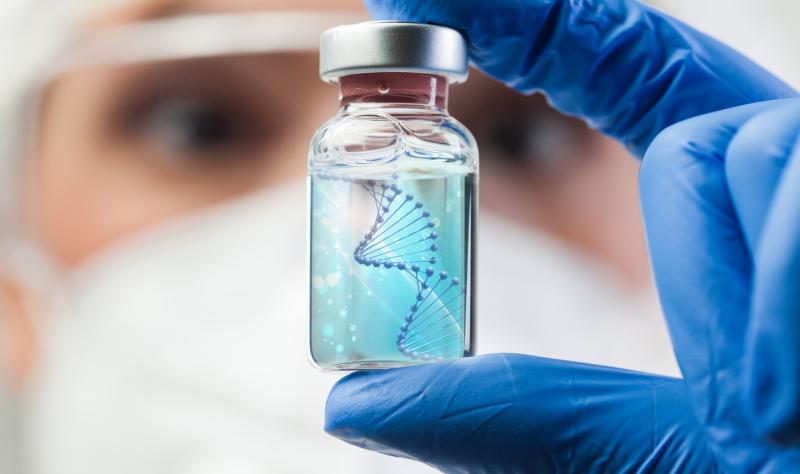
The DNA fragments that remain in vaccines are reduced to below 200 base pairs in length—far too short to encode functional proteins or integrate meaningfully into the human genome. For context, the average human gene spans thousands to tens of thousands of base pairs. The FDA’s advisory committee has specifically evaluated cellular DNA in childhood vaccines and concluded it was unlikely to integrate into host cells or cause harm.
Claims linking these vaccines to autism largely stem from a 2015 paper published in Issues in Law and Medicine—a journal published by a right-to-life advocacy organization, not a peer-reviewed scientific journal focusing on molecular biology or epidemiology. The paper attempted to correlate dropping MMR vaccination rates following Andrew Wakefield’s discredited 1998 study with apparent decreases in autism diagnoses.
However, experts point out that this correlation likely reflects disrupted pediatric care during the height of vaccine concerns rather than a genuine decrease in autism rates. When parents avoid doctor visits due to vaccine fears, fewer children receive developmental assessments and diagnoses.
The religious concerns often cited in vaccine hesitancy have been addressed by major religious authorities. The Vatican’s Pontifical Academy for Life formally evaluated the ethics of vaccines produced using fetal cell strains in 2005, concluding that receiving these vaccines involves no morally relevant cooperation with the original abortions from six decades ago. In 2020, a statement from the Congregation for the Doctrine of the Faith, approved by Pope Francis, confirmed that receiving vaccines made using these cell strains is morally acceptable given the gravity of preventable disease.
The consequences of vaccine misinformation are increasingly evident. National MMR vaccination rates among kindergartners have fallen from 95.2% to 92.5%—below the threshold needed for herd immunity. The two pediatric measles deaths in 2025 were the first in the United States in more than a decade, representing a tragic regression in public health.
Public health experts emphasize that the MMR vaccine has been administered safely to hundreds of millions of people over six decades. They warn that unfounded fears about vaccine ingredients, contradicted by extensive safety data, have driven vaccination rates down to the point where children are dying from a disease once eliminated in the United States.
Fact Checker
Verify the accuracy of this article using The Disinformation Commission analysis and real-time sources.

10 Comments
This outbreak highlights the urgent need for a coordinated public health response to tackle vaccine misinformation. Elected leaders should be amplifying factual information from medical experts, not spreading unfounded claims.
Vaccination is one of our most powerful public health tools. I hope officials can quickly contain this outbreak and work to rebuild confidence in the safety and importance of the MMR vaccine.
Absolutely. Misinformation undermines the tremendous progress we’ve made in controlling infectious diseases. It’s critical that we listen to the scientific consensus, not political agendas.
This is a troubling development that shows the real-world consequences of vaccine hesitancy. I hope the public health community can come together to stem the spread of this outbreak and counter the rise of misinformation.
It’s concerning to see a public health official making unsubstantiated claims about vaccine contents. The medical consensus is clear that the MMR vaccine is safe. Allowing misinformation to spread could have devastating consequences.
I agree. Vaccines have saved millions of lives, and we can’t let unfounded rumors jeopardize that progress. Public trust in science-based health guidance is crucial during outbreaks like this.
This is a concerning situation. While vaccination rates have been declining, the science is clear that vaccines are safe and effective. I hope public health officials can provide accurate, evidence-based information to curb this outbreak.
Agreed. Spreading misinformation about vaccine contents is irresponsible and dangerous. We need to trust the medical experts, not politicians, on this issue.
Outbreaks like this show why it’s so important to maintain high vaccination rates in communities. The MMR vaccine has been proven safe and effective through extensive research. Spreading false claims undermines public health.
Absolutely. Vaccination is critical to protecting vulnerable populations, including young children and those with weakened immune systems. I hope leaders take this threat seriously and act swiftly.