


Listen to the article
In a dramatic escalation of tensions surrounding Liberia’s war crimes accountability efforts, the Office of the National Security Advisor has firmly rejected allegations that it is obstructing the establishment of the country’s War and Economic Crimes Court.
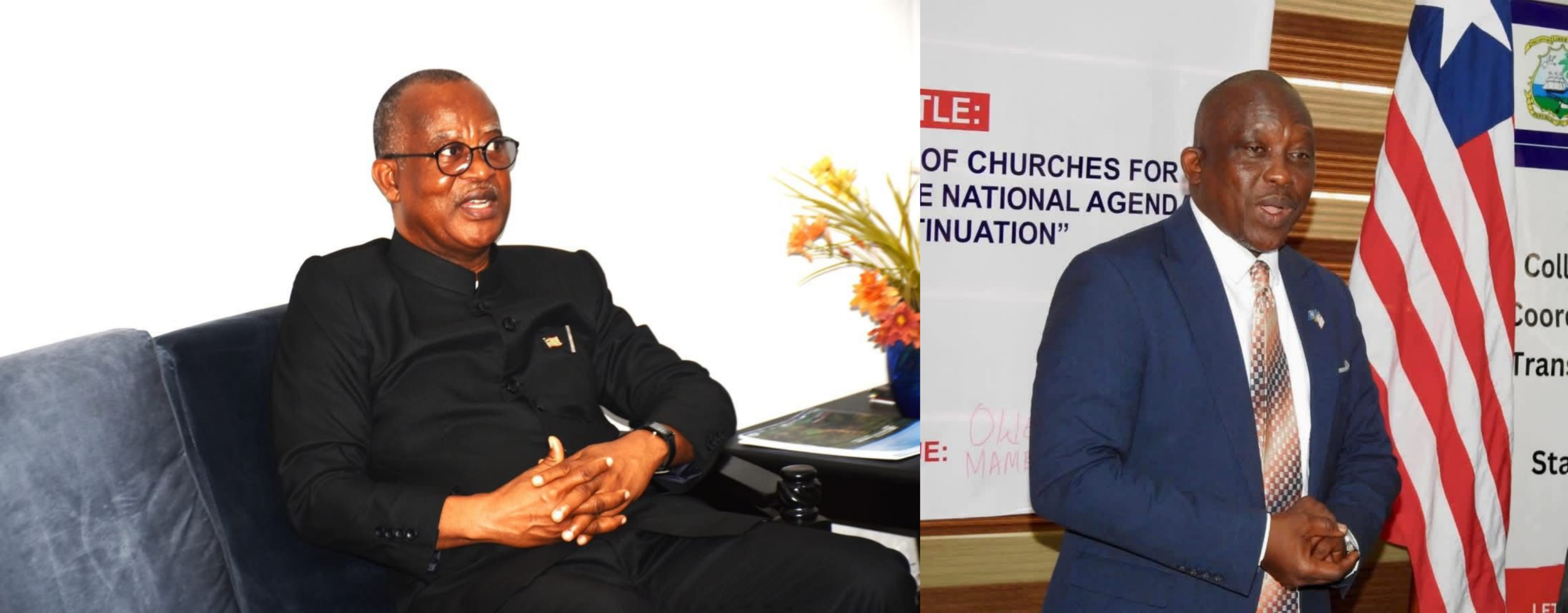
The controversy erupted after Counselor Jallah A. Barbu, Executive Director of the Office for the Establishment of the War and Economic Crimes Court for Liberia (OWECC-L), publicly accused National Security Advisor Samuel K. Woods II of deliberately undermining the transitional justice agenda during a recent appearance on Okay FM.
Barbu claimed that key administration officials, including Woods, have contributed to funding delays and created bureaucratic obstacles that have hampered progress. According to Barbu, the OWECC-L received only $800,000 of the $2 million reportedly promised by President Joseph Boakai in April 2025. He further alleged that none of the $1.2 million allocated in the 2026 national budget has been disbursed to his office.
The war crimes court official also expressed frustration that draft bills related to the court’s establishment, which were circulated to various officials including Woods and Presidential Legal Adviser Bushuben Keita, have stalled in the approval process.
In a strongly-worded statement issued April 26, the National Security Advisor’s office described these accusations as “false, unfounded, and ill-fated.” The statement emphasized that Woods remains fully committed to establishing the court as part of President Boakai’s ARREST Agenda, which focuses on accountability, justice, and national reconciliation.
“The establishment of a War and Economic Crimes Court is a central pillar of the government’s commitment to truth, justice, and reconciliation,” the statement declared. “The National Security Advisor has consistently supported this process and will not obstruct or undermine it.”
The NSA office pointed out that under Executive Order #131, the OWECC-L operates under the Justice Ministry’s supervision, not the National Security Advisor’s authority. They challenged Barbu to provide concrete evidence for his allegations and report any genuine misconduct directly to President Boakai rather than making public accusations.
In a remarkable counterattack, the NSA office suggested that Barbu might be an “unwitting pawn” in a broader conspiracy to hijack Liberia’s transitional justice process. They alleged that unnamed individuals, including foreign actors, were orchestrating a misinformation campaign to distort Woods’ longstanding record as an advocate for justice and accountability.
“He paid his dues when newly baptized advocates were taking cover and, in some cases, collaborating with warlords,” the statement asserted. “Thus, it is laughable that the same national security advisor will seek to undermine the work to which he has dedicated his life.”
The NSA also clarified Woods’ role as strategic and advisory, encompassing broader security issues rather than direct law enforcement actions. “It is not and will never engage in witch hunting, ordering arrests, etc., as some have maliciously claimed,” the statement emphasized.
In what appears to be an escalation of the dispute, the NSA called for an independent performance audit of the OWECC-L and a full investigation into the allegations exchanged between the institutions. Officials argued that such a review would help establish facts, restore public trust, and determine whether punitive measures are warranted.
This public dispute represents a significant challenge for President Boakai’s administration, which has made confronting Liberia’s legacy of war crimes and economic corruption a cornerstone of its governance agenda. The conflict between two key figures in the transitional justice framework threatens to undermine public confidence in the process.
The disagreement comes at a sensitive time for Liberia, which continues to grapple with the aftermath of brutal civil wars that killed an estimated 250,000 people between 1989 and 2003. Despite recommendations from the country’s Truth and Reconciliation Commission in 2009, no war crimes court has been established, leaving many perpetrators unpunished and victims without justice.
As pressure mounts from both domestic and international stakeholders, the Boakai administration now faces increasing calls to mediate this institutional conflict and ensure that Liberia’s long-delayed pursuit of justice is not further derailed by internal power struggles.
Fact Checker
Verify the accuracy of this article using The Disinformation Commission analysis and real-time sources.

6 Comments
Liberia’s pursuit of transitional justice is critically important, but also fraught with political challenges. I hope all stakeholders can put aside narrow interests and focus on the greater good of the Liberian people.
This is a complex and sensitive issue. While the allegations are concerning, it’s good to see both sides engaging publicly. I hope open dialogue and a spirit of compromise can help move the process forward in a fair and transparent way.
Interesting developments in Liberia’s pursuit of justice and accountability. It’s concerning to hear allegations of obstruction, but I’m glad the National Security Advisor is denying the claims. Transparency will be key to ensuring the war crimes court can move forward effectively.
The lack of funding and bureaucratic roadblocks seem to be hampering progress on the war crimes court. I hope the government can work to resolve these issues and demonstrate a real commitment to transitional justice in Liberia.
Agreed. Adequate and timely funding is crucial for the court to carry out its important mandate. I hope the administration can find a way to resolve the budgetary disputes.
The establishment of a war crimes court is an important step for Liberia’s ongoing reconciliation and healing. I’m curious to learn more about the specific obstacles being cited and what can be done to address them constructively.