


Listen to the article
Nigeria’s growing wave of misinformation threatens peace and stability, Commissioner warns
The Kaduna State Commissioner for Women Affairs and Social Development has issued a stark warning about the escalating threat of fake news to Nigeria’s social fabric. Speaking at a workshop for female Islamic scholars and teachers, Hajiya Rabi Salisu emphasized that the spread of misinformation poses a severe risk to national peace and stability.
“Fake news and false narratives are dangerous to the peace and stability of our society,” Salisu told attendees at the event organized by Alkalanci, a community organization focused on media literacy. She warned that if left unchecked, misinformation could intensify tensions and precipitate avoidable crises throughout the country.
The commissioner highlighted how false information has historically triggered communal and ethno-religious violence in Kaduna State and beyond. In a region with delicate ethnic and religious dynamics, the impact of misinformation can be particularly devastating, leading to rapid escalation of tensions and conflict.
Salisu noted that the proliferation of social media platforms has dramatically increased the velocity at which unverified content spreads, amplifying the associated risks. The ease of sharing information without verification has created an environment where falsehoods can quickly gain traction before being debunked.
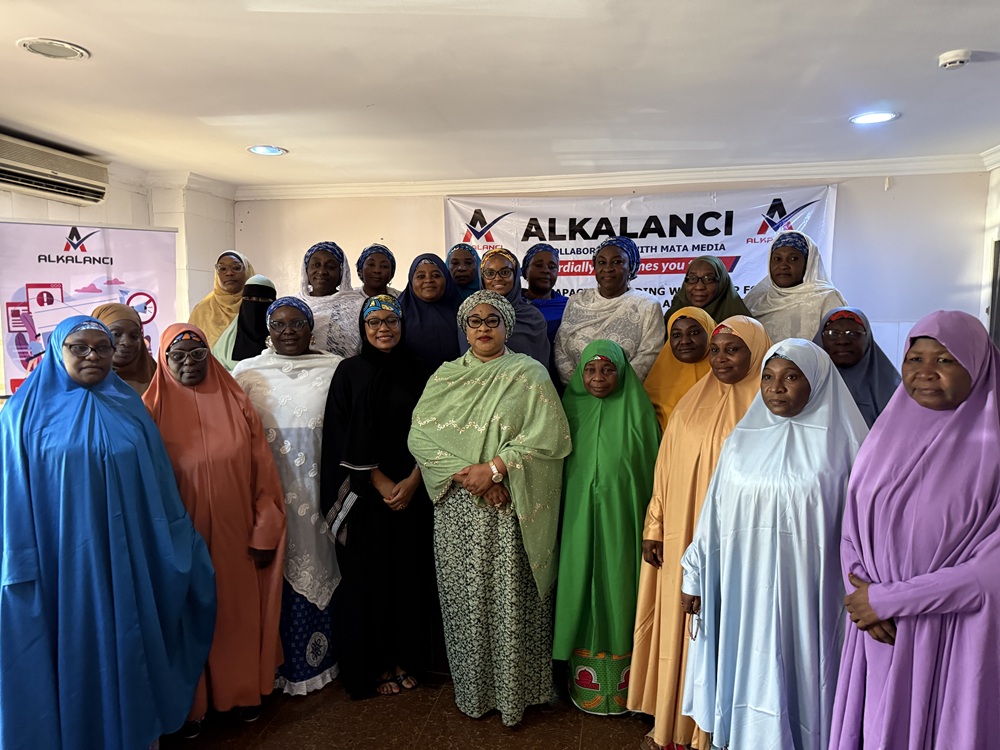
The workshop, a two-day capacity-building program, was specifically designed to equip female religious leaders with the skills to identify and counter misinformation in their communities. The commissioner praised the initiative as timely and strategic, emphasizing the significant influence religious leaders have on public opinion and community behavior.
“Female preachers and teachers occupy a unique position in shaping values and guiding communities,” Salisu observed, underscoring why their involvement is critical in combating the spread of false narratives. She urged participants to approach the training with openness and commitment, emphasizing the importance of sharing their newfound knowledge with their broader communities.
Bamas Victoria, Program Manager for Alkalanci, explained that the initiative aims to provide participants with practical skills for identifying and refuting misinformation. She described the effort as a women-driven initiative designed to empower female scholars, teachers, and community leaders to become advocates for truth in their respective spheres of influence.
The Kaduna workshop is part of a wider intervention targeting misinformation in Hausa-language communications across Nigeria and neighboring countries in the Sahel region. Victoria revealed that similar programs have been successfully conducted in Kano, Sokoto, and Gombe states in Nigeria, as well as in Maradi, Niger Republic, with encouraging results.
Fauziyah Kabir Tukur, Managing Director of Mata Media, emphasized that the training would enhance participants’ understanding of the dangers of false narratives while developing their capacity to detect misleading content. She specifically highlighted religion, politics, and health as sensitive areas particularly vulnerable to the spread of misinformation.
The initiative comes at a critical time for Nigeria, which faces numerous security challenges exacerbated by the spread of false information. In recent years, the country has witnessed how fabricated stories and manipulated facts on social media have contributed to violence and unrest in various regions.
Media literacy experts have increasingly recognized the importance of engaging religious and community leaders in combating fake news, particularly in societies where these figures command significant respect and authority. By empowering female Islamic scholars specifically, the program acknowledges the unique position these women hold in reaching audiences that might otherwise remain vulnerable to misinformation.
The workshop represents a grassroots approach to a problem that continues to challenge governments and technology platforms worldwide, suggesting that local, culturally-sensitive solutions may play a crucial role in addressing the global phenomenon of misinformation.
Fact Checker
Verify the accuracy of this article using The Disinformation Commission analysis and real-time sources.

6 Comments
This is a timely warning from the Kaduna commissioner. Fake news can indeed be a catalyst for social unrest, especially in regions with delicate inter-community relations. Promoting accurate information and critical thinking is crucial to preserve stability.
Combating fake news is a significant challenge in many countries. Nigeria seems to be grappling with this issue, and the commissioner is right to sound the alarm. Strengthening fact-checking and public awareness campaigns could help address the problem.
Interesting to see the commissioner highlight the destabilizing potential of misinformation in Kaduna State. In an environment with delicate social dynamics, the rapid spread of false narratives can quickly escalate tensions. Proactive measures to promote media literacy are clearly needed.
The commissioner raises a valid concern. Fake news can certainly exacerbate existing tensions and lead to further conflict, particularly in areas with fragile ethnic and religious dynamics. Addressing this challenge requires a multifaceted approach.
The commissioner’s warning is well-founded. Fake news can indeed pose a serious threat to peace and stability, especially in regions with delicate social dynamics like Kaduna State. Tackling this challenge requires a multifaceted approach involving media literacy, fact-checking, and public awareness campaigns.
This is an important warning from the Kaduna commissioner. Fake news can indeed be a serious threat to stability, especially in regions with complex ethnic and religious dynamics. Greater media literacy efforts are crucial to combat the spread of misinformation.