


Listen to the article
Deadly Hantavirus Outbreak on Cruise Ship Sparks International Health Response
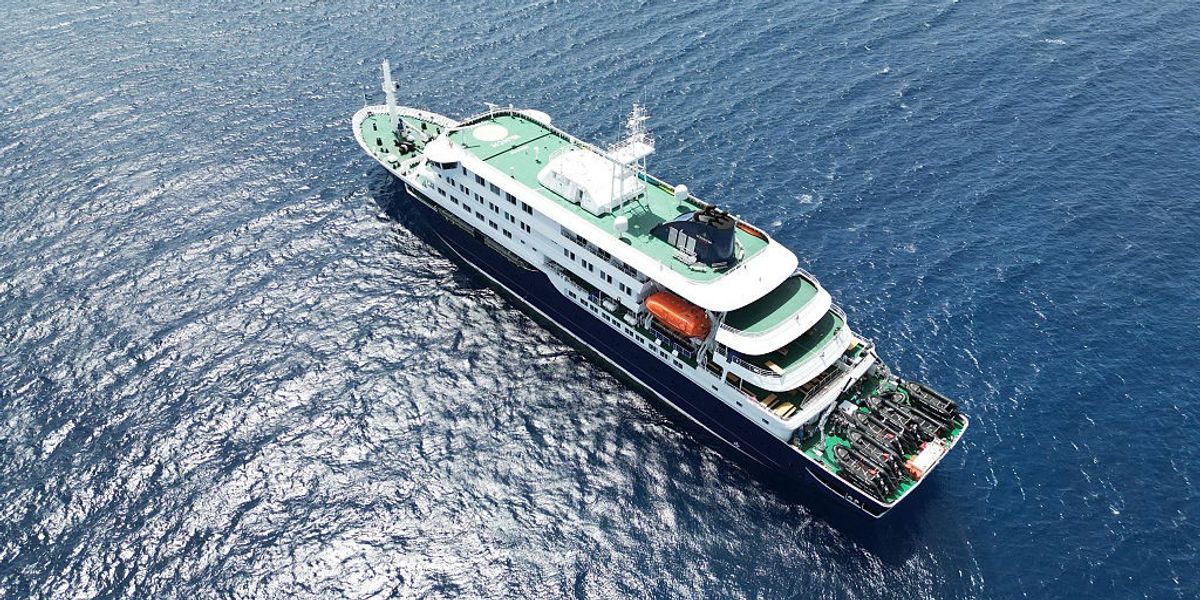
A deadly hantavirus outbreak aboard the luxury expedition cruise ship MV Hondius has triggered an international health response after claiming three lives and infecting several passengers. The vessel, carrying 149 people including two Indian nationals, remains stranded in the Atlantic Ocean as health authorities conduct investigations.
The outbreak has prompted the World Health Organization (WHO) and health agencies across multiple countries to launch a large-scale contact tracing operation to identify individuals who may have been exposed to the virus, as many passengers had already returned home on international flights before the outbreak was fully identified.
WHO has confirmed eight cases linked to the cruise ship so far. Five have been confirmed as hantavirus infections, while three remain suspected cases. Four passengers were medically evacuated from the ship for emergency treatment.
Speaking on Thursday, WHO Director-General Dr. Tedros Adhanom Ghebreyesus acknowledged the seriousness of the incident while providing some reassurance. “While this is a serious incident, WHO assesses the public health risk as low,” he said, though he cautioned that additional cases could still emerge due to the virus’s incubation period.
The MV Hondius departed from Argentina nearly a month ago, traveling through remote wildlife regions before the outbreak was detected. The vessel carried an international passenger list with travelers from the United Kingdom, South Africa, the Netherlands, the United States, Switzerland, and India.
In response to the outbreak, WHO has deployed experts to the ship to support medical assessments of passengers and crew members. The organization has also distributed 2,500 diagnostic kits from Argentina to laboratories across five countries to enhance testing capacity and is preparing operational guidance for the safe disembarkation and onward travel of those aboard.
One of the fatalities was a Dutch woman who disembarked at St. Helena Island on April 24. She had shared a cabin with her husband, who died aboard the ship on April 11, though authorities have not confirmed whether he was among the confirmed hantavirus cases.
Health officials are now closely monitoring passengers, crew members, medical staff, and others who may have had contact with infected individuals during the voyage, in hospitals, or on flights taken after leaving the ship.
Hantavirus comprises a group of viruses primarily carried by rodents and found in parts of Europe, Africa, Asia, and the Americas. Humans typically become infected after inhaling air contaminated with particles from rodent urine, droppings, or saliva. The current outbreak involves the Andes strain, considered one of the rarest and most dangerous variants.
Unlike most hantaviruses, the Andes strain has a documented history of human-to-human transmission, though this occurs only through very close and prolonged contact. WHO infectious disease epidemiologist Maria Van Kerkhove emphasized this key distinction: “This is not Covid, this is not influenza, it spreads very, very differently.”
Symptoms typically appear between two and four weeks after exposure, sometimes developing more than a month later. Investigators believe a passenger may have contracted the virus before boarding or while visiting remote wildlife areas during the cruise, with some infections potentially spreading between passengers while onboard.
The outbreak has highlighted the importance of international cooperation during public health emergencies. Dr. Tedros noted that WHO is working closely with several countries under the International Health Regulations framework. “Our priorities are to ensure the affected patients receive care, that the remaining passengers on the ship are kept safe and treated with dignity, and to prevent any further spread of the virus,” he said.
As news of the outbreak spread, misinformation quickly followed. An old social media post from 2022 predicting a future hantavirus pandemic resurfaced and went viral, creating unnecessary fear and confusion. Public health experts have warned that such misinformation can cause panic, emotional stress, and confusion during health emergencies, potentially undermining trust in official medical advice.
Health authorities urge the public to verify information before sharing it online and to rely on trusted organizations such as the WHO, CDC, ECDC, ICMR, NCDC India, and the Ministry of Health and Family Welfare for accurate updates.
Despite the concerning nature of the outbreak, WHO maintains that the overall global risk remains low. Authorities continue to monitor the situation closely while investigations into the MV Hondius outbreak remain ongoing.
Fact Checker
Verify the accuracy of this article using The Disinformation Commission analysis and real-time sources.

12 Comments
Scary news about this hantavirus outbreak on the cruise ship. Hope health authorities can get it under control quickly and contain any further spread. Key is separating facts from online misinformation, as the article suggests.
Absolutely, this is a serious public health issue that requires a coordinated global response. Glad to see the WHO is taking it seriously and working to trace potential exposures.
I’m curious to learn more about the epidemiology and transmission dynamics of this hantavirus strain. Seems like a good opportunity to improve our understanding of these types of emerging zoonotic diseases.
Agreed, analyzing the details of this outbreak could yield valuable insights. The article mentions contact tracing efforts, which will be crucial for mapping the spread.
Interesting that the article mentions two Indian nationals were among the passengers. Wonder if there are any cultural or geographic factors that may influence the transmission or susceptibility to this hantavirus strain.
That’s a good point. Differences in prior exposure, immune responses, or other factors could play a role. Understanding the diversity of affected populations will be important.
The global contact tracing effort sounds critical to getting ahead of this outbreak. Hopefully they can identify all potential exposures before the virus spreads further.
Yes, aggressive contact tracing will be key. Containing the outbreak at the source is the best way to prevent it from becoming a wider public health crisis.
With eight confirmed cases and three deaths so far, this is clearly a serious situation. Glad to see the WHO and other agencies mobilizing a comprehensive response.
Absolutely, the fatality rate is concerning. Hopefully the emergency treatment for the evacuated passengers is effective.
Outbreaks like this are a sobering reminder of the potential for infectious diseases to spread rapidly, especially in confined settings like cruise ships. Glad to see the health agencies acting swiftly.
Yes, the cruise ship scenario makes this particularly concerning. Hopefully they can get ahead of it and prevent any further loss of life.