


Listen to the article
Deadly Hantavirus Outbreak on Luxury Cruise Ship Sparks Global Health Response
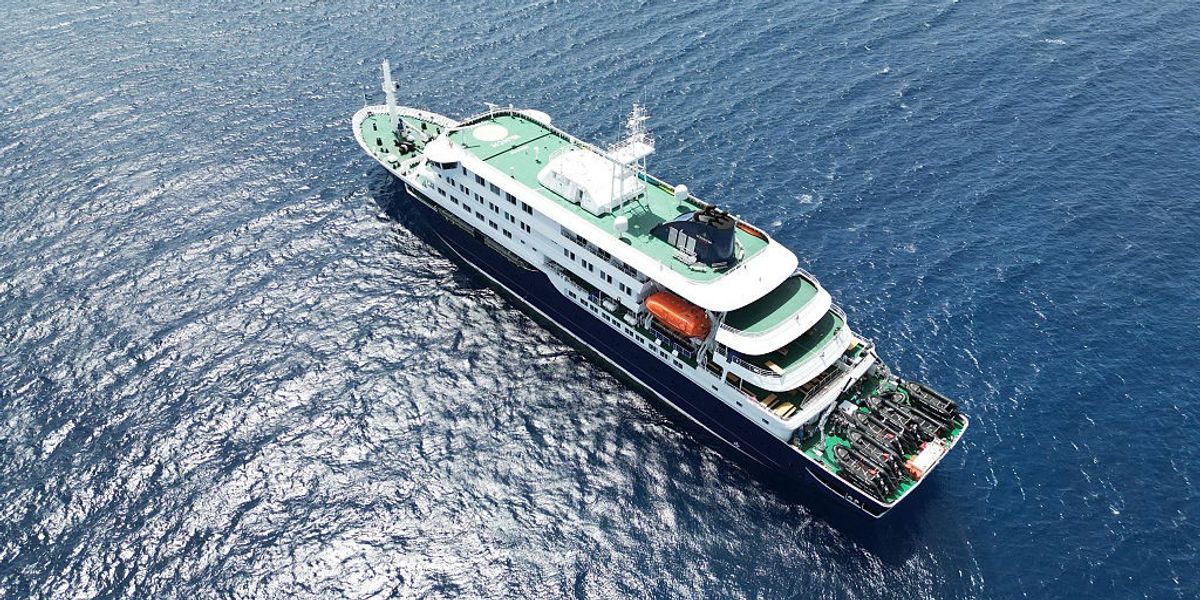
A deadly hantavirus outbreak aboard the luxury expedition cruise ship MV Hondius has prompted an international health response after three passengers died and several others became infected. Among the 149 people on board were two Indian nationals, according to reports from health authorities.
The vessel, now stranded in the Atlantic Ocean, has become the center of a multinational investigation as health officials work to contain the outbreak and trace potential contacts across multiple continents.
The World Health Organization confirmed eight cases linked to the cruise ship, with five confirmed as hantavirus infections and three others listed as suspected cases. Four passengers required medical evacuation for emergency treatment.
“While this is a serious incident, WHO assesses the public health risk as low,” said WHO Director-General Dr. Tedros Adhanom Ghebreyesus on Thursday. However, he cautioned that “it’s possible that more cases may be reported” due to the virus’s incubation period, which can extend to several weeks.
The WHO has deployed experts to the ship to support medical assessments and sent 2,500 diagnostic kits from Argentina to laboratories across five countries to enhance testing capacity. The organization is also developing protocols for safe disembarkation and travel arrangements for those aboard.
The MV Hondius departed from Argentina nearly a month ago, visiting remote wildlife regions before the outbreak was detected. Passengers from numerous countries including the United Kingdom, South Africa, the Netherlands, the United States, Switzerland, and India had been on board. Many had already returned to their home countries on international flights before authorities fully identified the outbreak.
One of the fatalities was a Dutch woman who disembarked at St. Helena Island on April 24. She had shared a cabin with her husband, who died aboard the ship on April 11. Health authorities have not confirmed whether he was among the confirmed hantavirus cases.
The outbreak involves the Andes strain of hantavirus, one of the rarest and most dangerous variants. Unlike most hantavirus types, which do not transmit between humans, the Andes strain can spread through close and prolonged human contact in rare circumstances.
“This is not COVID, this is not influenza, it spreads very, very differently,” emphasized WHO infectious disease epidemiologist Maria Van Kerkhove, attempting to quell comparisons to more contagious respiratory viruses.
Hantaviruses are primarily carried by rodents and typically infect humans when people breathe in air contaminated with particles from rodent urine, droppings, or saliva. Symptoms usually appear between two and four weeks after exposure, though they can take longer to develop.
Investigators believe a passenger may have encountered the virus either before boarding or while visiting wildlife areas during the cruise. There are also indications that some infections may have spread between passengers while on board, though this transmission route remains under investigation.
The situation has triggered a large international contact tracing operation to identify individuals who may have been exposed. Health authorities are monitoring passengers, crew members, medical staff, and others who had contact with infected individuals during the voyage, in hospitals, or on subsequent flights.
“Our priorities are to ensure the affected patients receive care, that the remaining passengers on the ship are kept safe and treated with dignity, and to prevent any further spread of the virus,” Dr. Tedros explained. The incident highlights the importance of international cooperation during public health emergencies.
As news of the outbreak spread, misinformation quickly followed. An old social media post from 2022 predicting a hantavirus pandemic resurfaced and went viral, creating unnecessary fear and confusion. Public health experts have urged caution against panic and misinformation, noting that emotionally charged content often spreads faster than verified scientific information.
Health communication specialists recommend checking updates only from trusted sources such as the WHO, the US Centers for Disease Control and Prevention, the European Centre for Disease Prevention and Control, and national health authorities like India’s Ministry of Health and Family Welfare.
While the WHO maintains that the global risk remains low despite the seriousness of the incident, the organization continues to monitor the situation as investigations into the MV Hondius outbreak proceed.
Fact Checker
Verify the accuracy of this article using The Disinformation Commission analysis and real-time sources.

10 Comments
The hantavirus outbreak on the cruise ship sounds very serious, with several deaths reported so far. I’m glad the WHO is involved and providing support, but it’s unsettling that more cases may still emerge. Hopefully they can fully contain the situation and prevent further transmission.
Agreed, it’s a concerning situation. The WHO’s assessment of low public health risk is reassuring, but vigilance will be key to stopping the outbreak from worsening.
Tragic to hear about the hantavirus deaths on the cruise ship. Kudos to the WHO for deploying experts to support the response. Glad they’re taking this seriously, but the possibility of more cases emerging is concerning. Hope they can contain the spread and get the situation under control.
Yes, this is a very serious situation that requires a coordinated global response. The WHO’s involvement is crucial to ensure proper protocols are followed and the outbreak is contained.
This hantavirus incident on the cruise ship is certainly alarming. While the WHO says the overall risk is low, the potential for more cases due to the long incubation period is worrying. I hope the authorities can effectively trace contacts and provide proper medical care to those affected.
This hantavirus incident on the cruise ship is certainly concerning, especially with the tragic deaths reported so far. I’m glad the WHO is closely involved and providing support, but the potential for more cases emerging due to the long incubation period is very concerning. Hoping the authorities can effectively contain the situation.
You’re right, the long incubation period is a major challenge in controlling the outbreak. Vigilance and a coordinated global response will be critical to limiting the spread.
Concerning news about the hantavirus outbreak on the cruise ship. Hope they can contain it and provide proper medical care to those affected. But it’s good the WHO assesses the overall risk as low. Curious to see if more cases emerge as the virus can have a long incubation period.
You’re right, the long incubation period is worrying. Hope they can trace all potential contacts to limit the spread.
The hantavirus outbreak on the cruise ship is quite alarming. While the WHO says the overall risk is low, the fact that several passengers have already died and more cases could emerge is very worrying. I hope the authorities can act quickly to trace contacts, provide medical care, and prevent further transmission.