


Listen to the article
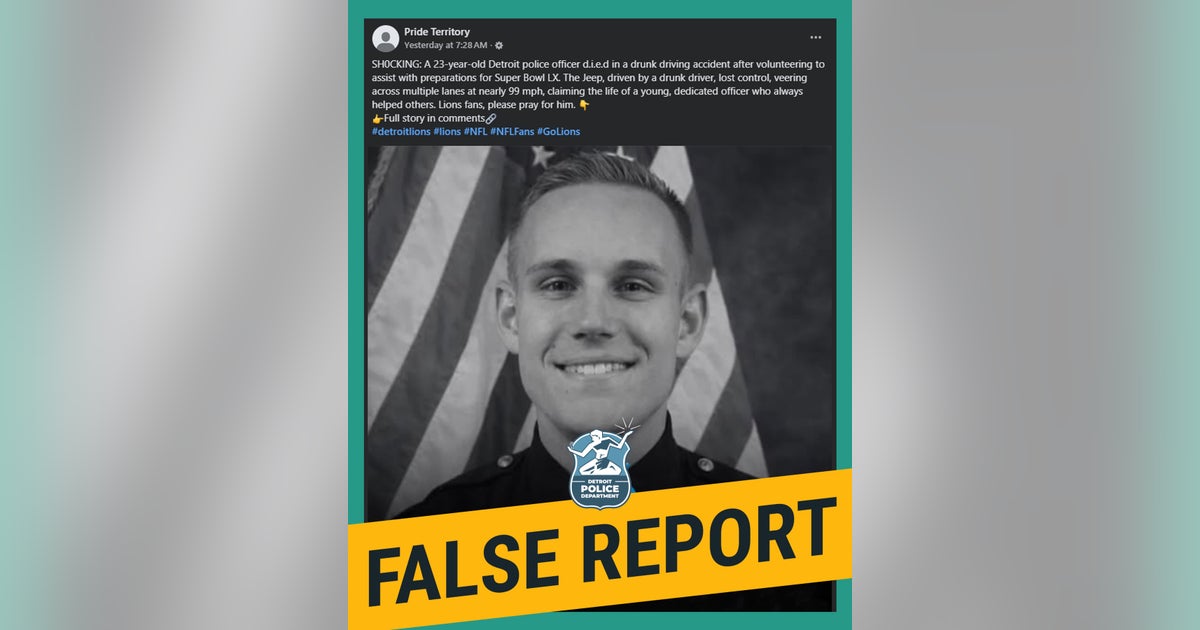
A social media post falsely claiming a young Detroit police officer died in a drunk driving accident has been debunked by department officials, who are warning the public about the spread of misinformation.
Detroit Police Department representatives took to Facebook to address the fabricated story, which had been circulating on the platform in recent days. The post, designed to appear as legitimate news, described a tragic scenario involving a supposed 23-year-old officer.
“SHOCKING: A 23-year-old Detroit police officer d.i.e.d in a drunk driving accident after volunteering to assist with preparations for Super Bowl LX,” read the misleading post. “The Jeep, driven by a drunk driver, lost control, veering across multiple lanes at nearly 99 mph, claiming the life of a young, dedicated officer who always helped others. Lions fans, please pray for him.”
The department quickly identified several red flags in the post. Officials confirmed that no such incident occurred and that no officer matching the description has ever served with the Detroit Police Department.
“Any information relating to this is false,” the department stated unequivocally in their response.
The fraudulent post appears to be part of a growing trend of misinformation designed to exploit emotional responses and generate clicks. It included NFL and Detroit Lions hashtags, likely attempting to capitalize on the heightened attention around the team during their playoff run. The post also directed readers to “read the full story in the comments,” where a suspicious link was shared.
This type of social media scam, often called “engagement bait,” typically aims to generate interactions through emotional manipulation before directing users to potentially malicious websites. These links may lead to phishing attempts, malware distribution, or sites filled with aggressive advertising.
Law enforcement agencies across the country have been increasingly forced to respond to similar false claims on social media platforms. The phenomenon highlights the challenges faced by police departments and other public institutions in combating misinformation in the digital age.
Social media platforms have implemented various measures to reduce the spread of false information, but these efforts have shown mixed results. Facebook, where this particular false story circulated, has faced ongoing criticism regarding the effectiveness of its content moderation policies.
Digital literacy experts recommend that users verify information through official channels before sharing emotional stories, particularly those involving tragedy or public safety. Red flags that might indicate a potentially false story include unusual spelling or grammar (such as the stylized “d.i.e.d” in the fake post), requests to “share” or “comment,” and prompts to click external links for the “full story.”
The Detroit Police Department regularly communicates official information through verified social media accounts, its website, and established news outlets. When major incidents involving officers occur, the department follows formal protocols for notification and public disclosure.
The timing of the false post coincides with increased national attention on Detroit due to the Lions’ NFL playoff performance, potentially providing scammers with a larger audience susceptible to emotional content related to the city.
Officials encourage the public to report suspicious posts to both the social media platforms where they appear and to the relevant authorities when they impersonate official sources or spread demonstrably false information about public safety matters.
Fact Checker
Verify the accuracy of this article using The Disinformation Commission analysis and real-time sources.

10 Comments
It’s concerning to see the spread of misinformation, especially about tragic events involving law enforcement. I’m glad the Detroit Police Department was quick to refute these false claims and warn the public. Vigilance against the spread of disinformation is crucial.
Agreed. Fact-checking and official responses from authorities are so important to counter false narratives. Social media users need to be cautious about blindly sharing unverified claims, no matter how compelling they may seem.
While the intentions behind sharing this story may have been well-meaning, the fabricated details are highly irresponsible. I’m glad the Detroit Police Department was proactive in addressing the situation and correcting the record. Responsible journalism and social media use are essential.
Absolutely. In an age of widespread misinformation, it’s critical that people verify information before sharing it, especially when it involves public safety or law enforcement. The Detroit PD’s response sets a good example.
While it’s understandable for people to want to express sympathy, fabricating details about a tragic incident is highly irresponsible. I’m glad the Detroit Police Department was able to quickly dispel these false claims and prevent the further spread of misinformation.
Yes, the department’s transparency and willingness to address this head-on is commendable. It’s a good model for how authorities should respond to misinformation, to maintain public trust and ensure accurate information is shared.
This is a good reminder of the importance of relying on authoritative and verified sources when it comes to news and information, especially around sensitive topics like public safety. I commend the Detroit PD for their swift action to address these fabricated reports.
Absolutely. In the age of misinformation, it’s vital that people take the time to verify claims before sharing them online. Spreading unconfirmed stories, even with good intentions, can have serious consequences.
It’s unfortunate to see false stories like this circulating, especially when they involve the loss of life. I appreciate the Detroit PD taking the time to clearly refute these claims and urge the public to be cautious about unverified information online.
Agreed. The spread of misinformation can be extremely damaging, particularly around sensitive topics. Fact-checking and official responses from credible sources are crucial to counter these false narratives.